



 Chat with AI
Exam 2: Life's Chemical Bases

Exam 1: Invitation to Biology79 Questions
Exam 2: Life's Chemical Bases67 Questions
Exam 3: Molecules of Life87 Questions
Exam 4: Cell Structure106 Questions
Exam 5: Ground Rules of Metabolism69 Questions
Exam 6: Where it Starts—Photosynthesis69 Questions
Exam 7: How Cells Release Chemical Energy75 Questions
Exam 8: DNA Structure and Function61 Questions
Exam 9: From DNA to Protein64 Questions
Exam 10: Control of Gene Expression63 Questions
Exam 11: How Cells Reproduce77 Questions
Exam 12: Meiosis and Sexual Reproduction59 Questions
Exam 13: Observing Patterns in Inherited Traits95 Questions
Exam 14: Chromosomes and Human Inheritance76 Questions
Exam 15: Studying and Manipulating Genomes58 Questions
Exam 16: Evidence of Evolution55 Questions
Exam 17: Processes of Evolution74 Questions
Exam 18: Organizing Information about Species46 Questions
Exam 19: Life's Origin and Early Evolution60 Questions
Exam 20: Viruses, Bacteria, and Archaea56 Questions
Exam 21: Protists: The Simplest Eukaryotes61 Questions
Exam 22: The Land Plants66 Questions
Exam 23: Fungi52 Questions
Exam 24: Animal Evolution: The Invertebrates74 Questions
Exam 25: Animal Evolution: The Chordates71 Questions
Exam 26: Human Evolution51 Questions
Exam 27: Plant Tissues96 Questions
Exam 28: Plant Nutrition and Transport69 Questions
Exam 29: Life Cycles of Flowering Plants89 Questions
Exam 30: Communication Strategies in Plants72 Questions
Exam 31: Animal Tissues and Organ Systems79 Questions
Exam 32: Neural Control97 Questions
Exam 33: Sensory Perception69 Questions
Exam 34: Endocrine Control90 Questions
Exam 35: Structural Support and Movement72 Questions
Exam 36: Circulation58 Questions
Exam 37: Immunity73 Questions
Exam 38: Respiration78 Questions
Exam 39: Digestion and Nutrition98 Questions
Exam 40: Maintaining the Internal Environment73 Questions
Exam 41: Animal Reproductive System105 Questions
Exam 42: Animal Development72 Questions
Exam 43: Animal Behavior74 Questions
Exam 44: Population Ecology59 Questions
Exam 45: Community Ecology71 Questions
Exam 46: Ecosystems64 Questions
Exam 47: The Biosphere73 Questions
Exam 48: Human Impacts on the Biosphere67 Questions
Select questions type


Classification. The following are important terms relating to water's special properties. Answer the questions below by matching the descriptions with the most appropriate word.
-NaCl becomes this in solution
(Multiple Choice)
4.9/5  (90)
(90) The solvent,cohesive,and temperature stabilization properties of water are primarily due to its ____.
(Multiple Choice)
4.9/5 (93)
(93) The slight positive charge of a hydrogen atom in one water molecule is drawn to the slight negative charge of an oxygen atom in another.This interaction is known as a(n)__________.
(Multiple Choice)
4.8/5 (72)
(72) When can we say that atom has no vacancy,or the atom is full?
(Multiple Choice)
4.9/5 (81)
(81) Classification. The following are important terms relating to acids and bases. Answer the questions below by matching the descriptions with the most appropriate word.
-Set of chemicals that stabilize pH
(Multiple Choice)
4.9/5 (90)
(90) The mass number of an atom is determined by the combined masses of its ____.
(Multiple Choice)
5.0/5 (72)
(72) Classification. The various energy levels in an atom of magnesium (24Mg) have different numbers of electrons. Use the numbers below to answer the following questions.
-The number of electrons in the third energy level
(Multiple Choice)
4.9/5 (76)
(76) Classification. The following are types of chemical bonds. Answer the questions below by matching the descriptions with the most appropriate bond type.
-The bond type holding several molecules of water together
(Multiple Choice)
4.9/5 (75)
(75) A(n)__________ is a strong mutual attraction between ions of opposite charge.
(Multiple Choice)
5.0/5 (92)
(92) 14C is a radioactive isotope,and it turns into ____________________ when it decays.
(Short Answer)
4.9/5 (85)
(85) Classification. The following are types of chemical bonds. Answer the questions below by matching the descriptions with the most appropriate bond type.
-The bond between the atoms of table salt (NaCl)
(Multiple Choice)
4.8/5 (94)
(94) The sharing of two pairs of electrons between two atoms is called a(n)____________________.
(Short Answer)
4.7/5 (92)
(92) Figure 2.5 C
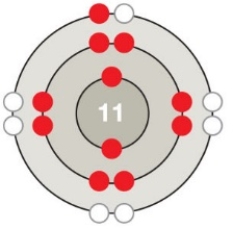 -Which of the following is depicted in the accompanying figure?
 (Multiple Choice)
4.9/5 (86)
(86) Classification. The following are types of chemical bonds. Answer the questions below by matching the descriptions with the most appropriate bond type.
-The bond between the oxygen atoms of oxygen gas (O2)
(Multiple Choice)
4.9/5 (86)
(86) 
Filters
- Essay(0)
- Multiple Choice(0)
- Short Answer(0)
- True False(0)
- Matching(0)