



 Chat with AI
Exam 42: Energy Prices

Exam 1: Economics: the Study of Opportunity Cost124 Questions
Exam 2: Supply and Demand204 Questions
Exam 3: The Concept of Elasticity and Consumer and Producer Surplus173 Questions
Exam 4: Firm Production, Cost, and Revenue158 Questions
Exam 5: Perfect Competition, Monopoly, and Economic Versus Normal Profit119 Questions
Exam 6: Every Macroeconomic Word You Ever Heard: Gross Domestic Product, Inflation, Unemployment, Recession, Depression201 Questions
Exam 7: Interest Rates and Present Value118 Questions
Exam 8: Aggregate Demand and Aggregate Supply110 Questions
Exam 9: Fiscal Policy66 Questions
Exam 10: Monetary Policy104 Questions
Exam 11: Federal Spending76 Questions
Exam 12: Federal Deficits, Surpluses, and the National Debt76 Questions
Exam 13: The Housing Bubble71 Questions
Exam 14: The Recession of 2007-2009: Causes and Policy Responses57 Questions
Exam 15: Is Economic Stagnation the New Normal42 Questions
Exam 16: Is the Fiscalsky Falling: An Examination of Unfunded Social Security, Medicare, and State and Local Pension Liabilities51 Questions
Exam 17: International Trade: Does It Jeopardize American Jobs86 Questions
Exam 18: International Finance and Exchange Rates77 Questions
Exam 19: The European Debt Crisis60 Questions
Exam 20: Economic Growth and Development60 Questions
Exam 21: Nafta, Gatt, Wto: Are Trade Agreements Good for Us42 Questions
Exam 22: The Line Between Legal and Illegal Goods71 Questions
Exam 23: Natural Resources, the Environment, and Climate Change73 Questions
Exam 24: Health Care87 Questions
Exam 25: Government-Provided Health Insurance: Medicaid, Medicare, and the Child Health Insurance Program79 Questions
Exam 26: The Economics of Prescription Drugs62 Questions
Exam 27: So You Want to Be a Lawyer: Economics and the Law62 Questions
Exam 28: The Economics of Crime62 Questions
Exam 29: Antitrust39 Questions
Exam 30: The Economics of Race and Discrimination60 Questions
Exam 31: Income and Wealth Inequality70 Questions
Exam 32: Farm Policy63 Questions
Exam 33: Minimum Wage60 Questions
Exam 34: Ticket Brokers and Ticket Scalping60 Questions
Exam 35: Rent Control31 Questions
Exam 36: Economics of K-12 Education55 Questions
Exam 37: Economics of College and University Education82 Questions
Exam 38: Poverty and Welfare69 Questions
Exam 39: Head Start44 Questions
Exam 40: Social Security60 Questions
Exam 41: Personal Income Taxes55 Questions
Exam 42: Energy Prices67 Questions
Exam 43: If We Build It, Will They Come and Other Sports Questions61 Questions
Exam 44: The Stock Market Crashes57 Questions
Exam 45: Unions66 Questions
Exam 46: Walmart: Always Low Prices and Low Wages- Always41 Questions
Exam 47: The Economic Impact of Casino Gambling39 Questions
Exam 48: The Economics of Terrorism43 Questions
Select questions type


The large increase in the elasticity of supply in crude oil during 2014-2015 was attributable to
(Multiple Choice)
4.9/5  (78)
(78) If gas prices today were $1.00 per gallon, in terms of history this would be
(Multiple Choice)
5.0/5 (86)
(86) The decrease in gasoline price volatility in 2015 and 2016 was a result of
(Multiple Choice)
4.8/5 (70)
(70) If gas prices today were $1.50 per gallon, in terms of history this would be
(Multiple Choice)
4.9/5 (81)
(81) At the current pace of oil consumption and given what oil is known to exist and what oil is expected to be discovered, oil reserves are likely to
(Multiple Choice)
4.8/5 (84)
(84) 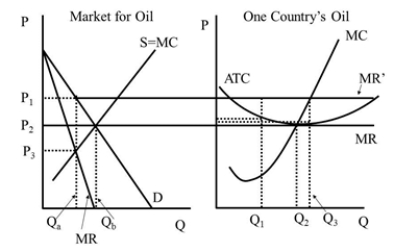 Figure 42.2
-Under the cartel the individual firm's quantity is (assuming that it wants to cheat on its quot A.
Figure 42.2
-Under the cartel the individual firm's quantity is (assuming that it wants to cheat on its quot A.
(Multiple Choice)
4.8/5 (88)
(88) 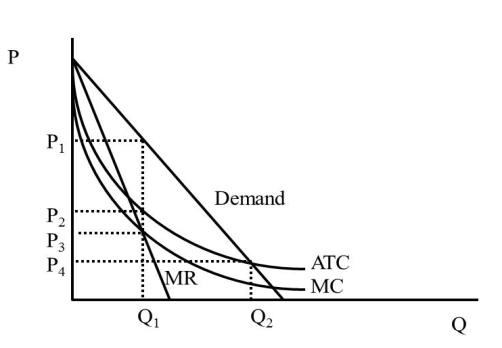 Figure 42.1
-In Figure 42.1, what is the quantity an unregulated monopolist will produce (assuming the regulator strives for zero economic profit)?
Figure 42.1
-In Figure 42.1, what is the quantity an unregulated monopolist will produce (assuming the regulator strives for zero economic profit)? (Multiple Choice)
4.8/5 (85)
(85) Between July, 2008 and January, 2009, U.S. gasoline prices fell from
(Multiple Choice)
4.8/5 (95)
(95) The underlying reason why gasoline prices at neighboring stations is usually identical is that
(Multiple Choice)
4.8/5 (74)
(74) Cartel members are motivated to increase production beyond their quotas because they are at a point where, if they can increase their own production without affecting the cartel price,
(Multiple Choice)
4.8/5 (92)
(92) Cartels are not stable because it is in the interest of each of the members to ____ beyond what is in the cartel's general interest.
(Multiple Choice)
4.7/5 (81)
(81) 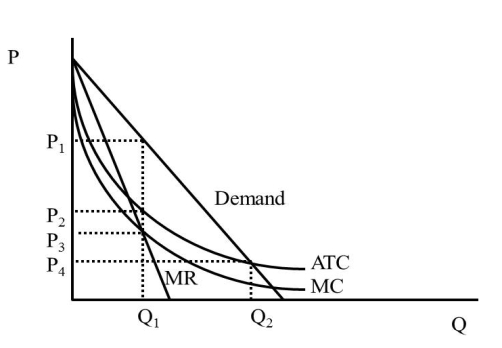 Figure 42.1
-In Figure 42.1, what is the quantity an unregulated monopolist will produce?
Figure 42.1
-In Figure 42.1, what is the quantity an unregulated monopolist will produce? (Multiple Choice)
4.8/5 (82)
(82) 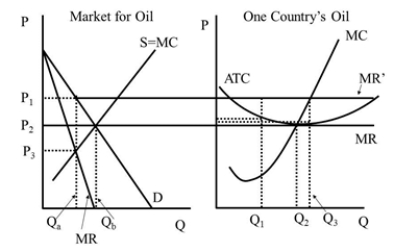 Figure 42.2
-Under perfect competition the price is
The large decrease in gasoline prices during 2014-2015 was attributable to
(Multiple Choice)
5.0/5 (84)
(84) In the natural monopoly case, the regulated price will be where
(Multiple Choice)
4.9/5 (86)
(86) 
Filters
- Essay(0)
- Multiple Choice(0)
- Short Answer(0)
- True False(0)
- Matching(0)