



 Chat with AI
Exam 7: Causal Research Design: Experimentation

Exam 1: Introduction to Marketing Research75 Questions
Exam 2: Defining the Marketing Research Problem and Developing an Approach74 Questions
Exam 3: Research Design91 Questions
Exam 4: Exploratory Research Design: Secondary Data86 Questions
Exam 5: Exploratory Research Design: Qualitative Research103 Questions
Exam 6: Descriptive Research Design: Survey and Observation82 Questions
Exam 7: Causal Research Design: Experimentation114 Questions
Exam 8: Measurement and Scaling: Fundamentals and Comparative Scaling84 Questions
Exam 9: Measurement and Scaling: Noncomparative Scaling Techniques115 Questions
Exam 10: Questionnaire and Form Design117 Questions
Exam 11: Sampling: Design and Procedures96 Questions
Exam 12: Sampling: Final and Initial Sample Size Determination71 Questions
Exam 13: Fieldwork55 Questions
Exam 14: Data Preparation126 Questions
Exam 15: Frequency Distribution, Cross-Tabulation, and Hypothesis Testing154 Questions
Exam 16: Analysis of Variance and Covariance83 Questions
Exam 17: Correlation and Regression92 Questions
Exam 18: Discriminant and Logit Analysis59 Questions
Exam 19: Factor Analysis70 Questions
Exam 20: Cluster Analysis73 Questions
Exam 21: Multidimensional Scaling and Conjoint Analysis111 Questions
Exam 22: Structural Equation Modeling and Path Analysis92 Questions
Exam 23: Report Preparation and Presentation75 Questions
Exam 24: International Marketing Research80 Questions
Select questions type


Which of the following statements is a limitation of Latin square designs?
(Multiple Choice)
4.9/5  (83)
(83) ________ refers to an extraneous variable that occurs when test units with extreme scores move closer to the average score during the course of the experiment.
(Multiple Choice)
4.9/5 (83)
(83) All of the following statements are true about external validity except ________.
(Multiple Choice)
5.0/5 (93)
(93) ________ is a statistical design that allows for the statistical control of two non-interacting external variables in addition to the manipulation of the independent variable.
(Multiple Choice)
4.8/5 (92)
(92) Unlike the randomized block design and the Latin square, factorial designs allow for interactions between variables.
(True/False)
4.8/5 (78)
(78) Discuss the trade-offs that must be made in experimental design formulation when trying to obtain realistic amounts of internal and external validity.
(Essay)
4.9/5 (81)
(81) Independent variables are the variables that measure the effect of the dependent variables on the test units.
(True/False)
4.9/5 (95)
(95) With experimental designs, it is possible to control for some of the other causal factors.
(True/False)
4.7/5 (83)
(83) Experimental designs may be classified as preexperimental, true experimental, quasi-experimental, or statistical.
(True/False)
4.8/5 (79)
(79) In the posttest-only control group design, the treatment effect (TE)is obtained by ________.
(Multiple Choice)
4.8/5 (81)
(81) The main disadvantage of a factorial design is that the number of treatment combinations increases multiplicatively with an increase in the number of variables or levels.
(True/False)
4.8/5 (95)
(95) In the New York coupon experiment mentioned in your text, the experiment was conducted to test the effects of the face value of coupons on the likelihood of coupon redemption. Subjects were randomly assigned to 2 treatment groups. One group was offered 15-cent coupons and the other 50-cent coupons for four products. During the interviews, the respondents answered questions about which brands they used and how likely they were to cash coupons of the given face value the next time they shopped. In the preceding experiment, the test units were ________.
(Multiple Choice)
4.8/5 (84)
(84) 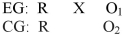 The true experimental design shown above is a ________ design.
 (Multiple Choice)
4.8/5 (85)
(85) Factorial design is a true experimental design that is used to measure the effects of two or more independent variables at various levels and to allow for interactions between variables.
(True/False)
4.7/5 (71)
(71) ________ refers to an extraneous variable attributable to the improper assignment of test units to treatment conditions.
(Multiple Choice)
4.9/5 (78)
(78) A ________ is a quasi-test market in which respondents are pre-selected, then interviewed and observed on their purchases and attitudes toward the product.
(Multiple Choice)
4.9/5 (81)
(81) A ________ is a test marketing program conducted by an outside research company in field experimentation. The research company guarantees distribution of the product in retail outlets that represent a pre-determined percentage of the market.
(Multiple Choice)
4.9/5 (91)
(91) In many countries, the marketing, economic, structural, information, and technological environments are not developed to the extent that they are in the United States.
(True/False)
4.9/5 (73)
(73) Which of the following is not true about the debriefing procedure?
(Multiple Choice)
4.8/5 (74)
(74) ________ is a statistical design in which the test units are blocked on the basis of an external variable to ensure that the various experimental and control groups are matched closely on that variable.
(Multiple Choice)
4.9/5 (68)
(68) 
Filters
- Essay(0)
- Multiple Choice(0)
- Short Answer(0)
- True False(0)
- Matching(0)