



 Chat with AI
Exam 16: Biogeographic Processes

Exam 1: Discovering the Earths Dimensions104 Questions
Exam 2: The Earths Global Energy Balance129 Questions
Exam 3: Air Temperature157 Questions
Exam 4: Atmospheric Moisture and Precipitation132 Questions
Exam 5: Global Atmospheric and Oceanic Circulation138 Questions
Exam 6: Weather Systems130 Questions
Exam 7: Global Climates and Climate Change148 Questions
Exam 8: Earth From the Inside Out79 Questions
Exam 9: Plate Tectonics, Earthquakes, and Volcanoes79 Questions
Exam 10: Weathering and Mass Wasting56 Questions
Exam 11: Fresh Water of the Continents67 Questions
Exam 12: Land-Forms Made by Running Water59 Questions
Exam 13: Landforms Made by Wind and Waves65 Questions
Exam 14: Glacial and Periglacial Landforms105 Questions
Exam 15: Global Soils137 Questions
Exam 16: Biogeographic Processes105 Questions
Exam 17: Global Biogeography142 Questions
Select questions type


The taxonomy of almost all species on Earth has been identified.
(True/False)
4.9/5  (75)
(75) The chemical reaction of photosynthesis is H₂O + O₂ + light energy → ─HOH─ + O₂.
(True/False)
4.8/5 (72)
(72) The biogeochemical cycle in which carbon moves through the biosphere, hydrosphere, atmosphere, and lithosphere is known as the ____________ cycle.
(Short Answer)
4.9/5 (81)
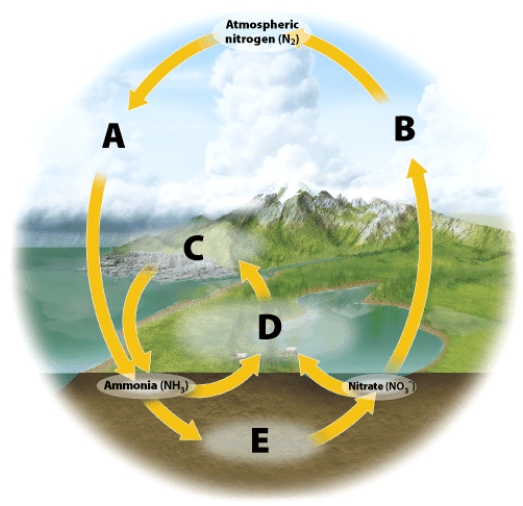
(81) 
The distribution and abundance of organisms in regards to their physiological needs is called:
(Multiple Choice)
4.8/5 (88)
(88) The variety of biological life on Earth or within a region is the:
(Multiple Choice)
4.8/5 (75)
(75) When a relationship develops where one or both species cannot survive alone, the relationship is called:
(Multiple Choice)
4.8/5 (83)
(83) The term below that means something different than the other terms is a:
(Multiple Choice)
4.8/5 (72)
(72) ____________ is the study of the distribution patterns of organisms over space and time and of the processes that produced these patterns.
(Short Answer)
4.9/5 (85)
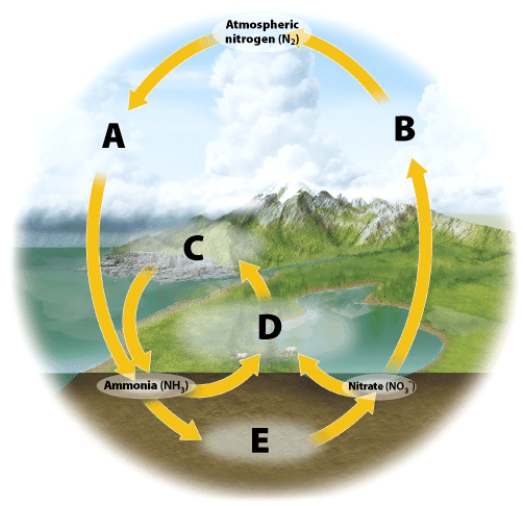
(85) 
In the past four centuries, botanist estimate the number of species that have become extinct is nearest to:
(Multiple Choice)
4.8/5 (84)
(84) _________ is the production of carbohydrates from water and carbon dioxide, using light energy and releasing oxygen.
(Short Answer)
4.8/5 (83)
(83) A complex organic molecule that absorbs light energy for use by plant cells is a(n)
(Multiple Choice)
4.9/5 (93)
(93) That propagation favors the individuals that are best adapted to the environment is the basis for natural selection.
(True/False)
4.8/5 (85)
(85) When the vegetation of an area is destroyed, the regrowth and development is called:
(Multiple Choice)
4.7/5 (84)
(84) 
Filters
- Essay(0)
- Multiple Choice(0)
- Short Answer(0)
- True False(0)
- Matching(0)