



 Chat with AI
Exam 15: Global Soils

Exam 1: Discovering the Earths Dimensions104 Questions
Exam 2: The Earths Global Energy Balance129 Questions
Exam 3: Air Temperature157 Questions
Exam 4: Atmospheric Moisture and Precipitation132 Questions
Exam 5: Global Atmospheric and Oceanic Circulation138 Questions
Exam 6: Weather Systems130 Questions
Exam 7: Global Climates and Climate Change148 Questions
Exam 8: Earth From the Inside Out79 Questions
Exam 9: Plate Tectonics, Earthquakes, and Volcanoes79 Questions
Exam 10: Weathering and Mass Wasting56 Questions
Exam 11: Fresh Water of the Continents67 Questions
Exam 12: Land-Forms Made by Running Water59 Questions
Exam 13: Landforms Made by Wind and Waves65 Questions
Exam 14: Glacial and Periglacial Landforms105 Questions
Exam 15: Global Soils137 Questions
Exam 16: Biogeographic Processes105 Questions
Exam 17: Global Biogeography142 Questions
Select questions type


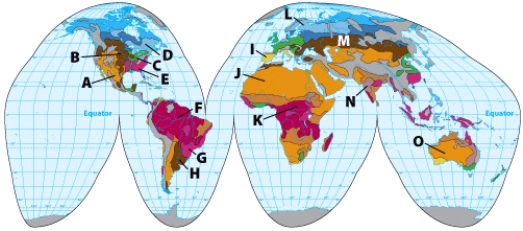

The soils associated with low humus content, high salts, and long dry periods are:
(Multiple Choice)
4.8/5  (71)
(71) Extremely small mineral or organic particles that can remain indefinitely suspended in water are:
(Multiple Choice)
4.9/5 (76)
(76) Spodosols are generally highly fertile and naturally agriculturally productive.
(True/False)
4.9/5 (83)
(83) The soil order occurring in isolated areas with a very high organic content is the:
(Multiple Choice)
4.8/5 (84)
(84) On the illustration, the letter that represents colloid-sized particles is: 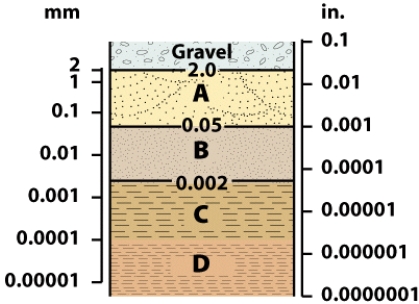
(Multiple Choice)
4.9/5 (78)
(78) 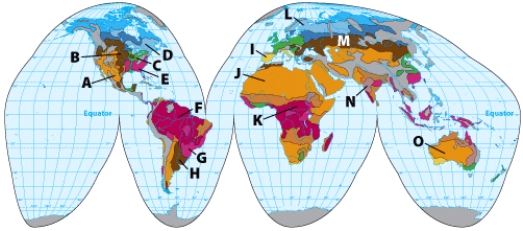
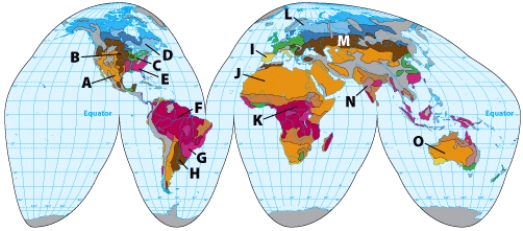
_________ have developed in the moist climates of the equatorial, tropical, and subtropical zones on land surfaces that have been stable for long periods.
(Short Answer)
4.8/5 (76)
(76) Larger than granule peds, ____________ peds are thin, flat soil masses, looking much like a stack of pancakes, occur near the surface and are associated with soil compaction.
(Short Answer)
5.0/5 (81)
(81) 
Filters
- Essay(0)
- Multiple Choice(0)
- Short Answer(0)
- True False(0)
- Matching(0)