



 Chat with AI
Exam 17: Biopsychology of Emotion, Stress, and Health

Exam 1: Biopsychology As a Neuroscience89 Questions
Exam 2: Evolution, Genetics, and Experience143 Questions
Exam 3: The Anatomy of the Nervous System153 Questions
Exam 4: Neural Conduction and Synaptic Transmission152 Questions
Exam 5: The Research Methods of Biopsychology161 Questions
Exam 6: The Visual System149 Questions
Exam 7: Mechanisms of Perception150 Questions
Exam 8: The Sensorimotor System119 Questions
Exam 9: Development of the Nervous System125 Questions
Exam 10: Brain Damage and Neuroplasticity185 Questions
Exam 11: Learning, Memory, and Amnesia147 Questions
Exam 12: Hunger, Eating, and Health145 Questions
Exam 13: Hormones and Sex157 Questions
Exam 14: Sleep, Dreaming, and Circadian Rhythms186 Questions
Exam 15: Drug Addiction and the Brains Reward Circuits153 Questions
Exam 16: Lateralization, Language, and the Split Brain170 Questions
Exam 17: Biopsychology of Emotion, Stress, and Health154 Questions
Exam 18: Biopsychology of Psychiatric Disorders137 Questions
Select questions type


The pattern of behavior demonstrated by decorticate cats is known as __________ rage.
(Short Answer)
4.8/5  (87)
(87) Describe the two major components of the physiological stress response.Draw a schematic diagram.
(Essay)
4.8/5 (85)
(85) Describe five different types of aggressive and defensive behavior in rats and the situations in which they occur.Why is it important to make these distinctions?
(Essay)
4.7/5 (73)
(73) The __________ does not seem to be involved in auditory fear conditioning itself, but it is involved in contextual fear conditioning.
(Short Answer)
4.9/5 (86)
(86) Handling rat pups for a few minutes per day during the first few weeks of their lives has permanent beneficial effects on the hippocampus.This effect occurs because
(Multiple Choice)
4.9/5 (86)
(86) In response to the threat of an auditory conditional stimulus, the __________ is thought to activate appropriate behavioral circuits in the PAG and sympathetic circuits in the hypothalamus.
(Short Answer)
4.8/5 (84)
(84) These are famous illustrations.Where were they originally published and what do they illustrate? Explain.

(Essay)
4.8/5 (79)
(79) A mirror-like system is thought to be the neural mechanism of
(Multiple Choice)
4.9/5 (77)
(77) The theory that facial expressions can influence emotional experience is called the
(Multiple Choice)
4.8/5 (89)
(89)  -Bilateral lesions to which of the following structures produces the Kluver-Bucy syndrome?
 (Multiple Choice)
4.8/5 (84)
(84) Modern neuropsychological and cognitive neuroscientific research have focused on the role of two brain structures in emotion: the
(Multiple Choice)
4.8/5 (73)
(73) 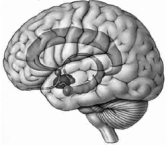 -Illustrated here is the

Filters
- Essay(0)
- Multiple Choice(0)
- Short Answer(0)
- True False(0)
- Matching(0)