



 Chat with AI
Exam 32: Plant Nutrition and Transport

Exam 1: Biology: Exploring Life48 Questions
Exam 2: The Chemical Basis of Life72 Questions
Exam 3: The Molecules of Cells85 Questions
Exam 4: A Tour of the Cell90 Questions
Exam 5: The Working Cell80 Questions
Exam 6: How Cells Harvest Chemical Energy82 Questions
Exam 7: Photosynthesis: Using Light to Make Food81 Questions
Exam 8: The Cellular Basis of Reproduction and Inheritance78 Questions
Exam 9: Patterns of Inheritance77 Questions
Exam 10: Molecular Biology of the Gene82 Questions
Exam 11: How Genes Are Controlled81 Questions
Exam 12: DNA Technology and Genomics78 Questions
Exam 13: How Populations Evolve64 Questions
Exam 14: The Origin of Species58 Questions
Exam 15: Tracing Evolutionary History82 Questions
Exam 16: Microbial Life: Prokaryotes and Protists84 Questions
Exam 17: The Evolution of Plant and Fungal Diversity79 Questions
Exam 18: The Evolution of Invertebrate Diversity72 Questions
Exam 19: The Evolution of Vertebrate Diversity72 Questions
Exam 20: Unifying Concepts of Animal Structure and Function63 Questions
Exam 21: Nutrition and Digestion91 Questions
Exam 22: Gas Exchange66 Questions
Exam 23: Circulation77 Questions
Exam 24: the Immune System79 Questions
Exam 25: Control of Body Temperature and Water Balance63 Questions
Exam 26: Hormones and the Endocrine System60 Questions
Exam 27: Reproduction and Embryonic Development71 Questions
Exam 28: Nervous Systems70 Questions
Exam 29: the Senses60 Questions
Exam 30: How Animals Move69 Questions
Exam 31: Plant Structure, Growth, and Reproduction79 Questions
Exam 32: Plant Nutrition and Transport65 Questions
Exam 33: Control Systems in Plants58 Questions
Exam 34: the Biosphere: an Introduction to Earths Diverse Environments63 Questions
Exam 35: Behavioral Adaptations to the Environment52 Questions
Exam 36: Population Ecology53 Questions
Exam 37: Communities and Ecosystems60 Questions
Exam 38: Conservation Biology57 Questions
Select questions type


Legumes are frequently grown in rotation with primary field crops. What is the benefit of this practice?
(Multiple Choice)
4.8/5  (79)
(79) Which of the following is a potential problem with the use of transgenic varieties of plants that contain Bt toxin?
(Multiple Choice)
4.8/5 (72)
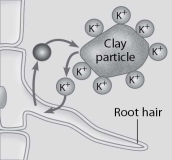
(72)  -What is implied by this figure?
The pores that facilitate gas exchange in plant leaves are called
(Multiple Choice)
4.9/5 (82)
(82) Which of the following correctly lists the sequence of structures through which water passes into a root?
(Multiple Choice)
4.8/5 (69)
(69) Why don't the countries that most need high-protein crops grow them?
(Multiple Choice)
4.9/5 (89)
(89) Much research is being done to increase the nitrogen-fixing ability of plants with root nodules. Why is this an important goal for agricultural researchers?
(Multiple Choice)
4.8/5 (74)
(74) Which of the following lists the set of plant macronutrients that make up about 98% of a plant's dry weight?
(Multiple Choice)
4.7/5 (89)
(89) The relationship between a plant and mycorrhizal fungi is best described as
(Multiple Choice)
4.8/5 (74)
(74) Plants are sometimes used for phytoremediation in areas where the soil has been contaminated with heavy metals. Suppose the Acme Remediation Company is proposing to remediate a contaminated area that you wish to restore. Acme presents you with the following data as evidence of their company's ability to remediate soil.
 -The data provide evidence for which of the following?
 (Multiple Choice)
4.8/5 (77)
(77) Plants are sometimes used for phytoremediation in areas where the soil has been contaminated with heavy metals. Suppose the Acme Remediation Company is proposing to remediate a contaminated area that you wish to restore. Acme presents you with the following data as evidence of their company's ability to remediate soil.
-The CEO of Acme Remediation Company is always trying to improve the company's effectiveness by keeping up with current research. Which of the following research topics should have the highest priority for that research?
-The CEO of Acme Remediation Company is always trying to improve the company's effectiveness by keeping up with current research. Which of the following research topics should have the highest priority for that research? (Multiple Choice)
4.8/5 (79)
(79) Commercial inorganic fertilizers have greatly increased agricultural productivity. Which of the following is an advantage of using inorganic rather than organic fertilizers?
(Multiple Choice)
4.9/5 (81)
(81) In an attempt to determine the source of a growing plant's mass, van Helmont planted a willow seedling in a pot of soil. After five years, the willow weighed 76.8 kg, and the soil had lost 0.06 kg of weight. Only water had been added to the pot. Which of the following conclusions should van Helmont have drawn?
(Multiple Choice)
4.8/5 (69)
(69) 
Filters
- Essay(0)
- Multiple Choice(0)
- Short Answer(0)
- True False(0)
- Matching(0)