



 Chat with AI
Exam 17: Amino Acid Metabolism

Exam 1: Introduction to Biochemistry72 Questions
Exam 2: Water94 Questions
Exam 3: Amino Acids and the Primary Structures of Proteins107 Questions
Exam 4: Proteins: Three-Dimensional Structure and Function116 Questions
Exam 5: Properties of Enzymes91 Questions
Exam 6: Mechanisms of Enzymes88 Questions
Exam 7: Coenzymes and Vitamins93 Questions
Exam 8: Carbohydrates92 Questions
Exam 9: Lipids and Membranes95 Questions
Exam 10: Introduction to Metabolism87 Questions
Exam 11: Glycolysis88 Questions
Exam 12: Gluconeogenesis, the Pentose Phosphate Pathway, and Glycogen Metabolism90 Questions
Exam 13: The Citric Acid Cycle93 Questions
Exam 14: Electron Transport and Atp Synthesis95 Questions
Exam 15: Photosynthesis89 Questions
Exam 16: Lipid Metabolism89 Questions
Exam 17: Amino Acid Metabolism84 Questions
Exam 18: Nucleotide Metabolism81 Questions
Exam 19: Nucleic Acids95 Questions
Exam 20: DNA Replication, repair, and Recombination89 Questions
Exam 21: Transcription and RNA Processing91 Questions
Exam 22: Protein Synthesis99 Questions
Select questions type


Chorismate is a key branch-point intermediate in aromatic amino acid synthesis.
(True/False)
4.7/5  (81)
(81) The changes that occur in cells that lead to its death are called ________.
(Multiple Choice)
5.0/5 (75)
(75) The catabolism of which amino acids can produce sulfuric acid?
(Multiple Choice)
4.9/5 (85)
(85) Which of the following is/are true statement(s)about glutamine?
(Multiple Choice)
4.9/5 (67)
(67) What type of reaction is shown below? Amino acid + α-Ketoglutarate⇋ α-Keto acid + Glutamate
(Multiple Choice)
4.8/5 (78)
(78) The essential amino acids are those that mammals cannot synthesize,but must obtain from the diet.
(True/False)
4.8/5 (74)
(74) The degradation of arginine,histidine and proline all lead to the product ________.
(Multiple Choice)
4.9/5 (91)
(91) An amino acid formed by transamination of a citric acid cycle intermediate is ________.
(Multiple Choice)
4.8/5 (91)
(91) Amino acids that are degraded to pyruvate or citric acid cycle intermediates are called ketogenic.
(True/False)
4.9/5 (78)
(78) Most animals and plants can tolerate moderately high cellular concentrations of ammonia;however,unusable excess is generally eliminated via the urea cycle.
(True/False)
4.8/5 (93)
(93) During the catabolism of amino acids,the carbon skeleton is first degraded,followed by the removal of the amino group.
(True/False)
4.9/5 (68)
(68) Most green plants contain both nitrate reductase and nitrite reductase to reduce nitrogen oxides to ammonia.
(True/False)
4.8/5 (74)
(74) Tryptophan synthase's a subunit catalyzes the cleavage of indole glycerol phosphate to glyceralde 3-phosphate and indole.
(True/False)
4.9/5 (82)
(82) The enzyme ________ is one of the most abundant in liver mitochondria and catalyzes the synthesis of the molecule shown below. 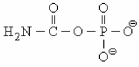
(Multiple Choice)
4.8/5 (75)
(75) Protein turnover of regulatory proteins helps cells to quickly respond to changing conditions.
(True/False)
4.9/5 (77)
(77) A key precursor in the synthesis of aromatic amino acids (tryptophan,tyrosine and phenylalanine)is ________.
(Multiple Choice)
4.7/5 (81)
(81) Which of the following is/are true concerning transanimation reactions?
(Multiple Choice)
4.8/5 (79)
(79) 
Filters
- Essay(0)
- Multiple Choice(0)
- Short Answer(0)
- True False(0)
- Matching(0)