



 Chat with AI
Exam 4: Economic Efficiency, Government Price Setting, and Taxes

Exam 1: Economics: Foundations and Models145 Questions
Exam 2: Trade-Offs, Comparative Advantage, and the Market System151 Questions
Exam 3: Where Prices Come From: the Interaction of Demand and Supply159 Questions
Exam 4: Economic Efficiency, Government Price Setting, and Taxes127 Questions
Exam 5: Externalities, Environmental Policy, and Public Goods141 Questions
Exam 6: Elasticity: the Responsiveness of Demand and Supply149 Questions
Exam 7: Comparative Advantage and the Gains From International Trade125 Questions
Exam 8: Consumer Choice and Behavioral Economics154 Questions
Exam 9: Technology, Production, and Costs169 Questions
Exam 10: Firms in Perfectly Competitive Markets153 Questions
Exam 11: Monopolistic Competition140 Questions
Exam 12: Oligopoly: Firms in Less Competitive Markets130 Questions
Exam 13: Monopoly and Antitrust Policy146 Questions
Exam 14: The Markets for Labour and Other Factors of Production149 Questions
Exam 15: Public Choice, Taxes, and the Distribution of Income134 Questions
Exam 16: Pricing Strategy132 Questions
Exam 17: Firms, the Stock Market, and Corporate Governance137 Questions
Select questions type


Will equilibrium in a market always result in an outcome that is economically efficient? Explain.
(Essay)
4.8/5  (86)
(86) Assume the market price for lemon grass is $4.00 per pound, but most buyers are willing to pay more than the market price.At the market price of $4.00, the quantity of lemon grass demanded is 1,500 pounds per month, and quantity demanded does not reach zero until the price reaches $30.00 per pound.Construct a graph showing this data, calculate the total consumer surplus in the market for lemon grass, and show the consumer surplus on the graph.
(Essay)
4.8/5 (85)
(85) Figure 4.2
 -Refer to Figure 4.2.What area represents producer surplus at a price of P₂?
 (Multiple Choice)
4.8/5 (78)
(78) ________ refers to the reduction in economic surplus resulting from not being in competitive equilibrium.
(Multiple Choice)
4.7/5 (85)
(85) Figure 4.8
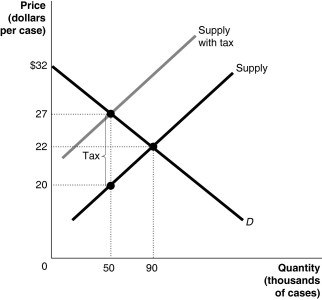 Figure 4.8 shows the market for beer. The government plans to impose a unit tax in this market.
-Refer to Figure 4.8.How much of the tax is paid by producers?
Figure 4.8 shows the market for beer. The government plans to impose a unit tax in this market.
-Refer to Figure 4.8.How much of the tax is paid by producers? (Multiple Choice)
4.9/5 (77)
(77) 
Filters
- Essay(0)
- Multiple Choice(0)
- Short Answer(0)
- True False(0)
- Matching(0)