



 Chat with AI
Exam 34: Animal Behavior

Exam 1: The Nature of Science and the Characteristics of Life82 Questions
Exam 2: Biological Diversity, Bacteria, and Archaea101 Questions
Exam 3: Protista, Plantae, and Fungi83 Questions
Exam 4: Animalia81 Questions
Exam 5: The Chemistry of Life92 Questions
Exam 6: Cell Structure and Internal Compartments87 Questions
Exam 7: Cell Membranes, Transport, and Communication85 Questions
Exam 8: Energy, Metabolism, and Enzymes81 Questions
Exam 9: Photosynthesis and Cellular Respiration84 Questions
Exam 10: Cell Division89 Questions
Exam 11: Stem Cells, Cancer, and Human Health93 Questions
Exam 12: Patterns of Inheritance75 Questions
Exam 13: Chromosomes and Human Genetics75 Questions
Exam 14: Dna and Genes105 Questions
Exam 15: From Gene to Protein80 Questions
Exam 16: Dna Technology80 Questions
Exam 17: How Evolution Works80 Questions
Exam 18: Evolution of Populations80 Questions
Exam 19: Speciation and the Origins of Biological Diversity80 Questions
Exam 20: The Evolutionary History of Life100 Questions
Exam 21: The Biosphere89 Questions
Exam 22: Growth of Populations69 Questions
Exam 23: Ecological Communities133 Questions
Exam 24: Ecosystems75 Questions
Exam 25: Global Change70 Questions
Exam 26: Internal Organization and Homeostasis79 Questions
Exam 27: Nutrition and Digestion80 Questions
Exam 28: Circulation and Gas Exchange77 Questions
Exam 29: Animal Hormones78 Questions
Exam 30: Nervous and Sensory Systems78 Questions
Exam 31: Skeletons, Muscles, and Movement78 Questions
Exam 32: Defenses Against Disease78 Questions
Exam 33: Reproduction and Development76 Questions
Exam 34: Animal Behavior76 Questions
Exam 35: Plant Structure, Nutrition, and Transport80 Questions
Exam 36: Plant Growth and Reproduction80 Questions
Select questions type


A(n)____________________ is an action made by one organism in response to other organisms or to the physical environment.
(Short Answer)
4.7/5  (72)
(72) ____________________ is a highly advanced form of communication found in humans.
(Short Answer)
4.8/5 (80)
(80) Male red-breasted robins defend their territories against other males by physically attacking them. The fact that a male robin will attack a clump of red feathers within its territory suggests that red feathers are a(n)____________________ that stimulates a fixed behavior.
(Short Answer)
4.8/5 (85)
(85) 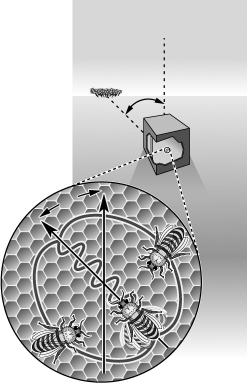
Which of the following statements about learned behaviors is true?
(Multiple Choice)
4.7/5 (81)
(81) ____________________ is the production of signals by one organism that stimulate a response in another organism.
(Short Answer)
4.7/5 (81)
(81) Which of the following statements about genetically controlled behaviors is true?
(Multiple Choice)
4.8/5 (85)
(85) Because a frog has a more complex nervous system than a slug, the behaviors of a frog should be more complex than those of a slug.
(True/False)
4.9/5 (73)
(73) Which of the following statements about fixed behaviors is false?
(Multiple Choice)
4.8/5 (71)
(71) Because genes can have an influence on behaviors, it is possible for behaviors to ____________________.
(Short Answer)
4.9/5 (88)
(88) Fixed behaviors evolve when the survival risks of exhibiting a wrong behavior are great.
(True/False)
4.8/5 (86)
(86) Which of the following does not describe a learned behavior?
(Multiple Choice)
4.9/5 (82)
(82) A honeybee gives up its life when it stings to protect the hive. This is an example of
(Multiple Choice)
4.9/5 (78)
(78) 
Filters
- Essay(0)
- Multiple Choice(0)
- Short Answer(0)
- True False(0)
- Matching(0)