



 Chat with AI
Exam 34: Animal Behavior

Exam 1: The Nature of Science and the Characteristics of Life82 Questions
Exam 2: Biological Diversity, Bacteria, and Archaea101 Questions
Exam 3: Protista, Plantae, and Fungi83 Questions
Exam 4: Animalia81 Questions
Exam 5: The Chemistry of Life92 Questions
Exam 6: Cell Structure and Internal Compartments87 Questions
Exam 7: Cell Membranes, Transport, and Communication85 Questions
Exam 8: Energy, Metabolism, and Enzymes81 Questions
Exam 9: Photosynthesis and Cellular Respiration84 Questions
Exam 10: Cell Division89 Questions
Exam 11: Stem Cells, Cancer, and Human Health93 Questions
Exam 12: Patterns of Inheritance75 Questions
Exam 13: Chromosomes and Human Genetics75 Questions
Exam 14: Dna and Genes105 Questions
Exam 15: From Gene to Protein80 Questions
Exam 16: Dna Technology80 Questions
Exam 17: How Evolution Works80 Questions
Exam 18: Evolution of Populations80 Questions
Exam 19: Speciation and the Origins of Biological Diversity80 Questions
Exam 20: The Evolutionary History of Life100 Questions
Exam 21: The Biosphere89 Questions
Exam 22: Growth of Populations69 Questions
Exam 23: Ecological Communities133 Questions
Exam 24: Ecosystems75 Questions
Exam 25: Global Change70 Questions
Exam 26: Internal Organization and Homeostasis79 Questions
Exam 27: Nutrition and Digestion80 Questions
Exam 28: Circulation and Gas Exchange77 Questions
Exam 29: Animal Hormones78 Questions
Exam 30: Nervous and Sensory Systems78 Questions
Exam 31: Skeletons, Muscles, and Movement78 Questions
Exam 32: Defenses Against Disease78 Questions
Exam 33: Reproduction and Development76 Questions
Exam 34: Animal Behavior76 Questions
Exam 35: Plant Structure, Nutrition, and Transport80 Questions
Exam 36: Plant Growth and Reproduction80 Questions
Select questions type


Lending a friend money when you do not have much money to spare is being ____________________.
(Short Answer)
4.8/5  (71)
(71) In the waggle dance of honeybees the number of "waggles" indicates the
(Multiple Choice)
4.8/5 (83)
(83) When a dog sits in response to a command from a human, the dog is exhibiting a(n)
(Multiple Choice)
5.0/5 (93)
(93) Based on the data presented in the graph below, begging in response to a red dot is a learned behavior.
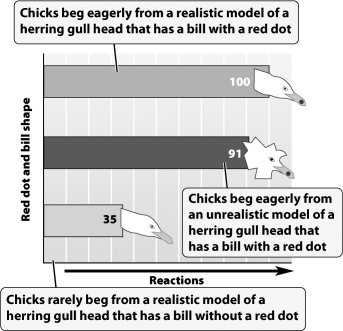
(True/False)
4.8/5 (82)
(82) Which sorts of behaviors, if any, offer an organism the best chance of survival?
(Multiple Choice)
4.9/5 (78)
(78) Which of the following is not found with eusocial organisms?
(Multiple Choice)
4.9/5 (76)
(76) Which of the following statements about fixed behaviors is true?
(Multiple Choice)
4.8/5 (97)
(97) An organism that exhibits ____________________ behavior helps other members of the group survive or reproduce while decreasing its own chances of doing so.
(Short Answer)
4.8/5 (85)
(85) In a laboratory, a mouse runs a maze faster on the third try and even faster on the fifth try. Which of the following best describes what has taken place?
(Multiple Choice)
4.8/5 (81)
(81) Pit bulls do not have the same behavior patterns as collies. The differences are
(Multiple Choice)
4.8/5 (72)
(72) Male mice "record" the odor of their siblings during the first 3 weeks of life. When these mice reach sexual maturity, they avoid mating with their siblings. This is an example of
(Multiple Choice)
4.8/5 (78)
(78) Group living can have disadvantages such as limited resources and spread of disease.
(True/False)
4.8/5 (80)
(80) Reading this question involves communication only at the level of fixed behaviors.
(True/False)
4.9/5 (85)
(85) Fruit flies are either "rovers" that move rapidly over a surface looking for food or "sitters" that move slowly over a surface. When a rover and a sitter are mated, all of the offspring are rovers. When two of these offspring are mated, 75 percent of the offspring are rovers and 25 percent of the offspring are sitters. This suggests that
(Multiple Choice)
4.7/5 (75)
(75) 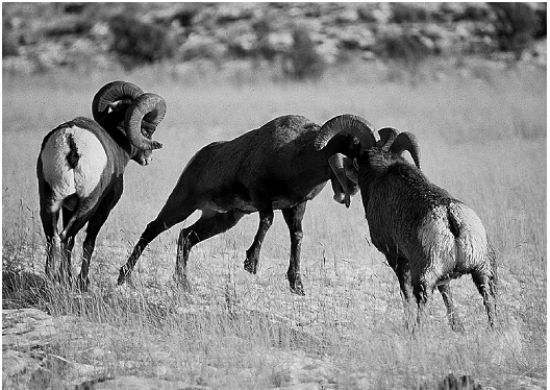
If both identical twins who were raised apart exhibit the same behavior,
(Multiple Choice)
5.0/5 (87)
(87) 
Filters
- Essay(0)
- Multiple Choice(0)
- Short Answer(0)
- True False(0)
- Matching(0)