



 Chat with AI
Exam 27: Nutrition and Digestion

Exam 1: The Nature of Science and the Characteristics of Life82 Questions
Exam 2: Biological Diversity, Bacteria, and Archaea101 Questions
Exam 3: Protista, Plantae, and Fungi83 Questions
Exam 4: Animalia81 Questions
Exam 5: The Chemistry of Life92 Questions
Exam 6: Cell Structure and Internal Compartments87 Questions
Exam 7: Cell Membranes, Transport, and Communication85 Questions
Exam 8: Energy, Metabolism, and Enzymes81 Questions
Exam 9: Photosynthesis and Cellular Respiration84 Questions
Exam 10: Cell Division89 Questions
Exam 11: Stem Cells, Cancer, and Human Health93 Questions
Exam 12: Patterns of Inheritance75 Questions
Exam 13: Chromosomes and Human Genetics75 Questions
Exam 14: Dna and Genes105 Questions
Exam 15: From Gene to Protein80 Questions
Exam 16: Dna Technology80 Questions
Exam 17: How Evolution Works80 Questions
Exam 18: Evolution of Populations80 Questions
Exam 19: Speciation and the Origins of Biological Diversity80 Questions
Exam 20: The Evolutionary History of Life100 Questions
Exam 21: The Biosphere89 Questions
Exam 22: Growth of Populations69 Questions
Exam 23: Ecological Communities133 Questions
Exam 24: Ecosystems75 Questions
Exam 25: Global Change70 Questions
Exam 26: Internal Organization and Homeostasis79 Questions
Exam 27: Nutrition and Digestion80 Questions
Exam 28: Circulation and Gas Exchange77 Questions
Exam 29: Animal Hormones78 Questions
Exam 30: Nervous and Sensory Systems78 Questions
Exam 31: Skeletons, Muscles, and Movement78 Questions
Exam 32: Defenses Against Disease78 Questions
Exam 33: Reproduction and Development76 Questions
Exam 34: Animal Behavior76 Questions
Exam 35: Plant Structure, Nutrition, and Transport80 Questions
Exam 36: Plant Growth and Reproduction80 Questions
Select questions type


Which one of the following food sources would be eaten by carnivores?
(Multiple Choice)
4.7/5  (76)
(76) Why do sheep have a much longer small intestine relative to their size than dogs do?
(Multiple Choice)
4.9/5 (65)
(65) Examine the photograph below of an animal skull.
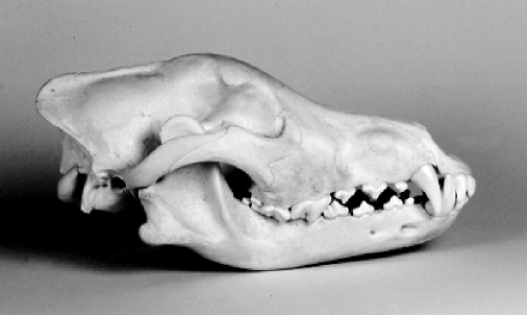 The characteristics of this skull suggest that it belongs to a ____________________, the type of animal that consumes only ____________________.
 (Short Answer)
4.8/5 (85)
(85) A major concern in public health is the intake of too much _____, thus leading many people to have _____, which can damage _____.
(Multiple Choice)
4.9/5 (86)
(86) The colon contains bacteria that produce ____________________, a small organic compound that is involved in blood clotting.
(Short Answer)
4.9/5 (71)
(71) An individual who wishes to avoid getting ill during the wintertime experiments by significantly boosting vitamin intake by taking multiple vitamin supplements. This action could
(Multiple Choice)
4.7/5 (77)
(77) Which pair of elements would make up more of your body weight than any of the other pairs below?
(Multiple Choice)
4.9/5 (87)
(87) Which of the following is not secreted by the mammalian pancreas?
(Multiple Choice)
4.9/5 (94)
(94) The natural production and absorption of many vitamins is regulated by negative feedback loops.
(True/False)
4.9/5 (81)
(81) Whole grain foods are good components of a diet when trying to reduce cancer risk.
(True/False)
5.0/5 (78)
(78) The brush border in the small intestine decreases the amount of surface area available for absorption of nutrients.
(True/False)
4.9/5 (70)
(70) Which of the following statements about fat digestion is false?
(Multiple Choice)
4.7/5 (84)
(84) The empty label in the following scheme most likely should read 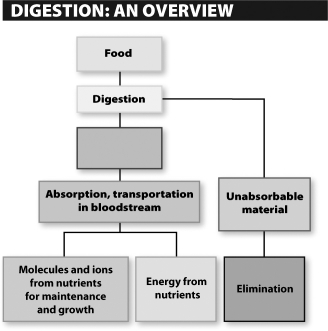
(Multiple Choice)
4.8/5 (86)
(86) The enzyme that works well in the acidic environment of the stomach is
(Multiple Choice)
4.8/5 (87)
(87) 
Filters
- Essay(0)
- Multiple Choice(0)
- Short Answer(0)
- True False(0)
- Matching(0)