



 Chat with AI
Exam 27: Nutrition and Digestion

Exam 1: The Nature of Science and the Characteristics of Life82 Questions
Exam 2: Biological Diversity, Bacteria, and Archaea101 Questions
Exam 3: Protista, Plantae, and Fungi83 Questions
Exam 4: Animalia81 Questions
Exam 5: The Chemistry of Life92 Questions
Exam 6: Cell Structure and Internal Compartments87 Questions
Exam 7: Cell Membranes, Transport, and Communication85 Questions
Exam 8: Energy, Metabolism, and Enzymes81 Questions
Exam 9: Photosynthesis and Cellular Respiration84 Questions
Exam 10: Cell Division89 Questions
Exam 11: Stem Cells, Cancer, and Human Health93 Questions
Exam 12: Patterns of Inheritance75 Questions
Exam 13: Chromosomes and Human Genetics75 Questions
Exam 14: Dna and Genes105 Questions
Exam 15: From Gene to Protein80 Questions
Exam 16: Dna Technology80 Questions
Exam 17: How Evolution Works80 Questions
Exam 18: Evolution of Populations80 Questions
Exam 19: Speciation and the Origins of Biological Diversity80 Questions
Exam 20: The Evolutionary History of Life100 Questions
Exam 21: The Biosphere89 Questions
Exam 22: Growth of Populations69 Questions
Exam 23: Ecological Communities133 Questions
Exam 24: Ecosystems75 Questions
Exam 25: Global Change70 Questions
Exam 26: Internal Organization and Homeostasis79 Questions
Exam 27: Nutrition and Digestion80 Questions
Exam 28: Circulation and Gas Exchange77 Questions
Exam 29: Animal Hormones78 Questions
Exam 30: Nervous and Sensory Systems78 Questions
Exam 31: Skeletons, Muscles, and Movement78 Questions
Exam 32: Defenses Against Disease78 Questions
Exam 33: Reproduction and Development76 Questions
Exam 34: Animal Behavior76 Questions
Exam 35: Plant Structure, Nutrition, and Transport80 Questions
Exam 36: Plant Growth and Reproduction80 Questions
Select questions type


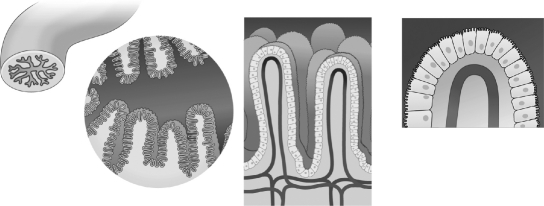

The journey of a potato chip through our digestive tract would be
(Multiple Choice)
4.8/5  (76)
(76) Which of the following is not one of the three elements that provide the framework for the complex organic compounds that characterize life?
(Multiple Choice)
4.9/5 (73)
(73) Not all parts of the food that humans ingest is used by our bodies. Fiber, consisting mostly of cellulose, for instance, is excreted without providing nutrition. Which of the following statements explains why fiber is not used as a nutrient in humans?
(Multiple Choice)
4.9/5 (83)
(83) Seasonal affective disorder (SAD)is caused by both neurological and dietary components.
(True/False)
4.9/5 (85)
(85) In mammals, the mechanical breakdown of food involves teeth. In worms, the mechanical breakdown is accomplished by a ____________________.
(Short Answer)
4.9/5 (86)
(86) Only guinea pigs, bats, the great apes, and humans must get vitamin C from their diets rather than synthesizing it themselves.
(True/False)
4.8/5 (88)
(88) Because vitamins are so important to metabolism, it is important to ingest large amounts of them in the form of vitamin supplements.
(True/False)
4.9/5 (87)
(87) Prior to a sporting event, many competitors will ingest lipids for quick energy sources.
(True/False)
4.9/5 (81)
(81) Because they are not soluble in water, fats are digested in a different way than proteins and carbohydrates.
(True/False)
4.8/5 (77)
(77) The figure below shows four types of nutrients that are absorbable by animal cells.  Which of the above molecules could be absorbed by the digestive tract without further digestion by enzymes?
 (Multiple Choice)
4.8/5 (76)
(76) For most animals, cellulose is a good source of energy and fiber.
(True/False)
4.8/5 (78)
(78) Many ____________________, small inorganic compounds that are needed in trace amounts, are essential to the proper function of proteins.
(Short Answer)
5.0/5 (87)
(87) Chemical digestion occurs inside of the organ indicated by the arrow in the figure below.
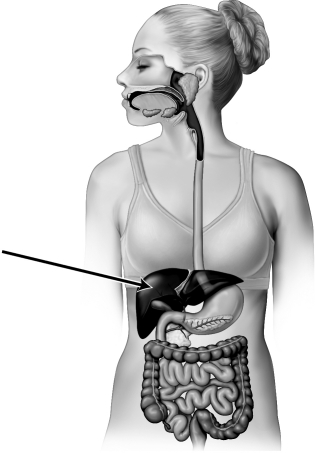
(True/False)
4.8/5 (80)
(80) Which of the following statements about human digestion is true?
(Multiple Choice)
4.8/5 (82)
(82) The nutrients in food enter our body by crossing through the epithelial cells lining the ____________________ intestine.
(Short Answer)
4.7/5 (87)
(87) The major organ that supplies digestive enzymes and bicarbonate to the small intestine is the ____________________.
(Short Answer)
4.9/5 (103)
(103) Food must be broken down chemically before nutrients in it can be absorbed.
(True/False)
4.8/5 (79)
(79) 
Filters
- Essay(0)
- Multiple Choice(0)
- Short Answer(0)
- True False(0)
- Matching(0)