



 Chat with AI
Exam 7: Cell Membranes, Transport, and Communication

Exam 1: The Nature of Science and the Characteristics of Life82 Questions
Exam 2: Biological Diversity, Bacteria, and Archaea101 Questions
Exam 3: Protista, Plantae, and Fungi83 Questions
Exam 4: Animalia81 Questions
Exam 5: The Chemistry of Life92 Questions
Exam 6: Cell Structure and Internal Compartments87 Questions
Exam 7: Cell Membranes, Transport, and Communication85 Questions
Exam 8: Energy, Metabolism, and Enzymes81 Questions
Exam 9: Photosynthesis and Cellular Respiration84 Questions
Exam 10: Cell Division89 Questions
Exam 11: Stem Cells, Cancer, and Human Health93 Questions
Exam 12: Patterns of Inheritance75 Questions
Exam 13: Chromosomes and Human Genetics75 Questions
Exam 14: Dna and Genes105 Questions
Exam 15: From Gene to Protein80 Questions
Exam 16: Dna Technology80 Questions
Exam 17: How Evolution Works80 Questions
Exam 18: Evolution of Populations80 Questions
Exam 19: Speciation and the Origins of Biological Diversity80 Questions
Exam 20: The Evolutionary History of Life100 Questions
Exam 21: The Biosphere89 Questions
Exam 22: Growth of Populations69 Questions
Exam 23: Ecological Communities133 Questions
Exam 24: Ecosystems75 Questions
Exam 25: Global Change70 Questions
Exam 26: Internal Organization and Homeostasis79 Questions
Exam 27: Nutrition and Digestion80 Questions
Exam 28: Circulation and Gas Exchange77 Questions
Exam 29: Animal Hormones78 Questions
Exam 30: Nervous and Sensory Systems78 Questions
Exam 31: Skeletons, Muscles, and Movement78 Questions
Exam 32: Defenses Against Disease78 Questions
Exam 33: Reproduction and Development76 Questions
Exam 34: Animal Behavior76 Questions
Exam 35: Plant Structure, Nutrition, and Transport80 Questions
Exam 36: Plant Growth and Reproduction80 Questions
Select questions type


Multicellular organisms have various specialized cells because
(Multiple Choice)
4.8/5  (89)
(89) After entering its target cell, a hydrophobic hormone binds to its intracellular receptor and interacts with the cell's DNA, resulting in the production of a specific ____________________.
(Short Answer)
5.0/5 (82)
(82) Imagine a cell needing an essential specific amino acid (one the cell cannot synthesize). What process could acquire the amino acid most quickly?
(Multiple Choice)
4.8/5 (78)
(78) A cell that is gaining water from its surroundings is in a(n)
(Multiple Choice)
4.9/5 (72)
(72) Ingested protein is always degraded to amino acids before absorption in the mature human small intestine, but nursing infants can absorb intact antibodies (large protein molecules)from breast milk. How might this difference in intestinal function be explained?
(Multiple Choice)
4.7/5 (73)
(73) Which statement best describes the equilibrium condition shown in the illustration below? 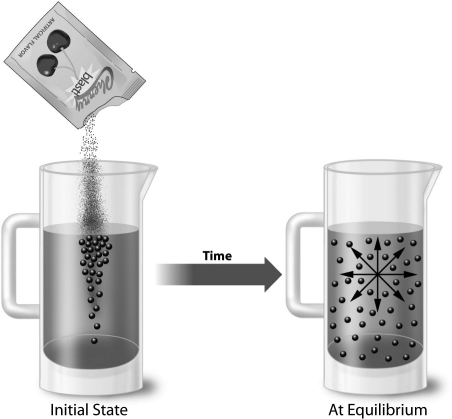
(Multiple Choice)
4.9/5 (83)
(83) Which of the following would supply energy directly to an active carrier protein?
(Multiple Choice)
4.9/5 (74)
(74) Epithelial tissue in animals provides a barrier against the invasion of bacteria into the body. Which of the following is most likely responsible for creating a tight enough barrier to prevent the passage of bacteria?
(Multiple Choice)
4.7/5 (87)
(87) The viscous coating found around most animal cells is called the extracellular ____________________.
(Short Answer)
4.9/5 (76)
(76) The concentration of solutes is higher within the mitochondria than it is in the cytosol. The cytosol is ____________________ [hypertonic, hypotonic, or isotonic] to the inside of the mitochondrion.
(Short Answer)
4.9/5 (65)
(65) When placed in a 2 percent sucrose solution, red blood cells crenate (lose volume); relative to the red blood cell cytoplasm a 2 percent solute must be
(Multiple Choice)
4.8/5 (68)
(68) The fragrance of bread baking in a kitchen spreads to other rooms by
(Multiple Choice)
4.9/5 (88)
(88) 
Filters
- Essay(0)
- Multiple Choice(0)
- Short Answer(0)
- True False(0)
- Matching(0)