



 Chat with AI
Exam 12: Nutrition From 1 to 100

Exam 1: Nutrition: Everyday Choices83 Questions
Exam 2: Guidelines for a Healthy Diet89 Questions
Exam 3: Digestion: From Meals to Molecules79 Questions
Exam 4: Carbohydrates: Sugars, Starches, and Fibers80 Questions
Exam 5: Lipids: Fats, Phospholipids, and Sterols124 Questions
Exam 6: Proteins and Amino Acids81 Questions
Exam 7: Vitamins98 Questions
Exam 8: Water and Minerals95 Questions
Exam 9: Energy Balance and Weight Management81 Questions
Exam 10: Nutrition, Fitness, and Physical Activity84 Questions
Exam 11: Nutrition During Pregnancy and Infancy93 Questions
Exam 12: Nutrition From 1 to 10070 Questions
Exam 13: How Safe Is Our Food Supply85 Questions
Exam 14: Feeding the World61 Questions
Select questions type


Being obese as a child increases the child's risk for type 2 diabetes.
(True/False)
4.9/5  (82)
(82) Binge drinking is defined as _____ or more drinks at one time for men and _____ or more drinks at one time for women.
(Multiple Choice)
4.9/5 (75)
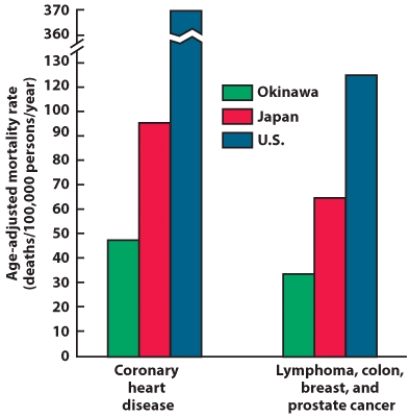
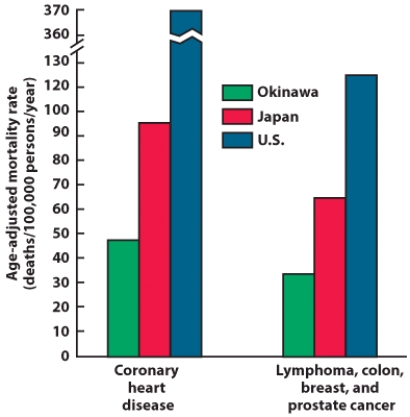
(75) Use the graph to compare the incidence of heart disease in Okinawa with that in Japan and the U.S.
(Not Answered)
This question doesn't have any answer yet
When short-term alcohol intake exceeds the body's ability to break it down, the excess accumulates in the bloodstream and impairs a person's abilities. Of the following, which is the correct sequence of impairments that occur?
(Multiple Choice)
4.8/5 (86)
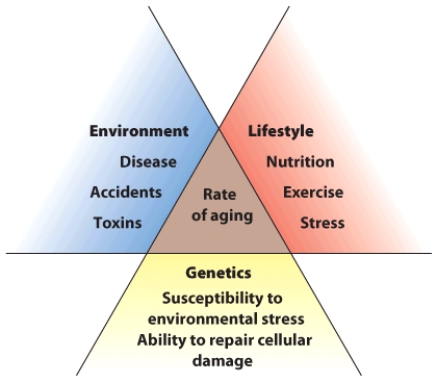
(86) Explain how the environment, lifestyle, and genetics influence one's rate of aging.
(Not Answered)
This question doesn't have any answer yet
Which of the following would be the healthiest alternative to French fries if you were eating at a fast-food restaurant?
(Multiple Choice)
4.9/5 (63)
(63) Peak blood alcohol concentrations occur about _____ minutes after ingestion.
(Multiple Choice)
4.9/5 (77)
(77) Which is NOT a lunch standard of the Healthy Hunger-Free Kids Act of 2010?
(Multiple Choice)
4.9/5 (83)
(83) ______ is used to determine overweight and obesity in children.
(Multiple Choice)
4.9/5 (76)
(76) In the US, the average life expectancy is 78 years and healthy life expectancy is 70 years. What does this mean?
(Multiple Choice)
4.9/5 (81)
(81) Which of the following does not affect nutritional status in older adults?
(Multiple Choice)
5.0/5 (82)
(82) A disease that results in a relentless and irreversible loss of mental function is
(Multiple Choice)
4.9/5 (77)
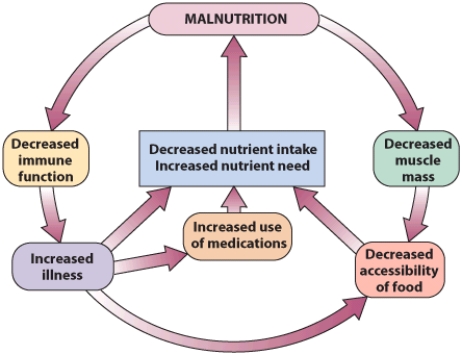
(77) Explain the Malnutrition Cycle.
(Not Answered)
This question doesn't have any answer yet
As people age, they tend to lose lean body mass, owing to the decrease in BMR typically seen with aging.
(True/False)
4.8/5 (73)
(73) The best way to determine if a child is receiving adequate nutrition is to observe their growth pattern.
(True/False)
4.9/5 (88)
(88) The recommended amount of calcium intake increases from 800 milligrams per day for children to 1300 milligrams per day during adolescence, yet intake is typically much lower than recommended in both sexes. What is the most immediate health-related concern of low calcium intake during adolescence? What is the greatest contributor to low calcium intake in this age group?
(Essay)
5.0/5 (77)
(77) Which of the following is the only dietary intervention that has been shown to slow aging and extend life?
(Multiple Choice)
4.8/5 (69)
(69) Shad is a 16 year old high school student. Shad loves to eat pizza and is trying to convince his mom that eating a piece of left-over cheese pizza from last night's dinner for breakfast this morning is a healthy food choice for breakfast. What might Shad tell his mom to sway her thoughts about this practice?
(Essay)
4.8/5 (85)
(85) The older adult years are often associated with increased physical frailty, dementia, and food insecurity. Define each of these terms and discuss how each could contribute to increased nutritional risk.
(Essay)
4.8/5 (84)
(84) 
Filters
- Essay(0)
- Multiple Choice(0)
- Short Answer(0)
- True False(0)
- Matching(0)