



 Chat with AI
Exam 4: Molecular Interactions: Holding It All Together

Exam 18: Chemical Analysis: Characterizing Chemical Compounds26 Questions
Exam 17: Acids, Bases, and Buffer Solutions: Life in an Aqueous Environment21 Questions
Exam 16: Kinetics: What Affects the Speed of a Reaction20 Questions
Exam 15: Equilibria: How Far Do Reactions Go17 Questions
Exam 14: Energy: What Makes Reactions Go22 Questions
Exam 13: Reaction Mechanisms: The Chemical Changes That Drive the Chemistry of Life26 Questions
Exam 12: Chemical Reactions, Oxidation, and Reduction: Bringing Molecules to Life18 Questions
Exam 11: Metals in Biology: Life Beyond Carbon8 Questions
Exam 10: Biological Macromolecules: The Infrastructure of Life27 Questions
Exam 9: Isomerism: Generating Chemical Variety20 Questions
Exam 8: Molecular Shape and Structure: Life in Three Dimensions21 Questions
Exam 7: Functional Groups: Adding Function to the Framework of Life32 Questions
Exam 6: Hydrocarbons: The Framework of Life16 Questions
Exam 5: Moles, Concentrations, and Dilutions: Making Sense of Chemical Numbers22 Questions
Exam 4: Molecular Interactions: Holding It All Together15 Questions
Exam 3: Compounds and Chemical Bonding: Bringing Atoms Together21 Questions
Exam 2: Atoms: The Foundations of Life15 Questions
Exam 1: Introduction: Why Biologists Need Chemistry9 Questions
Select questions type


Which of the following statements about hydrogen bonds are true? Select all that apply.

Free
(Multiple Choice)
4.8/5  (77)
(77) Correct Answer: Verified
A,C,E
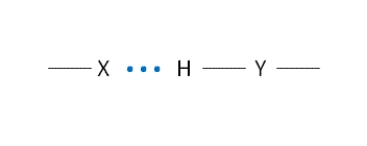
Look at this figure of a hydrogen bond. Which entity - X or Y - is acting as the hydrogen bond donor?
Free
(Multiple Choice)
5.0/5 (73)
(73) Correct Answer:Verified
VerifiedB
Which of the following statements about dispersion forces are true? Select all that apply.
Free
(Multiple Choice)
4.8/5 (90)
(90) Correct Answer:Verified
VerifiedA,B,C,E
Non-covalent interactions are more sensitive to an increase in temperature than covalent interactions.
(True/False)
4.8/5 (87)
(87) Which of the following statements about polar molecules are true? Select all that apply.
(Multiple Choice)
4.8/5 (61)
(61) Which of the following is the name given to the molecular force that operates between oppositely-charged amino acid side chains in a protein?
(Multiple Choice)
4.9/5 (75)
(75) Which three of the following elements is H most likely to be attached to for it to participate in a hydrogen bond? Select the three that apply.
(Multiple Choice)
4.8/5 (76)
(76) Hydrogen bonds are an example of which of the following types of molecular interaction?
(Multiple Choice)
4.8/5 (72)
(72) Which of the following molecules are polar? Select all that apply.
(Multiple Choice)
4.8/5 (74)
(74) Which of the following statements about non-covalent interactions are false? Select all that apply.
(Multiple Choice)
4.8/5 (77)
(77) Rank the following physical phases in order of the extent of the non-covalent forces they feature, with 1 being the greatest and 3 being the lowest.
(Short Answer)
4.9/5 (90)
(90) Match the following descriptions with the names of the physical processes they represent.
-The transition from solid to gas
(Multiple Choice)
4.9/5 (97)
(97) Which of the following are characteristic of non-polar molecules? Select all that apply.
(Multiple Choice)
4.9/5 (61)
(61) Match the following descriptions with the names of the physical processes they represent.
-The transition from solid to liquid
(Multiple Choice)
5.0/5 (74)
(74) Which of the following does not contribute to the van der Waals interaction?
(Multiple Choice)
4.9/5 (84)
(84) 
Filters
- Essay(0)
- Multiple Choice(0)
- Short Answer(0)
- True False(0)
- Matching(0)