



 Chat with AI
Exam 13: Reaction Mechanisms: The Chemical Changes That Drive the Chemistry of Life

Exam 18: Chemical Analysis: Characterizing Chemical Compounds26 Questions
Exam 17: Acids, Bases, and Buffer Solutions: Life in an Aqueous Environment21 Questions
Exam 16: Kinetics: What Affects the Speed of a Reaction20 Questions
Exam 15: Equilibria: How Far Do Reactions Go17 Questions
Exam 14: Energy: What Makes Reactions Go22 Questions
Exam 13: Reaction Mechanisms: The Chemical Changes That Drive the Chemistry of Life26 Questions
Exam 12: Chemical Reactions, Oxidation, and Reduction: Bringing Molecules to Life18 Questions
Exam 11: Metals in Biology: Life Beyond Carbon8 Questions
Exam 10: Biological Macromolecules: The Infrastructure of Life27 Questions
Exam 9: Isomerism: Generating Chemical Variety20 Questions
Exam 8: Molecular Shape and Structure: Life in Three Dimensions21 Questions
Exam 7: Functional Groups: Adding Function to the Framework of Life32 Questions
Exam 6: Hydrocarbons: The Framework of Life16 Questions
Exam 5: Moles, Concentrations, and Dilutions: Making Sense of Chemical Numbers22 Questions
Exam 4: Molecular Interactions: Holding It All Together15 Questions
Exam 3: Compounds and Chemical Bonding: Bringing Atoms Together21 Questions
Exam 2: Atoms: The Foundations of Life15 Questions
Exam 1: Introduction: Why Biologists Need Chemistry9 Questions
Select questions type


Match the correct words with the numbered gaps in the following relationship:
 -The combination of all the components of two reactants
Free
(Multiple Choice)
4.9/5  (81)
(81) Correct Answer: Verified
D
A(n) _________ can undergo nucleophilic attack on the carbonyl group of an aldehyde to form a hemiacetal.
Free
(Short Answer)
4.9/5 (86)
(86) Correct Answer:Verified
Verifiedalcohol
Match the correct words with the numbered gaps in the following relationship:
-The addition of the components of a water molecule across a double bond
-The addition of the components of a water molecule across a double bondFree
(Multiple Choice)
4.9/5 (75)
(75) Correct Answer:Verified
VerifiedB
A two-step reaction has associated with it how many transition states?
(Multiple Choice)
4.9/5 (82)
(82) The hydrolysis of which bond in ATP yields energy to drive biochemical reactions in the cell?
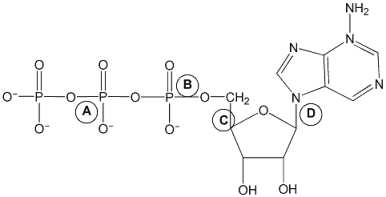
(Multiple Choice)
4.7/5 (83)
(83) Match the correct labels to the positions A-F in this energy diagram:
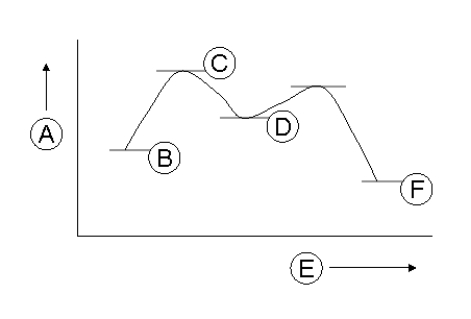 -Energy
 (Multiple Choice)
4.9/5 (88)
(88) The reaction scheme shown here represents which one of the following reaction types?
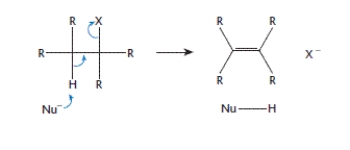
(Multiple Choice)
4.9/5 (75)
(75) Hydrolysis reverses which of the following types of reaction?
(Multiple Choice)
4.9/5 (74)
(74) Match the following abbreviations with their correct descriptions.
-E2
(Multiple Choice)
5.0/5 (77)
(77) Match the correct labels to the positions A-F in this energy diagram:
-Transition state
-Transition state (Multiple Choice)
4.8/5 (75)
(75) Match the following abbreviations with their correct descriptions.
-SN2
(Multiple Choice)
4.9/5 (67)
(67) Condensation is the combination of which two of the following types of reaction?
(Multiple Choice)
4.8/5 (78)
(78) Match the correct labels to the positions A-F in this energy diagram:
-Intermediate
-Intermediate (Multiple Choice)
5.0/5 (82)
(82) Match the following abbreviations with their correct descriptions.
-SN1
(Multiple Choice)
4.8/5 (85)
(85) Match the correct labels to the positions A-F in this energy diagram:
-Products
-Products (Multiple Choice)
4.8/5 (88)
(88) Which of the following schemes correctly depicts what is happening during nucleophilic attack on a carbonyl group?
(Multiple Choice)
4.8/5 (87)
(87) The following reaction mechanism is a type of which one of the following?

(Multiple Choice)
4.8/5 (81)
(81) The reaction scheme shown here represents which one of the following reaction types?

(Multiple Choice)
4.9/5 (73)
(73) Match the correct labels to the positions A-F in this energy diagram:
-Reactants
-Reactants (Multiple Choice)
5.0/5 (93)
(93) Match the correct labels to the positions A-F in this energy diagram:
-Progress of reaction
-Progress of reaction (Multiple Choice)
4.8/5 (87)
(87) 
Filters
- Essay(0)
- Multiple Choice(0)
- Short Answer(0)
- True False(0)
- Matching(0)