



 Chat with AI
Exam 11: Cardiovascular Clinical Assessment and Diagnostic Procedures

Exam 1: Caring for the Critically Ill Patient14 Questions
Exam 2: Ethical and Legal Issues16 Questions
Exam 3: Patient and Family Education24 Questions
Exam 4: Psychosocial and Spiritual Alterations and Management25 Questions
Exam 5: Sleep Alterations23 Questions
Exam 6: Nutritional Alterations30 Questions
Exam 7: Gerontological Alterations12 Questions
Exam 8: Pain and Pain Management14 Questions
Exam 9: Sedation, Agitation and Delirium Management20 Questions
Exam 10: End of Life Care20 Questions
Exam 11: Cardiovascular Clinical Assessment and Diagnostic Procedures88 Questions
Exam 12: Cardiovascular Disorders30 Questions
Exam 13: Cardiovascular Therapeutic Management30 Questions
Exam 14: Pulmonary Clinical Assessment and Diagnostic Procedures46 Questions
Exam 15: Pulmonary Disorders24 Questions
Exam 16: Pulmonary Therapeutic Management30 Questions
Exam 17: Neurologic Clinical Assessment and Diagnostic Procedures43 Questions
Exam 18: Neurologic Disorders and Therapeutic Management44 Questions
Exam 19: Kidney Clinical Assessment and Diagnostic Procedures19 Questions
Exam 20: Kidney Disorders and Therapeutic Management28 Questions
Exam 21: Gastrointestinal Clinical Assessment and Diagnostic Procedures21 Questions
Exam 22: Gastrointestinal Disorders and Therapeutic Management21 Questions
Exam 23: Endocrine Clinical Assessment and Diagnostic Procedures16 Questions
Exam 24: Endocrine Disorders and Therapeutic Management49 Questions
Exam 25: Trauma26 Questions
Exam 26: Shock, Sepsis, and Multiple Organ Dysfunction Syndrome28 Questions
Exam 27: Hematologic Disorders and Oncologic Emergencies20 Questions
Select questions type


The major key to the clinical significance of atrial flutter is the
(Multiple Choice)
4.9/5  (70)
(70) A patient presents with atrial flutter with an atrial rate of 280 beats/min and a ventricular rate of 70 beats/min.Which of the following best explains this discrepancy in rates?
(Multiple Choice)
4.9/5 (73)
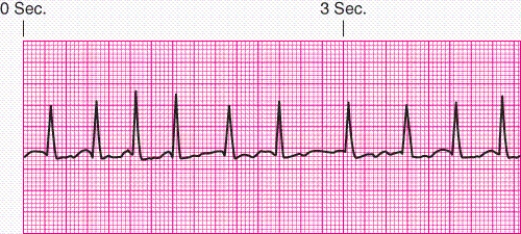
(73) 
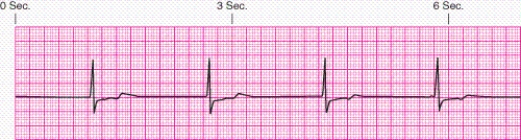
Which of the following conditions can cause an artificial increase in the PAOP/PCWP?
(Multiple Choice)
4.8/5 (76)
(76) The presence of a carotid or femoral bruit may be evidence of
(Multiple Choice)
4.8/5 (93)
(93) A new-onset MI can be recognized by which of the following ECG changes?
(Multiple Choice)
4.9/5 (71)
(71) Which of the following expresses the correct order when working with an invasive pressure monitor?
(Multiple Choice)
4.8/5 (72)
(72) The blood test used to standardize PT results among clinical laboratories worldwide is known as
(Multiple Choice)
4.9/5 (71)
(71) A patient with heart failure may be at risk for hypomagnesemia as a result of
(Multiple Choice)
4.9/5 (76)
(76) After an MI, a patient presents with an increasing frequency of PVCs.The patient's heart rate is 110 beats/min, and ECG indicates a sinus rhythm with up to five unifocal PVCs per minute.Which of the following should be done? The patient is alert and responsive and denies any chest pain or dyspnea.
(Multiple Choice)
5.0/5 (86)
(86) A patient's arterial line waveform has become damped.The nurse should
(Multiple Choice)
4.7/5 (76)
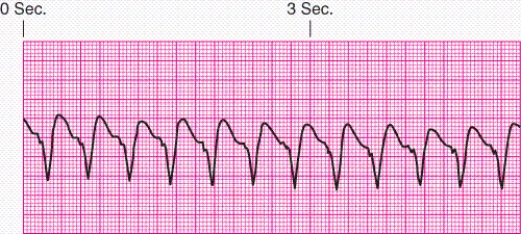
(76) 
During a history examination, a patient tells the nurse, "The cardiologist says I have a leaking valve." The nurse documents that the patient has a history of
(Multiple Choice)
4.8/5 (63)
(63) New-onset atrial fibrillation can be serious for which of the following reasons?
(Multiple Choice)
4.8/5 (82)
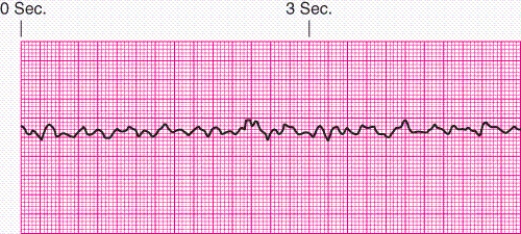
(82) 
A sudden increase in left atrial pressure, acute pulmonary edema, and low cardiac output, caused by the ventricle contracting during systole, are all characteristics of
(Multiple Choice)
4.9/5 (80)
(80) 
Filters
- Essay(0)
- Multiple Choice(0)
- Short Answer(0)
- True False(0)
- Matching(0)