



 Chat with AI
Exam 12: Principles of Social Evolution

Exam 1: An Introduction to Animal Behavior22 Questions
Exam 2: The Integrative Study of Behavior17 Questions
Exam 3: The Developmental and Molecular Bases of Behavior15 Questions
Exam 4: The Neural Basis of Behavior22 Questions
Exam 5: The Physiological and Endocrine Basis of Behavior22 Questions
Exam 6: Avoiding Predators and Finding Food25 Questions
Exam 7: Territoriality and Movement21 Questions
Exam 8: Principles of Communication22 Questions
Exam 9: Reproductive Behavior24 Questions
Exam 10: Mating Systems26 Questions
Exam 11: Parental Care22 Questions
Exam 12: Principles of Social Evolution20 Questions
Exam 13: Social Behavior and Sociality23 Questions
Exam 14: Human Behavior18 Questions
Select questions type


In a group of meerkats, a male gives a number of alarm calls that in total save the lives of two sisters as well as three offspring of another sibling. But by giving these alarm calls, the male is exposed to risk of attack from predators and eventually is killed by a hawk. As a result of a shortened life, he does not produce three surviving offspring that he otherwise would have had. According to Hamilton's rule, is this alarm-calling behavior adaptive?

Free
(Multiple Choice)
4.8/5  (75)
(75) Correct Answer: Verified
A
One of the main benefits ascribed to using inclusive fitness theory to explain the evolution of complex social behavior is that it
Free
(Multiple Choice)
4.8/5 (77)
(77) Correct Answer:Verified
VerifiedC
Refer to the figure.
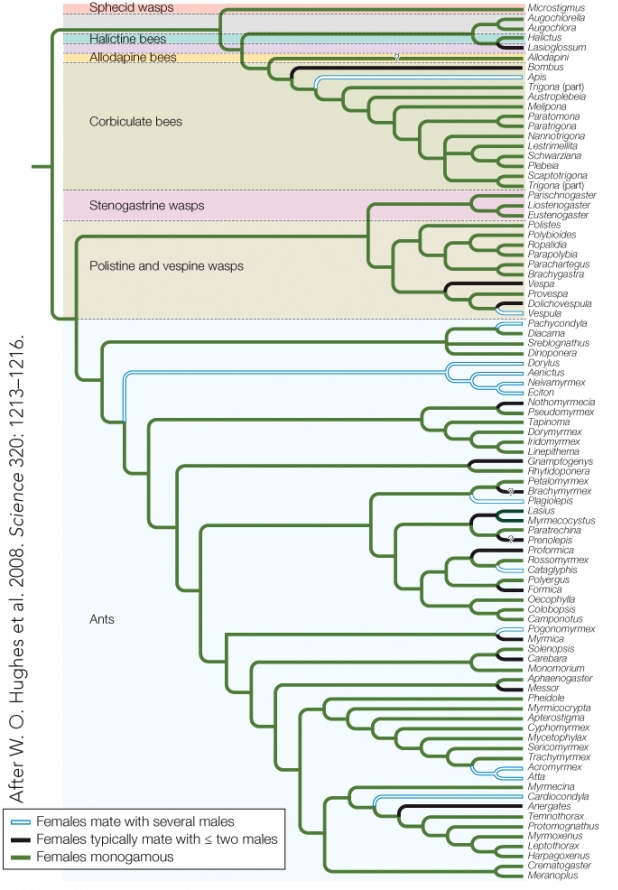 What hypothesis do these results support?
Free
(Multiple Choice)
4.7/5 (98)
(98) Correct Answer:Verified
VerifiedA
In a group of meerkats, a male gives a number of alarm calls that in total save the lives of two sisters as well as three offspring of another sibling. But by giving these alarm calls, the male is exposed to risk of attack from predators and eventually is killed by a hawk. As a result of a shortened life, he does not produce three surviving offspring that he otherwise would have had. What was the direct fitness cost to the male for his alarm-calling altruism?
(Multiple Choice)
4.9/5 (82)
(82) Professor Reynolds claims that when male emperor penguins stand in the Antarctic winter, each with an egg cradled between his feet and his belly, the males' parental behavior is "altruistic." Reynolds is _______ because _______.
(Multiple Choice)
4.8/5 (76)
(76) Bob gives up a chance to marry and have a family in order to go to work in a distant country. Had he married, he would have had two surviving offspring. He sends money back to his sister, who as a result produces five surviving offspring instead of the two she would have had without Bob's assistance. What was Bob's benefit to himself in units of indirect fitness (such as children)?
(Multiple Choice)
4.7/5 (79)
(79) 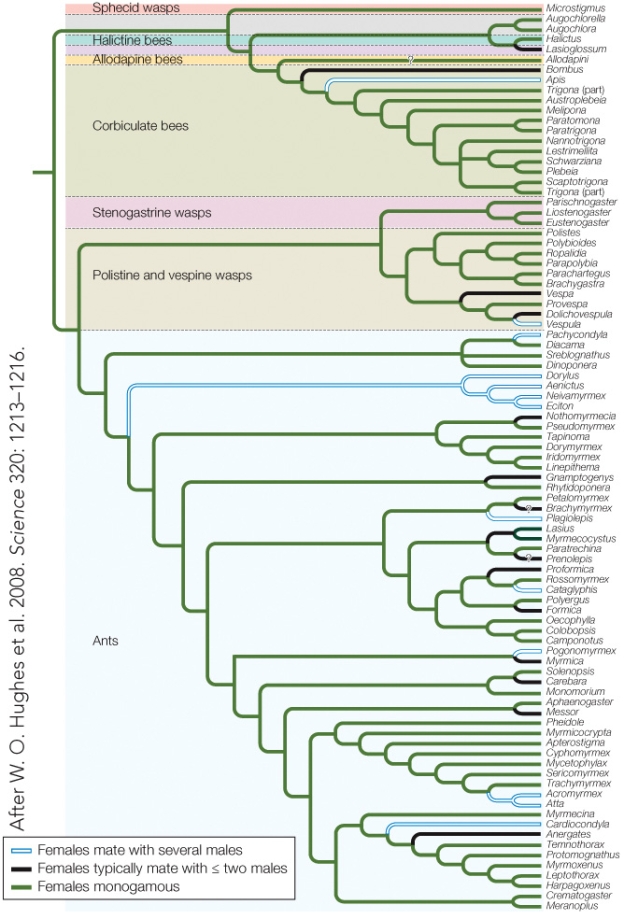 These results indicate that
Compare the monogamy hypothesis and the haplodiploidy hypothesis for the evolution of eusociality. Describe one prediction for each hypothesis.
(Essay)
4.9/5 (81)
(81) In the bees, ants, and wasps (Hymenoptera), female workers are very closely related to their reproducing sisters only if their mother has mated with just one male because
(Multiple Choice)
4.7/5 (68)
(68) The activity of N2RB gene declines in older mice and causes a decline in learning ability. Some have suggested that this is beneficial, because it means older mice cannot forage as efficiently as they once did, which frees up resources for the next generation. How is this hypothesis based on group selection?
(Essay)
4.8/5 (85)
(85) Bob gives up a chance to marry and have a family in order to go to work in a distant country. Had he married, he would have had two surviving offspring. He sends money back to his sister, who as a result produces five surviving offspring instead of the two she would have had without Bob's assistance. What was Bob's cost to himself in units of direct fitness (such as children)?
(Multiple Choice)
4.8/5 (77)
(77) In a group of meerkats, a male gives a number of alarm calls that in total save the lives of two sisters as well as three offspring of another sibling. But by giving these alarm calls, the male is exposed to risk of attack from predators and eventually is killed by a hawk. As a result of a shortened life, he does not produce three surviving offspring that he otherwise would have had. What was the indirect fitness benefit to the male for his alarm-calling altruism?
(Multiple Choice)
4.9/5 (90)
(90) Explain why the coefficient of relatedness is important for biologists studying the evolution of altruism.
(Essay)
4.9/5 (78)
(78) One of the main benefits ascribed to using multilevel selection to explain the evolution of complex social behavior is that it
(Multiple Choice)
4.9/5 (71)
(71) If someone were to say the reason a bee population contains genetic variation is to enable natural selection to select the best hereditary variants, George C. Williams would say that this claim is
(Multiple Choice)
4.8/5 (73)
(73) Starlings sometimes assemble in large flocks that, in the evening, rise up in whirling flight together for 15 or 20 minutes in what looks like some kind of display. V.C. Wynne-Edwards suggested that this behavior is indeed a display that enables individual birds to assess just how many fellow starlings are living in the area so that they can adjust their breeding effort in the upcoming breeding season. In this way, they can avoid producing too many chicks and thereby avoid overpopulating their home range. This a group selectionist hypothesis because
(Multiple Choice)
4.9/5 (87)
(87) Bob gives up a chance to marry and have a family in order to go to work in a distant country. Had he married, he would have had two surviving offspring. He sends money back to his sister, who as a result produces five surviving offspring instead of the two she would have had without Bob's assistance. According to Hamilton's rule, Bob's decision was
(Multiple Choice)
4.8/5 (86)
(86) What is wrong with the following statement: "An adaptation is a trait whose fitness benefits (B) exceed its costs
(C))"
(Multiple Choice)
4.9/5 (79)
(79) 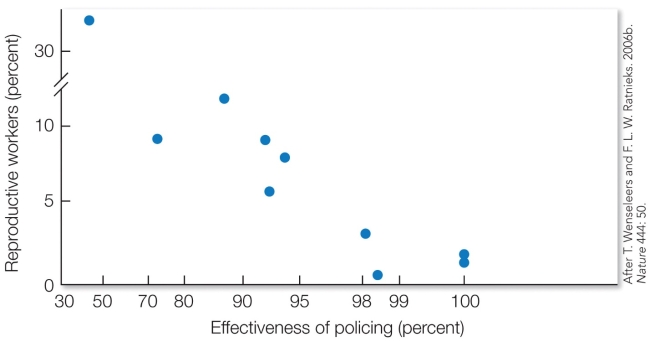 These results demonstrate that
In a group of meerkats, a male gives a number of alarm calls that in total save the lives of two sisters as well as three offspring of another sibling. But by giving these alarm calls, the male is exposed to risk of attack from predators and eventually is killed by a hawk. As a result of a shortened life, he does not produce three surviving offspring that he otherwise would have had. What was the inclusive fitness of this individual?
(Multiple Choice)
4.8/5 (85)
(85) 
Filters
- Essay(0)
- Multiple Choice(0)
- Short Answer(0)
- True False(0)
- Matching(0)