



 Chat with AI
Exam 15: Air Pollution, Climate Change and Ozone Depletion

Exam 1: The Environment and Sustainability91 Questions
Exam 2: Science, Matter, Energy and Systems89 Questions
Exam 3: Ecosystems: What Are They and How Do They Work100 Questions
Exam 4: Biodiversity and Evolution93 Questions
Exam 5: Species Interactions, Ecological Succession and Population Control93 Questions
Exam 6: The Human Population and Urbanization99 Questions
Exam 7: Climate and Biodiversity97 Questions
Exam 8: Sustaining Biodiversity: Saving Species100 Questions
Exam 9: Sustaining Biodiversity: Saving Ecosystems100 Questions
Exam 10: Food Production and the Environment100 Questions
Exam 11: Water Resources and Water Pollution100 Questions
Exam 12: Geology and Nonrenewable Mineral Resources92 Questions
Exam 13: Energy Resources100 Questions
Exam 14: Environmental Hazards and Human Health100 Questions
Exam 15: Air Pollution, Climate Change and Ozone Depletion100 Questions
Exam 16: Solid and Hazardous Waste100 Questions
Exam 17: Environmental Economics, Politics and Worldviews101 Questions
Select questions type


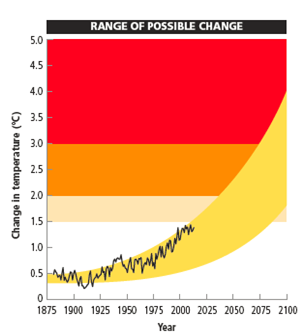 Figure 15.C from the previous edition test bank
According to the accompanying figure, how much did the average surface temperature of the earth change from 1950 to 2004?
Figure 15.C from the previous edition test bank
According to the accompanying figure, how much did the average surface temperature of the earth change from 1950 to 2004? (Short Answer)
4.8/5  (69)
(69) Life as we know it could not exist without the protective layer of ____________________ in the stratosphere.
(Short Answer)
4.9/5 (68)
(68) The emission of ____________________ from certain trees and plants in urban areas can promote the formation of photochemical smog.
(Short Answer)
4.8/5 (75)
(75) The formation of photochemical smog forms as a reaction between VOCs, NOx, heat, and ____.
(Multiple Choice)
4.8/5 (88)
(88) _____________________ is a source of methane that if melted, would accelerate the projected atmospheric warming by creating a positive feedback loop.
(Short Answer)
4.9/5 (89)
(89) An emissions trading policy on the emissions of ____ cut U.S. emissions by 76%.
(Multiple Choice)
4.8/5 (73)
(73) What is the gas that makes up most of the air that we breathe?
(Multiple Choice)
4.7/5 (71)
(71) In 2016, China's per capita carbon dioxide emissions rate was greater than that of the United States.
(True/False)
4.8/5 (76)
(76) Why do coal-burning power plants and oil refineries have tall smokestacks?
(Multiple Choice)
4.9/5 (74)
(74) What is a major problem with carbon capture and storage strategies?
(Multiple Choice)
4.9/5 (77)
(77) Most experts call for a combination of mitigation and ____________________ approaches to help deal with the projected harmful effects of global climate change.
(Short Answer)
4.9/5 (88)
(88) The increased use of ____________________ automobiles could help reduce our carbon footprint.
(Short Answer)
4.7/5 (75)
(75) Explain how we can prevent and reduce the emission of greenhouse gases.
(Essay)
4.9/5 (72)
(72) 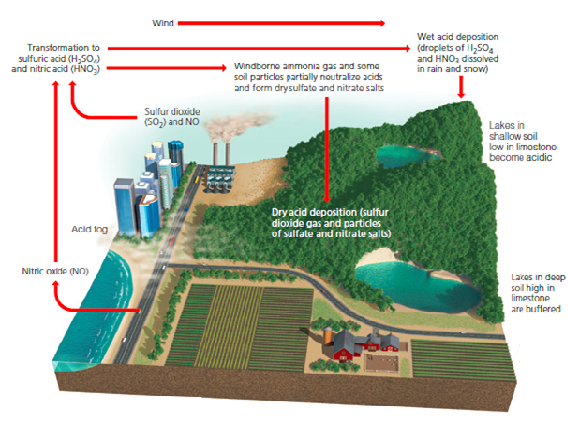 Figure 15.6
Based on the accompanying figure, which lakes will be mostly affected by acid rain?
Figure 15.6
Based on the accompanying figure, which lakes will be mostly affected by acid rain? (Essay)
4.9/5 (92)
(92) The ____ for any given place on the planet often fluctuates widely from day to day and from year to year.
(Multiple Choice)
4.7/5 (90)
(90) Which of the following is/are primary pollutants that eventually result in acid deposition?
(Multiple Choice)
4.8/5 (78)
(78) 
Filters
- Essay(0)
- Multiple Choice(0)
- Short Answer(0)
- True False(0)
- Matching(0)