



 Chat with AI
Exam 24: Health Care

Exam 1: Limits, Alternatives, and Choices107 Questions
Exam 2: The Market System and the Circular Flow287 Questions
Exam 3: Demand, Supply, and Market Equilibrium151 Questions
Exam 4: Market Failures Caused by Externalities Asymmetric Information229 Questions
Exam 5: Public Goods, Public Choice, and Government Failure268 Questions
Exam 6: Elasticity399 Questions
Exam 7: Utility Maximization358 Questions
Exam 8: Behavioral Economics311 Questions
Exam 9: Businesses and the Costs of Production445 Questions
Exam 10: Pure Competition in the Short Run342 Questions
Exam 11: Pure Competition in the Long Run250 Questions
Exam 12: Pure Monopoly407 Questions
Exam 13: Monopolistic Competition279 Questions
Exam 14: Oligopoly and Strategic Behavior362 Questions
Exam 15: Technology, RD, and Efficiency309 Questions
Exam 16: The Demand for Resources359 Questions
Exam 17: Wage Determination168 Questions
Exam 18: Rent, Interest, and Profit305 Questions
Exam 19: Natural Resource and Energy Economics337 Questions
Exam 20: Public Finance: Expenditures and Taxes336 Questions
Exam 21: Antitrust Policy and Regulation264 Questions
Exam 22: Agriculture: Economics and Policy265 Questions
Exam 23: Income Inequality, Poverty, and Discrimination324 Questions
Exam 24: Health Care280 Questions
Exam 25: Immigration259 Questions
Exam 26: International Trade347 Questions
Exam 27: The Balance of Payments, Exchange Rates, and Trade Deficits318 Questions
Exam 28: The Economics of Developing Countries277 Questions
Select questions type


The health care industry includes the manufacture and sale of low-fat food.
(True/False)
4.8/5  (75)
(75) One of the taxes included in the Patient Protection and Affordable Care Act (PPACA)to generate revenue is a tax on junk food.
(True/False)
4.7/5 (77)
(77) The moral hazard problem created by health insurance induces consumers to underconsume health care.
(True/False)
4.9/5 (77)
(77) One of the peculiarities of the U.S. market for health care is
(Multiple Choice)
4.9/5 (84)
(84) Most economists who have studied the health care industry have concluded that there is
(Multiple Choice)
4.9/5 (82)
(82) The recently enacted health care reform package (the Patient Protection and Affordable Care Act)focuses solely on controlling health care costs.
(True/False)
4.9/5 (91)
(91) Which of the following provisions of the PPACA do proponents expect to reduce the growth of health care spending?
(Multiple Choice)
4.8/5 (72)
(72) The demand for health care in industrially advanced economies is
(Multiple Choice)
4.9/5 (87)
(87) The provision of health insurance leads to a deadweight loss due to an overallocation of resources to health care.
(True/False)
4.9/5 (82)
(82) 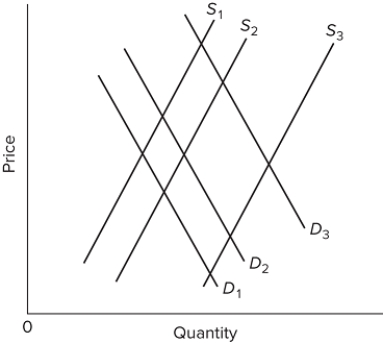 Refer to the diagram, which shows the market for U.S. health care. Other things equal, which of the following would shift the demand curve for medical care from D₂ to D₁?
 (Multiple Choice)
4.7/5 (98)
(98) Singapore's health care system includes the following major elements, except
(Multiple Choice)
5.0/5 (78)
(78) The moral hazard problem created when consumers acquire health insurance leads them to
(Multiple Choice)
4.9/5 (70)
(70) The Patient Protection and Affordable Care Act (PPACA)sets up so-called insurance exchanges where consumers can compare various insurance policies that meet certain government-set standards.
(True/False)
4.9/5 (71)
(71) Suppose you go to a doctor but your health insurance plan does not reimburse you because you have not yet paid enough out of pocket for the year to qualify for insurance benefits. This is an example of
(Multiple Choice)
5.0/5 (76)
(76) If the existence of health insurance increases one's incentive to use the health care system more intensively, this is an illustration of
(Multiple Choice)
5.0/5 (81)
(81) 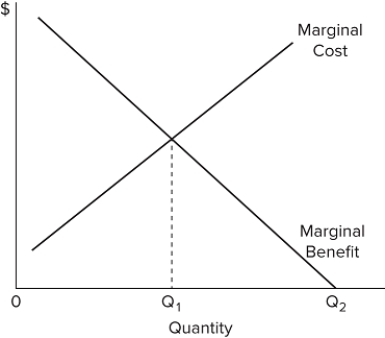 Refer to the diagram. Physicians likely would argue that health care should be provided to patients in
 (Multiple Choice)
4.8/5 (82)
(82) 
Filters
- Essay(0)
- Multiple Choice(0)
- Short Answer(0)
- True False(0)
- Matching(0)