



 Chat with AI
Exam 20: Diagnostic and Therapeutic Modalities

Exam 1: Terminology, Positioning, and Imaging Principles198 Questions
Exam 2: Chest98 Questions
Exam 3: Abdomen90 Questions
Exam 4: Upper Limb107 Questions
Exam 5: Humerus and Shoulder Girdle75 Questions
Exam 6: Lower Limb110 Questions
Exam 7: Femur and Pelvic Girdle80 Questions
Exam 8: Cervical and Thoracic Spine84 Questions
Exam 9: Lumbar Spine, Sacrum, and Coccyx75 Questions
Exam 10: Bony Thorax-Sternum and Ribs66 Questions
Exam 11: Cranium, Facial Bones, and Paranasal Sinuses181 Questions
Exam 12: Biliary Tract and Upper Gastrointestinal System127 Questions
Exam 13: Lower Gastrointestinal System83 Questions
Exam 14: Urinary System and Venipuncture100 Questions
Exam 15: Trauma, Mobile, and Surgical Radiography108 Questions
Exam 16: Pediatric Radiography72 Questions
Exam 17: Angiography and Interventional Procedures72 Questions
Exam 18: Computed Tomography103 Questions
Exam 19: Special Radiographic Procedures69 Questions
Exam 20: Diagnostic and Therapeutic Modalities208 Questions
Select questions type


How much central ray (CR)angulation is required for the mediolateral oblique projection of an average-sized breast?
(Multiple Choice)
4.9/5  (82)
(82) What is the average,mean glandular dose for most analog breast projections?
(Multiple Choice)
4.8/5 (68)
(68) Which patient position is preferred for most mammogram projections?
(Multiple Choice)
4.9/5 (80)
(80) Which of the following radiopharmaceuticals is used for thyroid uptake studies?
(Multiple Choice)
4.8/5 (75)
(75) Transverse or spin-spin relaxation when spins begin to precess out of phase with each other is termed:
(Multiple Choice)
4.8/5 (67)
(67) Which projection best demonstrates inflammation or pathology in the deep lateral aspect of the breast?
(Multiple Choice)
4.8/5 (87)
(87) Matching of the frequency of a precessing nucleus with a radio wave frequency is termed:
(Multiple Choice)
4.8/5 (83)
(83) 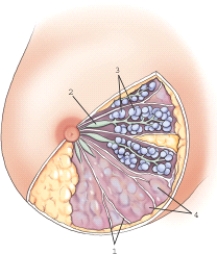
Which other region of the body can be scanned if the patient has spine or hip artifacts (i.e.,advanced arthritis)?
(Multiple Choice)
5.0/5 (72)
(72) One of the most common radioactive materials used in nuclear medicine procedures is:
(Multiple Choice)
4.9/5 (83)
(83) The effective dose from a bone density examination of both spine and hip is typically greater than 10 µSv (microSievert).
(True/False)
4.9/5 (86)
(86) Which member of the nuclear medicine health team performs statistical analysis of examination data?
(Multiple Choice)
4.8/5 (65)
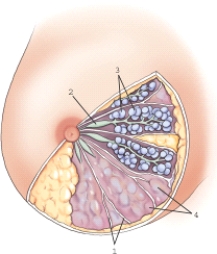
(65) 

Filters
- Essay(0)
- Multiple Choice(0)
- Short Answer(0)
- True False(0)
- Matching(0)