



 Chat with AI
Exam 3: Chemical Bonds

Exam 1: Matter, Energy, and Measurement143 Questions
Exam 2: Atoms134 Questions
Exam 3: Chemical Bonds142 Questions
Exam 4: Chemical Reactions138 Questions
Exam 5: Gases, Liquids, and Solids104 Questions
Exam 6: Solutions and Colloids157 Questions
Exam 7: Reaction Rates and Chemical Equilibrium104 Questions
Exam 8: Acids and Bases198 Questions
Exam 9: Nuclear Chemistry152 Questions
Exam 10: Organic Chemistry71 Questions
Exam 11: Alkanes142 Questions
Exam 12: Alkenes, Alkynes, and Aromatic Compounds184 Questions
Exam 13: Alcohols, Ethers, and Thiols118 Questions
Exam 14: Chirality: the Handedness of Molecules92 Questions
Exam 15: Amines89 Questions
Exam 16: Aldehydes and Ketones102 Questions
Exam 17: Carboxylic Acids115 Questions
Exam 18: Carboxylic Anhydrides, Esters, and Amides117 Questions
Exam 19: Carbohydrates103 Questions
Exam 20: Lipids132 Questions
Exam 21: Proteins128 Questions
Exam 22: Enzymes62 Questions
Exam 23: Chemical Communications: Neurotransmitters and Hormones89 Questions
Exam 24: Nucleotides, Nucleic Acids, and Heredity121 Questions
Exam 25: Gene Expression and Protein Synthesis129 Questions
Exam 26: Bioenergetics: How the Body Converts Food to Energy133 Questions
Exam 27: Specific Catabolic Pathways: Carbohydrate, Lipid, and Protein Metabolism104 Questions
Exam 28: Biosynthetic Pathways67 Questions
Exam 29: Nutrition73 Questions
Exam 30: Immunochemistry132 Questions
Exam 31: Body Fluids72 Questions
Select questions type


What is the correct way to write the formula of the compound formed by a hydrogen ion and a sulfate ion?
(Multiple Choice)
4.8/5  (67)
(67) What is the name of the species formed when a potassium atom loses an electron?
(Multiple Choice)
4.9/5 (71)
(71) The following represents carbonic acid, an important part of the buffer system in blood. 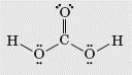 How many total valence electrons were used in constructing this structure?
 (Multiple Choice)
4.8/5 (86)
(86) Which of the following molecules is best described as having a nearly tetrahedral distribution of electron density?
(Multiple Choice)
4.9/5 (83)
(83) Which electronegativity difference is associated with a nonpolar covalent bond?
(Multiple Choice)
4.7/5 (83)
(83) Which of the following molecules has the greatest polarity?
(Multiple Choice)
4.7/5 (78)
(78) The term "limelight" is derived from the old name of calcium oxide. What is the formula of calcium oxide?
(Multiple Choice)
4.7/5 (62)
(62) Which types of elements generally have high electronegativities?
(Multiple Choice)
4.9/5 (87)
(87) Examine the following image representing the structure of a compound. 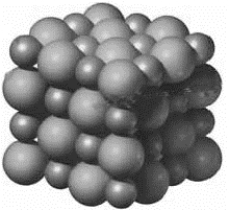 If the larger spheres represent SO42−, then which of the following may the smaller spheres represent?
 (Multiple Choice)
4.7/5 (77)
(77) What is the common name of the compound whose formula is FeCl2?
(Multiple Choice)
4.9/5 (75)
(75) For which types of elements do we sometimes use the "ous/ic" system in naming ions?
(Multiple Choice)
4.7/5 (86)
(86) Examine the following image representing the structure of a compound. 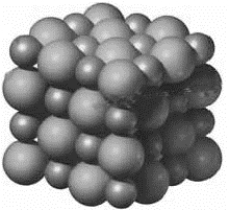 If the smaller spheres represent K+ and the larger spheres represent Cl−, then what is the name of this compound?
 (Multiple Choice)
4.7/5 (61)
(61) Formaldehyde has the chemical formula CH2O. How many electrons must be shown in the Lewis structure of formaldehyde?
(Multiple Choice)
4.8/5 (81)
(81) Which of the following is true in the carbonate ion, CO32−?
(Multiple Choice)
4.8/5 (82)
(82) What is the formula of the compound formed by potassium and chlorine?
(Multiple Choice)
4.9/5 (76)
(76) 
Filters
- Essay(0)
- Multiple Choice(0)
- Short Answer(0)
- True False(0)
- Matching(0)