



 Chat with AI
Exam 8: Polar Coordinates; Vectors

Exam 1: Functions and Their Graphs297 Questions
Exam 2: Linear and Quadratic Functions302 Questions
Exam 3: Polynomial and Rational Functions354 Questions
Exam 4: Exponential and Logarithmic Functions517 Questions
Exam 5: Trigonometric Functions354 Questions
Exam 6: Analytic Trigonometry342 Questions
Exam 7: Applications of Trigonometric Functions105 Questions
Exam 8: Polar Coordinates; Vectors253 Questions
Exam 9: Analytic Geometry200 Questions
Exam 10: Systems of Equations and Inequalities235 Questions
Exam 11: Sequences; Induction; the Binomial Theorem238 Questions
Exam 12: Counting and Probability115 Questions
Exam 13: A Preview of Calculus: the Limit, Derivative, and Integral of a Function145 Questions
Exam 14: Foundations: a Prelude to Functions234 Questions
Exam 15: Graphing Utilities29 Questions
Select questions type


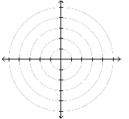
The rectangular coordinates of a point are given. Find polar coordinates for the point.
- Round the polar coordinates to two decimal places, with in degrees.
(Multiple Choice)
5.0/5  (87)
(87) 
Use the figure below. Determine whether the given statement is true or false. 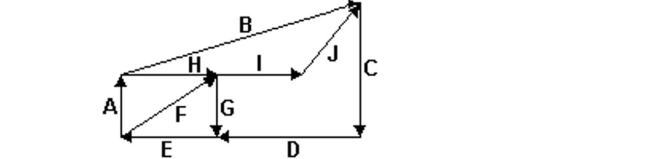 -A + B + C + D + E = 0
 (Multiple Choice)
4.9/5 (89)
(89) Write the word or phrase that best completes each statement or answers the question.
Solve the problem.
-A sail on a sailboat is supported by a mast and a boom. The length and direction of the mast and boom can be
described by the vectors , respectively, where the components are in meters. Find the angle (to the nearest tenth of a degree) between the mast and boom.
(Short Answer)
4.9/5 (77)
(77) Test the equation for symmetry with respect to the given axis, line, or pole.
- the line
(Multiple Choice)
5.0/5 (80)
(80) 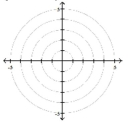
The rectangular coordinates of a point are given. Find polar coordinates for the point.
-
(Multiple Choice)
4.7/5 (79)
(79) Choose the one alternative that best completes the statement or answers the question.
Find the requested vector.
-
Find a vector orthogonal to both and .
(Multiple Choice)
4.8/5 (81)
(81) Find the area of the parallelogram with vertices P1, P2, P3, and P4.
-
(Multiple Choice)
4.9/5 (83)
(83) Solve the problem.
-If and , find all numbers such that the vector represented by has length .
(Multiple Choice)
4.7/5 (81)
(81) 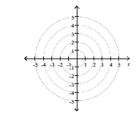
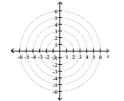
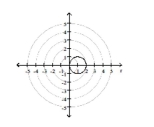
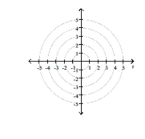
Transform the polar equation to an equation in rectangular coordinates. Then identify and graph the equation.
-
(Multiple Choice)
4.7/5 (77)
(77) 
Choose the one alternative that best completes the statement or answers the question.
-Which of the following vectors is orthogonal to ?
(Multiple Choice)
4.7/5 (94)
(94) 
Filters
- Essay(0)
- Multiple Choice(0)
- Short Answer(0)
- True False(0)
- Matching(0)