



 Chat with AI
Exam 8: Polar Coordinates; Vectors

Exam 1: Functions and Their Graphs297 Questions
Exam 2: Linear and Quadratic Functions302 Questions
Exam 3: Polynomial and Rational Functions354 Questions
Exam 4: Exponential and Logarithmic Functions517 Questions
Exam 5: Trigonometric Functions354 Questions
Exam 6: Analytic Trigonometry342 Questions
Exam 7: Applications of Trigonometric Functions105 Questions
Exam 8: Polar Coordinates; Vectors253 Questions
Exam 9: Analytic Geometry200 Questions
Exam 10: Systems of Equations and Inequalities235 Questions
Exam 11: Sequences; Induction; the Binomial Theorem238 Questions
Exam 12: Counting and Probability115 Questions
Exam 13: A Preview of Calculus: the Limit, Derivative, and Integral of a Function145 Questions
Exam 14: Foundations: a Prelude to Functions234 Questions
Exam 15: Graphing Utilities29 Questions
Select questions type


State whether the vectors are parallel, orthogonal, or neither.
-
(Multiple Choice)
4.8/5  (90)
(90) Find all the complex roots. Leave your answers in polar form with the argument in degrees.
-The complex fifth roots of
(Multiple Choice)
4.7/5 (77)
(77) 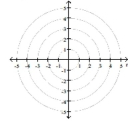
Choose the one alternative that best completes the statement or answers the question.
The polar coordinates of a point are given. Find the rectangular coordinates of the point.
- Round the rectangular coordinates to two decimal places.
(Multiple Choice)
4.9/5 (76)
(76) Describe the set of points (x, y, z) defined by the equation.
-y = 0
(Multiple Choice)
4.9/5 (81)
(81) Choose the one alternative that best completes the statement or answers the question.
Find the direction angles of the vector. Round to the nearest degree, if necessary.
-
(Multiple Choice)
4.9/5 (69)
(69) Solve the problem. Leave your answer in polar form.
- z=10 4+i4 w=5 1+i1
Find .
(Multiple Choice)
4.8/5 (74)
(74) Find the position vector for the vector having initial point P and terminal point Q.
- and
(Multiple Choice)
4.8/5 (79)
(79) Choose the one alternative that best completes the statement or answers the question.
Find the requested vector.
-
Find a vector orthogonal to both and .
(Multiple Choice)
4.8/5 (72)
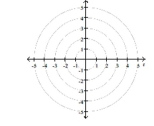
(72) 
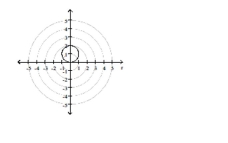
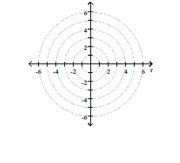
-Two forces, of magnitude 60 newtons ( and of magnitude 70 newtons, act on an object at angles of and (respectively) with the positive -axis. Find the direction and magnitude of the resultant force; that is, find . Round the direction and magnitude to two decimal places.
(Short Answer)
4.8/5 (70)
(70) 
Filters
- Essay(0)
- Multiple Choice(0)
- Short Answer(0)
- True False(0)
- Matching(0)