



 Chat with AI
Exam 12: Derivatives Continued

Exam 1: Algebraic Concepts308 Questions
Exam 2: Linear Equations and Functions243 Questions
Exam 3: Quadratic and Other Special Functions113 Questions
Exam 4: Matrices227 Questions
Exam 5: Inequalities and Linear Programming120 Questions
Exam 6: Exponential and Logarithmic Functions108 Questions
Exam 7: Mathematics of Finance131 Questions
Exam 8: Introduction to Probability178 Questions
Exam 9: Further Topics in Probability; Data Description114 Questions
Exam 10: Derivatives248 Questions
Exam 11: Applications of Derivatives172 Questions
Exam 12: Derivatives Continued139 Questions
Exam 13: Indefinite Integrals120 Questions
Exam 14: Definite Integrals: Techniques of Integration185 Questions
Exam 15: Functions of Two or More Variables119 Questions
Select questions type


Suppose that the demand for a product is given by  . Find the elasticity when
 and
 and also determine how would revenue be affected by a price increase?
. Find the elasticity when and and also determine how would revenue be affected by a price increase? (Multiple Choice)
4.7/5  (88)
(88) Find the relative maxima, and use a graphing utility to check your results. Round your answer to two decimal places. 
(Multiple Choice)
4.9/5 (90)
(90) Suppose the concentration C(t), in mg/ml, of a drug in the bloodstream t minutes after an injection is given by  Find the maximum concentration and when it occurs.
 (Multiple Choice)
4.9/5 (79)
(79) Suppose that a tumor in a person's body has a spherical shape and that treatment is causing the radius of the tumor to decrease at a rate of 9 millimeters per month. At what rate is the surface area of the tumor decreasing when the radius is 2 mm?
(Multiple Choice)
4.8/5 (78)
(78) 
 .
Between the years 1960 and 2002, the percent of women in the work force can be modeled by  , where x is the number of years past 1950 (Source: U.S. Bureau of Labor Statistics). If this model is accurate beyond 2002, at what rate will the percent be changing in 2017?
 (Multiple Choice)
4.9/5 (75)
(75)  .


 , find
 .

p is the price per unit in dollars and q is the number of units. If the daily demand for a product is given by the function  and the daily supply before taxation is
 , find the tax per item that maximizes tax revenue. Round your answer to the nearest cent.
and the daily supply before taxation is , find the tax per item that maximizes tax revenue. Round your answer to the nearest cent. (Multiple Choice)
4.8/5 (74)
(74) p is the price per unit in dollars and q is the number of units. If the demand and supply functions for a product are  , and
 , respectively, how many items will maximize the tax revenue?
, and , respectively, how many items will maximize the tax revenue? (Multiple Choice)
4.7/5 (90)
(90) p is in dollars and q is the number of units. Find the elasticity of the demand function 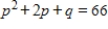 at
 . Round your answer to two decimal places.
at . Round your answer to two decimal places. (Multiple Choice)
4.9/5 (76)
(76) Find the maximum value of y. Use a graphing utility to verify your conclusion. Round your answer to three decimal places. 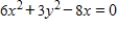
(Multiple Choice)
4.8/5 (70)
(70) 
Assume that water is being purified by causing it to flow through a conical filter that has a height of 5 inches and a radius of 4 inches. If the depth of the water is decreasing at a rate of 3 inches per minute when the depth is 4 inches, at what rate is the volume of water flowing out of the filter at this instant? Round your answer to two decimal places.
(Multiple Choice)
4.8/5 (66)
(66) If the demand function for q units of a commodity at p$ per unit is given by 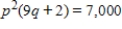 , find the rate of change of quantity with respect to price when
 . Round your answer to three decimal places.
, find the rate of change of quantity with respect to price when . Round your answer to three decimal places. (Multiple Choice)
4.7/5 (70)
(70) 

Filters
- Essay(0)
- Multiple Choice(0)
- Short Answer(0)
- True False(0)
- Matching(0)