



 Chat with AI
Exam 1: An Introduction to the Human Body

Exam 1: An Introduction to the Human Body78 Questions
Exam 2: Cells75 Questions
Exam 3: Tissues75 Questions
Exam 4: Development85 Questions
Exam 5: The Integumentary System75 Questions
Exam 6: Bone Tissue75 Questions
Exam 7: The Skeletal System: the Axial Skeleton75 Questions
Exam 8: The Skeletal System: the Appendicular Skeleton75 Questions
Exam 9: Joints75 Questions
Exam 10: Muscular Tissue75 Questions
Exam 11: The Muscular System75 Questions
Exam 12: The Cardiovascular System: Blood75 Questions
Exam 13: The Cardiovascular System: the Heart75 Questions
Exam 14: The Cardiovascular System: Blood Vessels75 Questions
Exam 15: The Lymphatic Lymphoid System and Immunity75 Questions
Exam 16: Nervous Tissue75 Questions
Exam 17: The Spinal Cord and the Spinal Nerves75 Questions
Exam 18: The Brain and the Cranial Nerves75 Questions
Exam 19: The Autonomic Nervous System75 Questions
Exam 20: Somatic Senses and Motor Control75 Questions
Exam 21: Special Senses75 Questions
Exam 22: The Endocrine System75 Questions
Exam 23: The Respiratory System87 Questions
Exam 24: The Digestive System75 Questions
Exam 25: The Urinary System100 Questions
Exam 26: The Reproductive Systems75 Questions
Exam 27: Surface Anatomy74 Questions
Select questions type


Which of the following imaging procedures is best used to study the physiology of body structures, such as metabolism of the brain or heart?
(Multiple Choice)
5.0/5  (74)
(74) 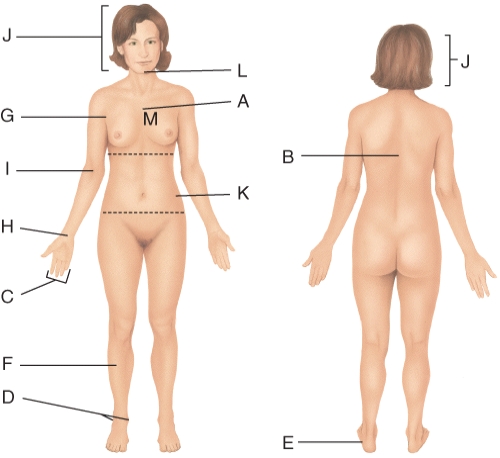
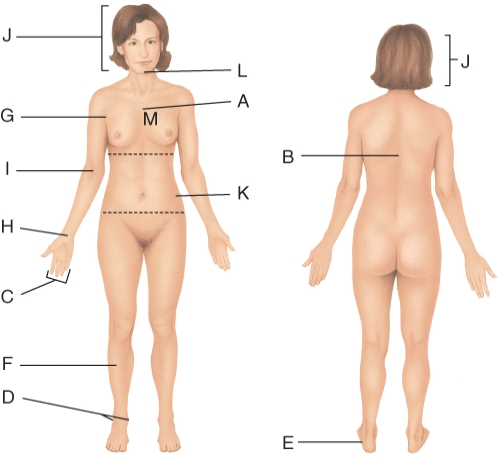
The right iliac region of the abdomen is _____ to the right lumbar region.
(Short Answer)
4.9/5 (78)
(78) 
The _____ system enables the body to detect and respond to environmental change through the propagation of impulses.
(Short Answer)
4.8/5 (77)
(77) The serous membrane associated with the lungs is called the pleural membrane.
(True/False)
4.9/5 (77)
(77) The two organ systems that have the primary responsibility for regulating body activities are
(Multiple Choice)
4.7/5 (77)
(77) The skin along with its derivatives is an example of which level of body organization?
(Short Answer)
4.9/5 (80)
(80) Food proteins are broken down into amino acids, building blocks that can then be used to build new proteins that make up muscles and bones. This is a good example of what human life process?
(Multiple Choice)
4.9/5 (82)
(82) A _____ section of the body or organ would reveal its right and left side
(Multiple Choice)
4.7/5 (81)
(81) The system responsible for movement of limbs, maintenance of posture, and production of heat is the _____ system.
(Short Answer)
4.8/5 (80)
(80) The descending colon of the large intestine extends from the left lumbar region into the left iliac region.
(True/False)
4.8/5 (75)
(75) A patient's vital signs (height, weight, temperature) will most likely be measured and reported in meters, kilograms and centigrade, respectively.
(True/False)
4.7/5 (74)
(74) Aging is a normal process characterized by a progressive decline in the body's ability to restore
(Multiple Choice)
4.9/5 (66)
(66) A lymphocyte is an example of which level of body organization?
(Short Answer)
4.7/5 (79)
(79) Organs such as the kidneys that are located behind the parietal peritoneum are described as _____ organs.
(Short Answer)
4.7/5 (81)
(81) 
Filters
- Essay(0)
- Multiple Choice(0)
- Short Answer(0)
- True False(0)
- Matching(0)