



 Chat with AI
Exam 3: Tissues

Exam 1: An Introduction to the Human Body78 Questions
Exam 2: Cells75 Questions
Exam 3: Tissues75 Questions
Exam 4: Development85 Questions
Exam 5: The Integumentary System75 Questions
Exam 6: Bone Tissue75 Questions
Exam 7: The Skeletal System: the Axial Skeleton75 Questions
Exam 8: The Skeletal System: the Appendicular Skeleton75 Questions
Exam 9: Joints75 Questions
Exam 10: Muscular Tissue75 Questions
Exam 11: The Muscular System75 Questions
Exam 12: The Cardiovascular System: Blood75 Questions
Exam 13: The Cardiovascular System: the Heart75 Questions
Exam 14: The Cardiovascular System: Blood Vessels75 Questions
Exam 15: The Lymphatic Lymphoid System and Immunity75 Questions
Exam 16: Nervous Tissue75 Questions
Exam 17: The Spinal Cord and the Spinal Nerves75 Questions
Exam 18: The Brain and the Cranial Nerves75 Questions
Exam 19: The Autonomic Nervous System75 Questions
Exam 20: Somatic Senses and Motor Control75 Questions
Exam 21: Special Senses75 Questions
Exam 22: The Endocrine System75 Questions
Exam 23: The Respiratory System87 Questions
Exam 24: The Digestive System75 Questions
Exam 25: The Urinary System100 Questions
Exam 26: The Reproductive Systems75 Questions
Exam 27: Surface Anatomy74 Questions
Select questions type


Which of the following statements about the classification of glandular epithelium is true?

Free
(Multiple Choice)
4.9/5  (73)
(73) Correct Answer: Verified
A
The basic structural unit of compact bone is called an osteon.
Free
(True/False)
4.9/5 (91)
(91) Correct Answer:Verified
VerifiedTrue
The tissue that contains erythrocytes, leukocytes, and plasma belongs to which tissue group?
Free
(Multiple Choice)
4.7/5 (80)
(80) Correct Answer:Verified
VerifiedB
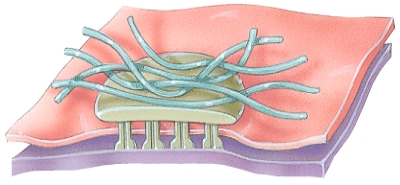
Osteocytes reside in small spaces between lamellae called _____.
(Short Answer)
4.8/5 (90)
(90) 
The membrane covering the outer surface of the lungs is called the _____.
(Multiple Choice)
4.7/5 (84)
(84) Dense connective tissue is termed dense because of the thick consistency of the fluid ground substance.
(True/False)
4.9/5 (77)
(77) Closely packed cells and fibers are characteristic of connective tissue.
(True/False)
4.7/5 (77)
(77) Peripherally located nuclei are characteristic of _____ muscle cells.
(Short Answer)
5.0/5 (71)
(71) Describe the structure of each of the following types of epithelium and explain how the structure of each is related to its functions: simple squamous epithelium, simple cuboidal epithelium, keratinized stratified squamous epithelium, transitional epithelium, and ciliated pseudostratified columnar epithelium.
(Essay)
4.8/5 (66)
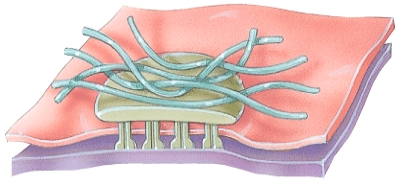
(66) 
Which of the following statements about stratified squamous epithelium is true?
(Multiple Choice)
4.9/5 (69)
(69) Describe the location and structure of a serous membrane. Locate and name the serous membranes associated with the thoracic and abdominal cavities.
(Essay)
4.8/5 (72)
(72) Name and describe the three functional types of multicellular exocrine glands and give an example of each.
(Essay)
4.8/5 (79)
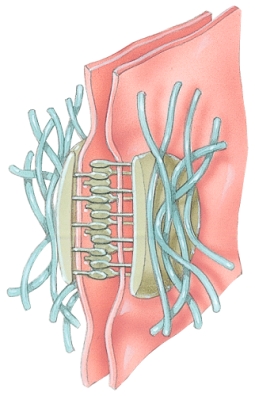
(79) 
Serous membranes line cavities of the body that are not open to the external environment.
(True/False)
4.8/5 (78)
(78) All three types of fibers (collagen, elastic, and reticular) are found in which of the following tissues?
(Multiple Choice)
4.8/5 (74)
(74) Microvilli are most likely to be found in which type of tissue?
(Multiple Choice)
4.8/5 (71)
(71) Describe the structure of each of the following types of connective tissue and explain how the structure of each is related to its functions: areolar connective tissue, dense regular connective tissue, dense irregular connective tissue, hyaline cartilage, elastic cartilage, and bone.
(Short Answer)
4.9/5 (72)
(72) 
Filters
- Essay(0)
- Multiple Choice(0)
- Short Answer(0)
- True False(0)
- Matching(0)