



 Chat with AI
Exam 24: The Digestive System

Exam 1: An Introduction to the Human Body78 Questions
Exam 2: Cells75 Questions
Exam 3: Tissues75 Questions
Exam 4: Development85 Questions
Exam 5: The Integumentary System75 Questions
Exam 6: Bone Tissue75 Questions
Exam 7: The Skeletal System: the Axial Skeleton75 Questions
Exam 8: The Skeletal System: the Appendicular Skeleton75 Questions
Exam 9: Joints75 Questions
Exam 10: Muscular Tissue75 Questions
Exam 11: The Muscular System75 Questions
Exam 12: The Cardiovascular System: Blood75 Questions
Exam 13: The Cardiovascular System: the Heart75 Questions
Exam 14: The Cardiovascular System: Blood Vessels75 Questions
Exam 15: The Lymphatic Lymphoid System and Immunity75 Questions
Exam 16: Nervous Tissue75 Questions
Exam 17: The Spinal Cord and the Spinal Nerves75 Questions
Exam 18: The Brain and the Cranial Nerves75 Questions
Exam 19: The Autonomic Nervous System75 Questions
Exam 20: Somatic Senses and Motor Control75 Questions
Exam 21: Special Senses75 Questions
Exam 22: The Endocrine System75 Questions
Exam 23: The Respiratory System87 Questions
Exam 24: The Digestive System75 Questions
Exam 25: The Urinary System100 Questions
Exam 26: The Reproductive Systems75 Questions
Exam 27: Surface Anatomy74 Questions
Select questions type


In the small intestine, segmentation begins with the contraction of this muscle layer.
(Multiple Choice)
4.8/5  (80)
(80) The greater curvature of the stomach is closer to the liver than is the lesser curvature.
(True/False)
4.8/5 (66)
(66) From the primitive gut, the endodermal layer gives rise to the epithelial lining and glands of most of the GI tract, whereas the smooth muscle and connective tissue develop from the mesodermal layer.
(True/False)
4.8/5 (87)
(87) Mucus in the small intestine is secreted by goblet cells in the mucosa and by duodenal glands (Brunner's glands) in the submucosa of the duodenum.
(True/False)
4.8/5 (84)
(84) Which of the following is an anatomical feature of the small intestine that serves to increase the surface area for digestion and absorption?
(Multiple Choice)
4.8/5 (76)
(76) Most pancreatic tissue is exocrine in function and is arranged in cell clusters called acini.
(True/False)
4.9/5 (73)
(73) In the wall of the GI tract, the mucosa and muscularis layers both contain smooth muscle.
(True/False)
5.0/5 (86)
(86) Paneth cells, circular folds (plicae circulares), brush border enzymes and lacteals are all characteristics of the small intestine.
(True/False)
4.9/5 (66)
(66) Bile helps accomplish which of the following?
1) chemical (enzymatic) breakdown of protein
2) emulsification of large lipid globules
3) absorption of digested lipids
4) maintenance of an alkaline pH in the duodenum
(Multiple Choice)
4.7/5 (80)
(80) The secretory activity of the salivary glands is controlled via vasoconstriction and vasodilation of their blood vessels.
(True/False)
4.8/5 (78)
(78) Advancing a gastric tube from the oral cavity to the oropharynx requires passing through the:
(Multiple Choice)
4.7/5 (87)
(87) The cells of the serous layer of the alimentary canal come in contact with food.
(True/False)
4.8/5 (81)
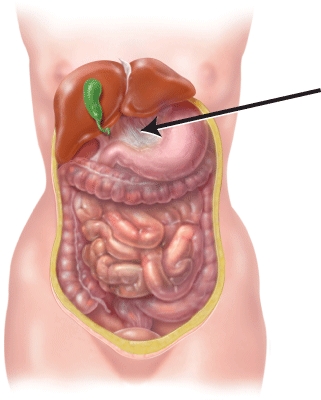
(81) 
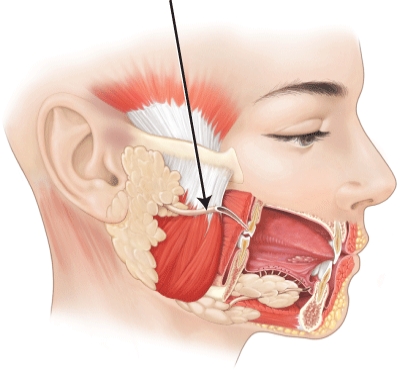
A portal triad in the liver consists of which three basic structures:
(Multiple Choice)
4.8/5 (87)
(87) Pouches of the large intestine that give it a puckered appearance are called epiploic (omental) appendices.
(True/False)
4.9/5 (73)
(73) Place the following in the correct order, as found in the muscularis layer of the stomach, from outermost to innermost:
1) oblique layer
2) circular layer
3) longitudinal layer
(Multiple Choice)
4.9/5 (92)
(92) 
Filters
- Essay(0)
- Multiple Choice(0)
- Short Answer(0)
- True False(0)
- Matching(0)