



 Chat with AI
Exam 9: Vertebral Column

Exam 1: Preliminary Steps in Radiography32 Questions
Exam 2: General Anatomy and Radiographic Positioning Terminology119 Questions
Exam 3: Thoracic Viscera: Chest and Upper Airway79 Questions
Exam 4: Abdomen25 Questions
Exam 5: Upper Extremity136 Questions
Exam 6: Shoulder Girdle94 Questions
Exam 7: Lower Extremity154 Questions
Exam 8: Pelvis and Hip53 Questions
Exam 9: Vertebral Column179 Questions
Exam 10: Bony Thorax59 Questions
Exam 11: Cranium185 Questions
Exam 12: Trauma Radiography11 Questions
Exam 13: Contrast Arthrography3 Questions
Exam 14: Myelography and Other Central Nervous System Imaging13 Questions
Exam 15: Digestive System: Salivary Glands, alimentary Canal, and Biliary System125 Questions
Exam 16: Urinary System and Venipuncture81 Questions
Exam 17: Reproductive System9 Questions
Exam 18: Mammography27 Questions
Exam 19: Bone Densitometry16 Questions
Exam 20: Mobile Radiography12 Questions
Exam 21: Surgical Radiography11 Questions
Exam 22: Pediatric Imaging16 Questions
Exam 23: Geriatric Radiography14 Questions
Exam 24: Sectional Anatomy for Radiographers29 Questions
Exam 25: Computed Tomography14 Questions
Exam 26: Magnetic Resonance Imaging14 Questions
Exam 27: Vascular,cardiac,and Interventional Radiography37 Questions
Exam 28: Diagnostic Medical Sonography15 Questions
Exam 29: Nuclear Medicine and Molecular Imaging18 Questions
Exam 30: Radiation Oncology17 Questions
Select questions type


Which of the following describes the anatomy of interest for the Fuchs method?
(Multiple Choice)
4.9/5  (68)
(68) Where is the central ray centered for a hyperflexion or hyperextension lateral cervical spine?
(Multiple Choice)
4.7/5 (81)
(81) Which vertebral process projects posteriorly from the junction of the laminae and pedicles?
(Multiple Choice)
4.9/5 (87)
(87) The central-ray angle for an AP axial projection of the coccyx is:
(Multiple Choice)
4.9/5 (75)
(75) Occasionally,a patient may have to be placed in the prone position for a sacrum radiography,and a PA projection performed.What is the central-ray angle for this projection?
(Multiple Choice)
4.7/5 (82)
(82) How is the neck positioned for the AP axial projection of the vertebral arch (pillars)?
(Multiple Choice)
4.9/5 (88)
(88) The central-ray angle for an AP axial projection of the sacrum is:
(Multiple Choice)
4.9/5 (100)
(100) To demonstrate the zygapophyseal joints of the lumbar spine,MSP of the patient is rotated _____ degrees.
(Multiple Choice)
4.9/5 (76)
(76) How much is the body rotated from the lateral position to demonstrate the zygapophyseal joints of the thoracic region?
(Multiple Choice)
4.9/5 (82)
(82) What anatomy and projection is demonstrated in the image below? 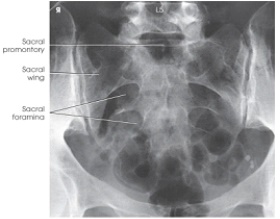
(Multiple Choice)
4.8/5 (67)
(67) Where should the superior edge of the IR/collimated field be placed for an AP projection of the thoracic vertebrae?
(Multiple Choice)
4.8/5 (82)
(82) An abnormally increased concavity of the lumbar spine is termed:
(Multiple Choice)
4.9/5 (78)
(78) Spinal nerves and blood vessels exit the spinal column through the:
(Multiple Choice)
4.8/5 (87)
(87) When the shoulder is immobile and cannot be depressed sufficiently for the cervicothoracic region lateral projection (swimmer's technique),the central ray is angled:
(Multiple Choice)
4.9/5 (68)
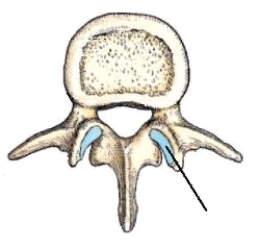
(68) 
What anatomy is labeled with the letter D in the image below? 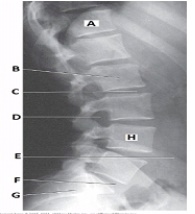
(Multiple Choice)
4.8/5 (83)
(83) Where does the central ray exit for the AP axial oblique projection to demonstrate the cervical spine pillars and laminae?
(Multiple Choice)
4.9/5 (92)
(92) 
Filters
- Essay(0)
- Multiple Choice(0)
- Short Answer(0)
- True False(0)
- Matching(0)