



 Chat with AI
Exam 1: Matter, Energy, and Measurement

Exam 1: Matter, Energy, and Measurement91 Questions
Exam 2: Atomic Structure and Radioisotopes107 Questions
Exam 3: Ionic and Covalent Compounds95 Questions
Exam 4: Molecular Geometry, Polarity, and Intermolecular86 Questions
Exam 5: Chemical Quantities and Introduction to Reactions88 Questions
Exam 6: Chemical Reactions: Energy, Rates, and Equilibrium87 Questions
Exam 7: Changes of State and Gas Laws99 Questions
Exam 8: Mixtures, Solution Concentrations, and Diffusion97 Questions
Exam 9: Acids and Bases, Ph, and Buffers83 Questions
Exam 10: Introduction to Organic Chemistry:111 Questions
Exam 11: Alcohols, Phenols, Thiols, Ethers, and Amines69 Questions
Exam 12: The Carbonyl Containing Functional Groups70 Questions
Exam 13: The Common Organic Reactions in Biochemistry82 Questions
Exam 14: Carbohydrates: Structure and Function97 Questions
Exam 15: Lipids: Structure and Function106 Questions
Exam 16: Proteins: Structure and Function134 Questions
Exam 17: Nucleotides and Nucleic Acids109 Questions
Exam 18: Energy and Metabolism115 Questions
Select questions type



When measuring the temperature of gases, Kelvin is often used because it is a function of the kinetic energy of a gas.If a gas is 121 K, what is its temperature in °C?
(Multiple Choice)
4.9/5  (72)
(72) Which of the following unit conversions are useful and correct for converting 312 mg to kilograms? 1 mg = 1,000 g
1,000 mg = 1 g
1 kg = 1,000 g
1,000 kg = 1 g
I
II
III
IV
(Multiple Choice)
4.8/5 (73)
(73) A patient's urine has a density of 1.010 g/mL.What is the specific gravity of the patient's urine?
(Multiple Choice)
4.9/5 (73)
(73) How many milligrams of Tylenol should be administered to this child in a single dose?
(Multiple Choice)
4.7/5 (73)
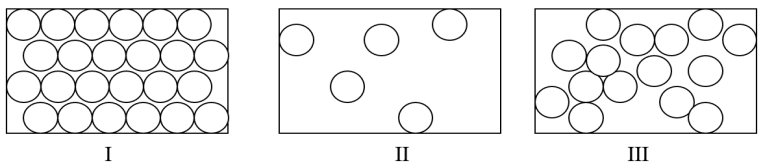
(73) Atoms and molecules in this state of matter are the most highly ordered.
(Multiple Choice)
4.7/5 (98)
(98) A patient has a kidney infection.Which of the following is MOST likely to be the specific gravity of the patient's urine?
(Multiple Choice)
4.8/5 (79)
(79) Identify whether the following represent the microscopic, macroscopic, or atomic scale.
I.Hemoglobin
ii.Person
iii.Red blood cell
(Multiple Choice)
4.9/5 (83)
(83) The strategy for converting 312 mg to kilograms includes which of the following?
(Multiple Choice)
4.9/5 (70)
(70) A child's guardian reports that his child has a fever, with a temperature of 101 °F.What temperature do you expect to measure in °C?
(Multiple Choice)
4.9/5 (87)
(87) Tylenol is ordered for a child weighing 42 pounds at a dosage of 15 mg per kilogram of body weight.You need to determine how many milligrams of Tylenol should be administered to this child in a single dose.Which of the following equations is set up to find the answer to this problem?
(Multiple Choice)
4.9/5 (99)
(99) Which of the following is MOST commonly used to assess the strength of a bone?
(Multiple Choice)
4.8/5 (85)
(85) Room temperature is about 70 °F.What is this temperature in Celsius?
(Multiple Choice)
4.8/5 (77)
(77) A molecule of hemoglobin is described as being on the _____ scale.
(Multiple Choice)
4.9/5 (88)
(88) 
Filters
- Essay(0)
- Multiple Choice(0)
- Short Answer(0)
- True False(0)
- Matching(0)