



 Chat with AI
Exam 15: Lipids: Structure and Function

Exam 1: Matter, Energy, and Measurement91 Questions
Exam 2: Atomic Structure and Radioisotopes107 Questions
Exam 3: Ionic and Covalent Compounds95 Questions
Exam 4: Molecular Geometry, Polarity, and Intermolecular86 Questions
Exam 5: Chemical Quantities and Introduction to Reactions88 Questions
Exam 6: Chemical Reactions: Energy, Rates, and Equilibrium87 Questions
Exam 7: Changes of State and Gas Laws99 Questions
Exam 8: Mixtures, Solution Concentrations, and Diffusion97 Questions
Exam 9: Acids and Bases, Ph, and Buffers83 Questions
Exam 10: Introduction to Organic Chemistry:111 Questions
Exam 11: Alcohols, Phenols, Thiols, Ethers, and Amines69 Questions
Exam 12: The Carbonyl Containing Functional Groups70 Questions
Exam 13: The Common Organic Reactions in Biochemistry82 Questions
Exam 14: Carbohydrates: Structure and Function97 Questions
Exam 15: Lipids: Structure and Function106 Questions
Exam 16: Proteins: Structure and Function134 Questions
Exam 17: Nucleotides and Nucleic Acids109 Questions
Exam 18: Energy and Metabolism115 Questions
Select questions type


The melting point of a fatty acid is determined by _________in the fatty acid.
(Multiple Choice)
4.8/5  (79)
(79) Which choice correctly numbers pinolenic acid (shown below)using the delta system? 
(Multiple Choice)
4.8/5 (78)
(78) A membrane lipid is often depicted as shown below in lipid I.Which part of the molecular structure of lipid I does the wavy line represent? 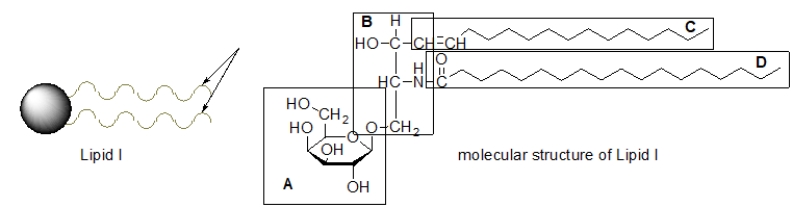
(Multiple Choice)
4.9/5 (80)
(80) This type of lipoprotein travels through the blood and delivers triacylglycerols to adipose and muscle cells.
(Multiple Choice)
5.0/5 (79)
(79) Identify the class of lipid to which the following molecule belongs. 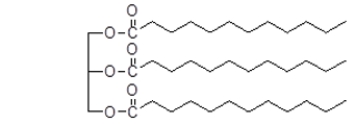
(Multiple Choice)
4.9/5 (66)
(66) 
Filters
- Essay(0)
- Multiple Choice(0)
- Short Answer(0)
- True False(0)
- Matching(0)