



 Chat with AI
Exam 16: Proteins: Structure and Function

Exam 1: Matter, Energy, and Measurement91 Questions
Exam 2: Atomic Structure and Radioisotopes107 Questions
Exam 3: Ionic and Covalent Compounds95 Questions
Exam 4: Molecular Geometry, Polarity, and Intermolecular86 Questions
Exam 5: Chemical Quantities and Introduction to Reactions88 Questions
Exam 6: Chemical Reactions: Energy, Rates, and Equilibrium87 Questions
Exam 7: Changes of State and Gas Laws99 Questions
Exam 8: Mixtures, Solution Concentrations, and Diffusion97 Questions
Exam 9: Acids and Bases, Ph, and Buffers83 Questions
Exam 10: Introduction to Organic Chemistry:111 Questions
Exam 11: Alcohols, Phenols, Thiols, Ethers, and Amines69 Questions
Exam 12: The Carbonyl Containing Functional Groups70 Questions
Exam 13: The Common Organic Reactions in Biochemistry82 Questions
Exam 14: Carbohydrates: Structure and Function97 Questions
Exam 15: Lipids: Structure and Function106 Questions
Exam 16: Proteins: Structure and Function134 Questions
Exam 17: Nucleotides and Nucleic Acids109 Questions
Exam 18: Energy and Metabolism115 Questions
Select questions type


The following is a description of an enzyme called superoxide dismutase.Refer to this paragraph to answer the following question. Superoxide dismutase is an enzyme that detoxifies a free radical called superoxide.This radical is responsible for causing injury during reperfusion after a heart attack, and is also thought to play a role in Parkinson's Disease.a Depending on what organism the protein is found in, it occurs either as a dimer or tetramer of identical subunits.b The subunits are mostly α-helical with some β-sheet near the C-terminus.c A metal binding site for manganese, iron, nickel or copper/zinc is composed of residues from both the N-terminus and the C-terminus.d These residues are: His-26, His-81, Asp-167, His-171.e
Which statement refers to primary structure?
(Multiple Choice)
4.7/5  (84)
(84) What type of interaction would you expect between the following -R groups in the tertiary structure of a protein? 
(Multiple Choice)
4.9/5 (75)
(75) Which type of protein defends the body against infectious agents?
(Multiple Choice)
4.8/5 (90)
(90) Select the statement that BEST describes a key difference between competitive and noncompetitive inhibitors.
(Multiple Choice)
4.9/5 (88)
(88) Acetylcholine is a neurotransmitter that initiates muscle contraction.In order for muscle to relax after contraction, acetylcholine must be broken down into choline and acetate by the enzyme acetylcholinesterase.Nerve agents such as Sarin inhibit acetylcholinesterase by permanently covalently bonding to a serine amino acid in the active site of the enzyme, causing muscle paralysis.What type of inhibitor is Sarin?
(Multiple Choice)
4.9/5 (67)
(67) In the peptide Ser-Gly-Asp-Ala, the N-terminal amino acid is
(Multiple Choice)
4.8/5 (84)
(84) The following is a description of an enzyme called superoxide dismutase.Refer to this paragraph to answer the following question. Superoxide dismutase is an enzyme that detoxifies a free radical called superoxide.This radical is responsible for causing injury during reperfusion after a heart attack, and is also thought to play a role in Parkinson's Disease.a Depending on what organism the protein is found in, it occurs either as a dimer or tetramer of identical subunits.b The subunits are mostly α-helical with some β-sheet near the C-terminus.c A metal binding site for manganese, iron, nickel or copper/zinc is composed of residues from both the N-terminus and the C-terminus.d These residues are: His-26, His-81, Asp-167, His-171.e
Which statement refers to secondary structure?
(Multiple Choice)
4.7/5 (84)
(84) In an enzyme-catalyzed reaction, the reactant that the enzyme acts upon is called the
(Multiple Choice)
4.8/5 (77)
(77) In some proteins, hydrogen bonding occurs between polar residues and the surrounding aqueous environment, forcing the polar residues to the exterior of the protein.What are the interactions between the polar residues and the aqueous environment called?
(Multiple Choice)
4.7/5 (63)
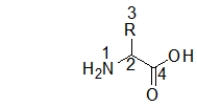
(63) 
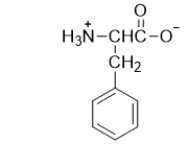

Filters
- Essay(0)
- Multiple Choice(0)
- Short Answer(0)
- True False(0)
- Matching(0)