



 Chat with AI
Exam 1: What Is Economics

Exam 1: What Is Economics472 Questions
Exam 2: The Economic Problem432 Questions
Exam 3: Demand and Supply503 Questions
Exam 4: Measuring Gdp and Economic Growth393 Questions
Exam 5: Monitoring Jobs and Inflation398 Questions
Exam 6: Economic Growth343 Questions
Exam 7: Finance, Saving, and Investment233 Questions
Exam 8: Money, the Price Level, and Inflation583 Questions
Exam 9: The Exchange Rate and the Balance of Payments482 Questions
Exam 10: Aggregate Supply and Aggregate Demand411 Questions
Exam 11: Expenditure Multipliers: the Keynesian Model444 Questions
Exam 12: U.S Inflation, Unemployment, and Business Cycle391 Questions
Exam 13: Fiscal Policy251 Questions
Exam 14: Monetary Policy216 Questions
Exam 15: International Trade Policy187 Questions
Review101 Questions
Select questions type


Which of the following is NOT an investment in human capital?

Free
(Multiple Choice)
4.8/5  (80)
(80) Correct Answer: Verified
D
Macroeconomics is concerned with
Free
(Multiple Choice)
4.8/5 (88)
(88) Correct Answer:Verified
VerifiedB
If a curve falls and then rises, it shows
Free
(Multiple Choice)
4.8/5 (89)
(89) Correct Answer:Verified
VerifiedB
When an economy produces more houses and fewer typewriters, it is answering the part of one of the two big economic questions.
(Multiple Choice)
5.0/5 (65)
(65) In broad terms the difference between microeconomics and macroeconomics is that
(Multiple Choice)
4.9/5 (85)
(85) The statement that ʺpeach ice cream is better than chocolate ice creamʺ
(Multiple Choice)
4.9/5 (79)
(79) 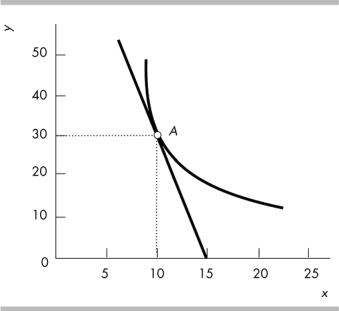
Which of the following statements are correct?
I. The ʺhighest-valued alternative given up to get somethingʺ is the opportunity cost.
II. Wealthy economies donʹt experience opportunity costs.
III. Scarcity creates opportunity costs.
(Multiple Choice)
4.9/5 (68)
(68) 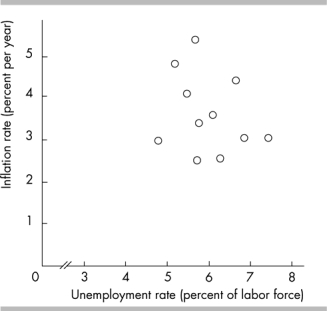 -In the above figure, the axis break in the x-axis
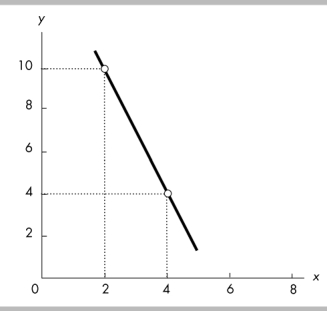 -The slope of the line shown in the above figure is
Ceteris paribus refers to the idea that if more than two variables are graphed, only one variable must be held constant.
(True/False)
4.9/5 (77)
(77) 
Filters
- Essay(0)
- Multiple Choice(0)
- Short Answer(0)
- True False(0)
- Matching(0)