



 Chat with AI
Exam 14: Reconstruction: an Unfinished Revolution

Exam 1: Three Old Worlds Create a New108 Questions
Exam 2: Europeans Colonize North America108 Questions
Exam 3: North America in the Atlantic World101 Questions
Exam 4: Becoming America112 Questions
Exam 5: The Ends of Empire133 Questions
Exam 6: American Revolutions109 Questions
Exam 7: Forging a Nation161 Questions
Exam 8: Defining the Nation170 Questions
Exam 9: The Rise of the South111 Questions
Exam 10: The Restless North177 Questions
Exam 11: The Contested West100 Questions
Exam 12: Politics and the Fate of the Union178 Questions
Exam 13: Transforming Fire: the Civil War160 Questions
Exam 14: Reconstruction: an Unfinished Revolution122 Questions
Select questions type


Map Exercise 16-1
You will need one colored pen to complete this exercise. On the outline map of the South that follows and using the map in Chapter 16 of the text entitled "The Reconstruction" as a guide:
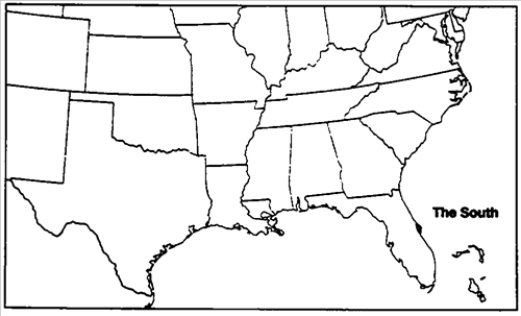 -Refer to Map Exercise 16-1. In each of the former Confederate states,
a. Indicate the date of readmission to the Union.
b. Indicate the date of re-establishment of conservative rule.
Underline this date to distinguish it from the date of readmission and indicate what the two dates mean in the map's legend.
-Refer to Map Exercise 16-1. In each of the former Confederate states,
a. Indicate the date of readmission to the Union.
b. Indicate the date of re-establishment of conservative rule.
Underline this date to distinguish it from the date of readmission and indicate what the two dates mean in the map's legend. (Essay)
4.8/5  (87)
(87) Instructions:
∙ Identify each item. Give an explanation or description of the item. Answer the questions who, what, where, and when.
Explain the historical significance of each item. Establish the historical context in which the
∙ item exists. Establish the item as the result of or as the cause of other factors existing in the society under study. Answer this question: What were the political, social, economic,
and/or cultural consequences of this item?
-the southern conservatives
(Essay)
4.7/5 (87)
(87) President Johnson's refusal to allow any change in his Reconstruction policies caused which of the following?
(Multiple Choice)
4.9/5 (82)
(82) Examine the role played by the legislative, executive, and judicial branches of the federal government in the national retreat from the commitment to equality for the freedmen.
(Essay)
4.9/5 (78)
(78) The section of the Fourteenth Amendment that had the greatest legal significance in subsequent years was the section that
(Multiple Choice)
4.8/5 (96)
(96) Instructions:
∙ Identify each item. Give an explanation or description of the item. Answer the questions who, what, where, and when.
Explain the historical significance of each item. Establish the historical context in which the
∙ item exists. Establish the item as the result of or as the cause of other factors existing in the society under study. Answer this question: What were the political, social, economic,
and/or cultural consequences of this item?
-Thaddeus Stevens and Charles Sumner
(Essay)
4.8/5 (72)
(72) The Radical Republicans in Congress believed that it was essential to
(Multiple Choice)
4.9/5 (75)
(75) Instructions:
∙ Identify each item. Give an explanation or description of the item. Answer the questions who, what, where, and when.
Explain the historical significance of each item. Establish the historical context in which the
∙ item exists. Establish the item as the result of or as the cause of other factors existing in the society under study. Answer this question: What were the political, social, economic,
and/or cultural consequences of this item?
-the presidential election of 1868
(Essay)
4.8/5 (66)
(66) Instructions:
∙ Identify each item. Give an explanation or description of the item. Answer the questions who, what, where, and when.
Explain the historical significance of each item. Establish the historical context in which the
∙ item exists. Establish the item as the result of or as the cause of other factors existing in the society under study. Answer this question: What were the political, social, economic,
and/or cultural consequences of this item?
-race relations in the American West
(Essay)
4.8/5 (89)
(89) Instructions:
∙ Identify each item. Give an explanation or description of the item. Answer the questions who, what, where, and when.
Explain the historical significance of each item. Establish the historical context in which the
∙ item exists. Establish the item as the result of or as the cause of other factors existing in the society under study. Answer this question: What were the political, social, economic,
and/or cultural consequences of this item?
-the Fourteenth Amendment
(Essay)
4.9/5 (64)
(64) Instructions:
∙ Identify each item. Give an explanation or description of the item. Answer the questions who, what, where, and when.
Explain the historical significance of each item. Establish the historical context in which the
∙ item exists. Establish the item as the result of or as the cause of other factors existing in the society under study. Answer this question: What were the political, social, economic,
and/or cultural consequences of this item?
-Republican tax policies in the former Confederate states
(Essay)
5.0/5 (92)
(92) Which of the following correctly states the belief of Thaddeus Stevens and other congressional Republicans who criticized Lincoln' s approach to Reconstruction?
(Multiple Choice)
4.8/5 (72)
(72) Instructions:
∙ Identify each item. Give an explanation or description of the item. Answer the questions who, what, where, and when.
Explain the historical significance of each item. Establish the historical context in which the
∙ item exists. Establish the item as the result of or as the cause of other factors existing in the society under study. Answer this question: What were the political, social, economic,
and/or cultural consequences of this item?
-the sharecropping system
(Essay)
4.9/5 (78)
(78) Instructions:
∙ Identify each item. Give an explanation or description of the item. Answer the questions who, what, where, and when.
Explain the historical significance of each item. Establish the historical context in which the
∙ item exists. Establish the item as the result of or as the cause of other factors existing in the society under study. Answer this question: What were the political, social, economic,
and/or cultural consequences of this item?
-"redeemer" Democrats
(Essay)
4.9/5 (77)
(77) Instructions:
∙ Identify each item. Give an explanation or description of the item. Answer the questions who, what, where, and when.
Explain the historical significance of each item. Establish the historical context in which the
∙ item exists. Establish the item as the result of or as the cause of other factors existing in the society under study. Answer this question: What were the political, social, economic,
and/or cultural consequences of this item?
-the Radical Republicans
(Essay)
4.8/5 (63)
(63) Instructions:
∙ Identify each item. Give an explanation or description of the item. Answer the questions who, what, where, and when.
Explain the historical significance of each item. Establish the historical context in which the
∙ item exists. Establish the item as the result of or as the cause of other factors existing in the society under study. Answer this question: What were the political, social, economic,
and/or cultural consequences of this item?
-the southern Republican Party
(Essay)
4.8/5 (83)
(83) Map Exercise 16-1
You will need one colored pen to complete this exercise. On the outline map of the South that follows and using the map in Chapter 16 of the text entitled "The Reconstruction" as a guide:
-Refer to Map Exercise 16-1. What states were still under Reconstruction governments in 1876? What bearing did this have on the election of 1876? How was the problem resolved?
-Refer to Map Exercise 16-1. What states were still under Reconstruction governments in 1876? What bearing did this have on the election of 1876? How was the problem resolved? (Essay)
4.7/5 (83)
(83) 
Filters
- Essay(0)
- Multiple Choice(0)
- Short Answer(0)
- True False(0)
- Matching(0)