



 Chat with AI
Exam 16: Aromatic Compounds

Exam 1: Structure and Bonding127 Questions
Exam 2: Acids and Bases; Functional Groups136 Questions
Exam 3: Structure and Stereochemistry of Alkanes134 Questions
Exam 4: The Study of Chemical Reactions128 Questions
Exam 5: Stereochemistry132 Questions
Exam 6: Alkyl Halides; Nucleophilic Substitution137 Questions
Exam 7: Structure and Synthesis of Alkenes; Elimination131 Questions
Exam 8: Reactions of Alkenes134 Questions
Exam 10: Structure and Synthesis of Alcohols136 Questions
Exam 11: Reactions of Alcohols125 Questions
Exam 12: Infrared Spectroscopy and Mass Spectrometry121 Questions
Exam 13: Nuclear Magnetic Resonance Spectroscopy130 Questions
Exam 14: Ethers, Epoxides, and Thioethers127 Questions
Exam 15: Conjugated Systems, Orbital Symmetry, and Ultraviolet Spectroscopy130 Questions
Exam 16: Aromatic Compounds128 Questions
Exam 17: Reactions of Aromatic Compounds129 Questions
Exam 18: Ketones and Aldehydes131 Questions
Exam 19: Amines127 Questions
Exam 20: Carboxylic Acids125 Questions
Exam 21: Carboxylic Acid Derivatives130 Questions
Exam 22: Condensations and Alpha Substitutions of Carboxyl Compounds127 Questions
Exam 23: Carbohydrates and Nucleic Acids126 Questions
Exam 24: Amino Acids, Peptides, and Proteins127 Questions
Exam 25: Lipids127 Questions
Exam 26: Synthetic Polymers128 Questions
Select questions type


In the molecular orbital representation of benzene, how many π molecular orbitals are present?
(Multiple Choice)
4.7/5  (84)
(84) Classify naphthalene as aromatic, antiaromatic, or nonaromatic. Assume planarity of the π network.
(Short Answer)
4.8/5 (72)
(72) Classify the following compound as being aromatic, nonaromatic or antiaromatic. 
(Short Answer)
4.7/5 (75)
(75) When cycloheptatriene is deprotonated, an anion with seven resonance forms of equal energy can be drawn. Given this fact, explain why cycloheptatriene is only slightly more acidic than propene.
(Essay)
4.9/5 (78)
(78) ________ is similar to furan, with a sulfur atom in place of the oxygen.
(Short Answer)
4.8/5 (76)
(76) How many peaks are in the proton spin decoupled 13C NMR spectrum of 1,3,5-trinitrobenzene?
(Multiple Choice)
4.7/5 (90)
(90) How many peaks are in the proton spin decoupled 13C NMR spectrum of the compound shown? 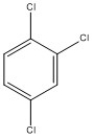
(Short Answer)
4.8/5 (88)
(88) Classify cyclopentadienyl cation as aromatic, antiaromatic, or nonaromatic. Assume planarity of the π network.
(Short Answer)
4.8/5 (75)
(75) The bond lengths in a substituted cyclobutadiene compounds were determined by computational methods to display very unequal bond lengths (1.354 and 1.608
A). What does this suggest about resonance structures in this compound? (J. Phys. Chem. A, 2000, 104, 1246-1255)
(Essay)
4.9/5 (77)
(77) In the UV-visible spectra of the following compounds, in which does λmax appear at the highest wavelength?
(Multiple Choice)
4.8/5 (81)
(81) Provide a diagram which depicts the relative energies of the π molecular orbitals of benzene. Show which molecular orbitals are filled in benzene's ground state.
(Essay)
4.7/5 (72)
(72) Classify the compound below as aromatic, antiaromatic, or nonaromatic. Assume planarity of the π network. 
(Short Answer)
4.8/5 (93)
(93) Show how the p orbitals overlap to generate the π4* of cyclobutadiene.
(Essay)
4.8/5 (78)
(78) Classify the compound below as aromatic, antiaromatic, or nonaromatic. Assume planarity of the π network. 
(Short Answer)
4.9/5 (87)
(87) Cyclic hydrocarbons which can be represented as structures containing alternating single and double bonds are called ________.
(Short Answer)
4.9/5 (81)
(81) Use resonance structures to explain why the compound shown below is considered to be antiaromatic. 
(Essay)
4.8/5 (90)
(90) 

Filters
- Essay(0)
- Multiple Choice(0)
- Short Answer(0)
- True False(0)
- Matching(0)