



 Chat with AI
Exam 16: Aromatic Compounds

Exam 1: Structure and Bonding127 Questions
Exam 2: Acids and Bases; Functional Groups136 Questions
Exam 3: Structure and Stereochemistry of Alkanes134 Questions
Exam 4: The Study of Chemical Reactions128 Questions
Exam 5: Stereochemistry132 Questions
Exam 6: Alkyl Halides; Nucleophilic Substitution137 Questions
Exam 7: Structure and Synthesis of Alkenes; Elimination131 Questions
Exam 8: Reactions of Alkenes134 Questions
Exam 10: Structure and Synthesis of Alcohols136 Questions
Exam 11: Reactions of Alcohols125 Questions
Exam 12: Infrared Spectroscopy and Mass Spectrometry121 Questions
Exam 13: Nuclear Magnetic Resonance Spectroscopy130 Questions
Exam 14: Ethers, Epoxides, and Thioethers127 Questions
Exam 15: Conjugated Systems, Orbital Symmetry, and Ultraviolet Spectroscopy130 Questions
Exam 16: Aromatic Compounds128 Questions
Exam 17: Reactions of Aromatic Compounds129 Questions
Exam 18: Ketones and Aldehydes131 Questions
Exam 19: Amines127 Questions
Exam 20: Carboxylic Acids125 Questions
Exam 21: Carboxylic Acid Derivatives130 Questions
Exam 22: Condensations and Alpha Substitutions of Carboxyl Compounds127 Questions
Exam 23: Carbohydrates and Nucleic Acids126 Questions
Exam 24: Amino Acids, Peptides, and Proteins127 Questions
Exam 25: Lipids127 Questions
Exam 26: Synthetic Polymers128 Questions
Select questions type


Classify cyclopentadiene as aromatic, antiaromatic, or nonaromatic. Assume planarity of the π network.
(Short Answer)
4.9/5  (84)
(84) Classify cycloheptatriene as aromatic, antiaromatic, or nonaromatic. Assume planarity of the π network.
(Short Answer)
4.8/5 (79)
(79) Nitrogen's lone pair electrons occupy what type of orbital in pyridine?
(Multiple Choice)
4.8/5 (76)
(76) Classify the compound below as aromatic, antiaromatic, or nonaromatic. Assume planarity of the π network. 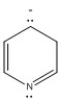
(Short Answer)
4.9/5 (82)
(82) Classify the compound below as aromatic, antiaromatic, or nonaromatic. Assume planarity of the π network. 
(Short Answer)
4.8/5 (99)
(99) Even assuming the molecule below is planar, it would still be classified as non-aromatic. Why? 
(Essay)
4.9/5 (94)
(94) How many peaks are in the proton spin decoupled 13C NMR spectrum of p-dichlorobenzene?
(Multiple Choice)
4.7/5 (89)
(89) Classify the compound below as aromatic, antiaromatic, or nonaromatic. Assume planarity of the π network. 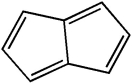
(Short Answer)
4.7/5 (80)
(80) Why would the reaction below proceed at an extremely slow rate if at all? 
(Essay)
4.9/5 (86)
(86) How could you distinguish the two compounds below using 1H and proton decoupled 13C NMR? 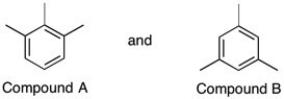
(Essay)
4.8/5 (68)
(68) Which of the following is also an acceptable name for 3-nitrophenol?
(Multiple Choice)
4.9/5 (82)
(82) What is suggested by the fact that benzene's molar heat of hydrogenation is 36 kcal less than three times the molar heat of hydrogenation of cyclohexene?
(Essay)
4.8/5 (76)
(76) Classify the compound below as aromatic, antiaromatic, or nonaromatic. Assume planarity of the π network. 
(Short Answer)
4.9/5 (72)
(72) 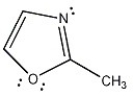
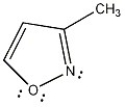
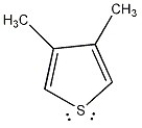
Classify the compound below as aromatic, antiaromatic, or nonaromatic. Assume planarity of the π network. 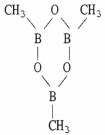
(Short Answer)
4.8/5 (98)
(98) Classify each nitrogen atom in the compound below as strongly basic or weakly basic, according to the availability of its lone pair of electrons. 
(Essay)
4.9/5 (70)
(70) Which sequence correctly ranks the following substrates in order of increasing reactivity in an SN1 reaction? 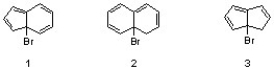
(Multiple Choice)
4.9/5 (91)
(91) 
Filters
- Essay(0)
- Multiple Choice(0)
- Short Answer(0)
- True False(0)
- Matching(0)