



 Chat with AI
Exam 20: Carboxylic Acids

Exam 1: Structure and Bonding127 Questions
Exam 2: Acids and Bases; Functional Groups136 Questions
Exam 3: Structure and Stereochemistry of Alkanes134 Questions
Exam 4: The Study of Chemical Reactions128 Questions
Exam 5: Stereochemistry132 Questions
Exam 6: Alkyl Halides; Nucleophilic Substitution137 Questions
Exam 7: Structure and Synthesis of Alkenes; Elimination131 Questions
Exam 8: Reactions of Alkenes134 Questions
Exam 10: Structure and Synthesis of Alcohols136 Questions
Exam 11: Reactions of Alcohols125 Questions
Exam 12: Infrared Spectroscopy and Mass Spectrometry121 Questions
Exam 13: Nuclear Magnetic Resonance Spectroscopy130 Questions
Exam 14: Ethers, Epoxides, and Thioethers127 Questions
Exam 15: Conjugated Systems, Orbital Symmetry, and Ultraviolet Spectroscopy130 Questions
Exam 16: Aromatic Compounds128 Questions
Exam 17: Reactions of Aromatic Compounds129 Questions
Exam 18: Ketones and Aldehydes131 Questions
Exam 19: Amines127 Questions
Exam 20: Carboxylic Acids125 Questions
Exam 21: Carboxylic Acid Derivatives130 Questions
Exam 22: Condensations and Alpha Substitutions of Carboxyl Compounds127 Questions
Exam 23: Carbohydrates and Nucleic Acids126 Questions
Exam 24: Amino Acids, Peptides, and Proteins127 Questions
Exam 25: Lipids127 Questions
Exam 26: Synthetic Polymers128 Questions
Select questions type


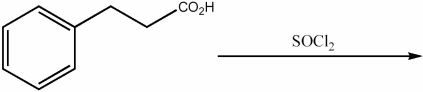

What products result from the reaction of sodium propanoate with hydrobromic acid?
(Short Answer)
4.9/5  (80)
(80) Hept-3-yne yields what acids upon treatment with concentrated permanganate of ozone followed by water?
(Short Answer)
4.9/5 (91)
(91) The combination of a carbonyl group and a hydroxyl group on the same carbon atom is called a ________ group.
(Multiple Choice)
4.8/5 (73)
(73) Give a detailed, stepwise mechanism for the Fischer esterification of acetic acid with methanol.
(Essay)
4.7/5 (77)
(77) 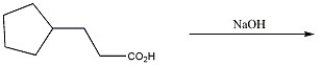
The pKa1 for oxalic acid (pKa = 1.27) is much lower than the pKa1 of glutaric acid (pKa = 4.35). Briefly explain why.
(Essay)
4.8/5 (62)
(62) After completing the synthesis of 3-methylpentanoic acid, which of the following treatments will neutralize the mineral acids and facilitate the distribution of the organic acid from the organic layer to the aqueous extraction layer?
(Multiple Choice)
4.8/5 (63)
(63) Which of the following reactions involves the formation of a methyl ester from a carboxylic acid?
(Multiple Choice)
5.0/5 (89)
(89) An unknown alkyne was subjected to concentrated KMnO4 and only one product was isolated. The spectral information for 1H NMR of the product is given below.
δ (ppm) = 11.0 (1H, broad s), 2.39 (2H, q), 1.16 (3H, t)
What is the structure of the starting alkyne?
(Essay)
4.9/5 (99)
(99) What are the products of the reaction of benzoic acid with thionyl chloride?
(Essay)
4.9/5 (80)
(80) Provide the sequence of reagents needed to accomplish the conversion below. 
(Essay)
4.8/5 (85)
(85) Suggest a sequence of synthetic steps through which phenylacetic acid can be prepared from toluene via phenylacetonitrile.
(Essay)
4.8/5 (72)
(72) Provide a detailed, stepwise mechanism for the reaction of acetyl chloride with methanol to produce methyl acetate and HCl.
(Essay)
4.8/5 (71)
(71) What is the best way to perform the transformation shown below? 
(Multiple Choice)
5.0/5 (84)
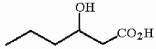
(84) 



Filters
- Essay(0)
- Multiple Choice(0)
- Short Answer(0)
- True False(0)
- Matching(0)