



 Chat with AI
Exam 20: Carboxylic Acids

Exam 1: Structure and Bonding127 Questions
Exam 2: Acids and Bases; Functional Groups136 Questions
Exam 3: Structure and Stereochemistry of Alkanes134 Questions
Exam 4: The Study of Chemical Reactions128 Questions
Exam 5: Stereochemistry132 Questions
Exam 6: Alkyl Halides; Nucleophilic Substitution137 Questions
Exam 7: Structure and Synthesis of Alkenes; Elimination131 Questions
Exam 8: Reactions of Alkenes134 Questions
Exam 10: Structure and Synthesis of Alcohols136 Questions
Exam 11: Reactions of Alcohols125 Questions
Exam 12: Infrared Spectroscopy and Mass Spectrometry121 Questions
Exam 13: Nuclear Magnetic Resonance Spectroscopy130 Questions
Exam 14: Ethers, Epoxides, and Thioethers127 Questions
Exam 15: Conjugated Systems, Orbital Symmetry, and Ultraviolet Spectroscopy130 Questions
Exam 16: Aromatic Compounds128 Questions
Exam 17: Reactions of Aromatic Compounds129 Questions
Exam 18: Ketones and Aldehydes131 Questions
Exam 19: Amines127 Questions
Exam 20: Carboxylic Acids125 Questions
Exam 21: Carboxylic Acid Derivatives130 Questions
Exam 22: Condensations and Alpha Substitutions of Carboxyl Compounds127 Questions
Exam 23: Carbohydrates and Nucleic Acids126 Questions
Exam 24: Amino Acids, Peptides, and Proteins127 Questions
Exam 25: Lipids127 Questions
Exam 26: Synthetic Polymers128 Questions
Select questions type


Which sequence of steps below describes the best synthesis of 5-oxohexanoic acid starting with 1-methylcyclopentan-1-ol?
(Multiple Choice)
4.7/5  (75)
(75) In the mass spectrum of 3-methylhexanoic acid, predict the mass of the fragment resulting from a McLafferty rearrangement.
(Essay)
4.8/5 (60)
(60) In a carboxylic acid, the hybridization of the C is ________ and the OCO bond angle is ________.
(Multiple Choice)
4.7/5 (93)
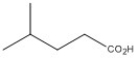
(93) 
Provide the major organic product of the following reaction sequence. 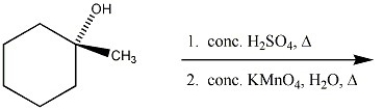
(Essay)
4.8/5 (97)
(97) Using the carboxylic acid below as your only carbon source, how would you make the given amide? 
(Essay)
4.9/5 (89)
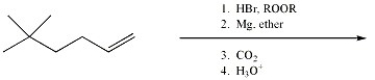
(89) 
Which of the following would be the preferred reagents used in the following synthesis? 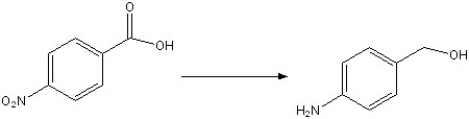
(Multiple Choice)
4.7/5 (86)
(86) 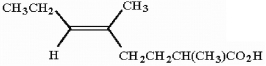
An acid which could not be prepared from an organic halide by carboxylation of the Grignard reagent is ________.
(Multiple Choice)
4.8/5 (73)
(73) Suggest a sequence of synthetic steps through which p-toluic acid can be prepared from toluene.
(Essay)
4.9/5 (87)
(87) An acid which could not be prepared by the reaction of an organic halide with cyanide ion followed by acid hydrolysis of the nitrile is ________.
(Multiple Choice)
4.8/5 (74)
(74) Provide the structure of the major organic product of the reaction sequence shown. 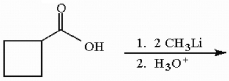
(Essay)
4.8/5 (75)
(75) Which of the reagents listed below would work best in the following reaction? 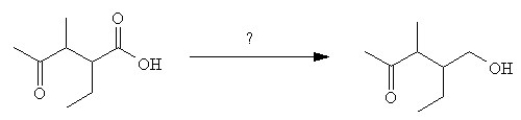
(Multiple Choice)
4.9/5 (75)
(75) Where would one expect to find the 1H NMR signal for the carboxyl group's hydrogen in propanoic acid?
(Multiple Choice)
4.7/5 (82)
(82) 
Filters
- Essay(0)
- Multiple Choice(0)
- Short Answer(0)
- True False(0)
- Matching(0)