Multiple Choice
Passage
Aldehydes are organic compounds encountered in everyday life and used as intermediates in metabolism. Common aldehydes include formaldehyde, which is used in the fixation of tissues, and cinnamaldehyde, which provides the flavor and smell of cinnamon (Figure 1) .
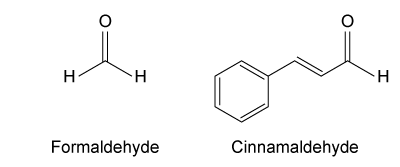 Figure 1 Common aldehydesThe aldol condensation shown in Figure 2 is an important carbon-carbon bond-forming reaction that has many applications in the synthesis of bioactive molecules. It also takes place in some metabolic processes, such as the citric acid cycle and gluconeogenesis. The aldol condensation begins with the aldol reaction, which can be acid- or base-catalyzed and requires nucleophilic addition to a carbonyl to provide the aldol product, which can be a β-hydroxy ketone or aldehyde. The final step of the aldol condensation consists of an acid- or base-catalyzed dehydration of the aldol product to yield an α,β-unsaturated ketone or aldehyde.
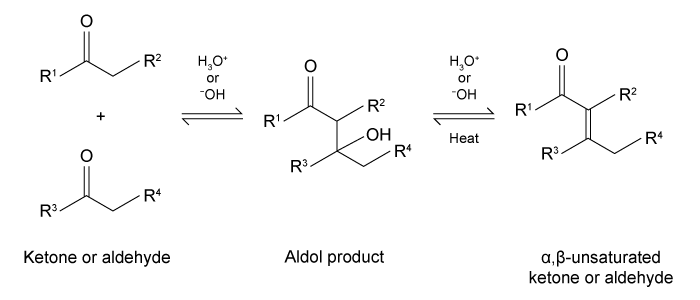 Figure 2 General aldol reaction and condensationThe reverse of an aldol reaction or condensation is known as a retro-aldol, which is important in metabolism, most notably in glycolysis. This reaction breaks a carbon-carbon bond to form aldehydes and/or ketones. In glycolysis, fructose 1,6-bisphosphate is broken down into an aldehyde and a ketone, glyceraldehyde 3-phosphate (GAP) and dihydroxyacetone phosphate (DHAP) , respectively (Figure 3) .
 Figure 3 Retro-aldol in glycolysis
-Which of the following compounds would be a plausible intermediate in the base-catalyzed aldol reaction of the first step of the citric acid cycle shown below? 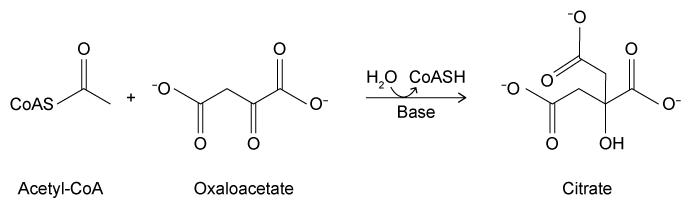
A) 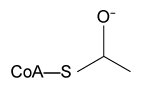
B) 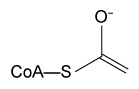
C) 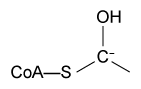
D) 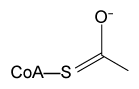
Correct Answer:

Verified
Correct Answer:
Verified
Q142: Passage<br>A group of students studied the reactivity
Q143: Passage<br>The β-lactam scaffold is an important feature
Q144: Passage<br>Students perform a synthesis of a carboxylic
Q145: The number of different stereoisomers that exist
Q146: Passage<br>Chloramphenicol (Compound <strong>1</strong>) is an antibiotic that
Q148: Passage<br>The cryptophycins, isolated from cyanobacteria, are a
Q149: Passage<br>Two key ingredients found in many soaps
Q150: Passage<br>Malaria is caused by the parasite Plasmodium
Q151: During the synthesis of a tosylate, which
Q152: A 100-mL aqueous HCl solution was made