Multiple Choice
Passage
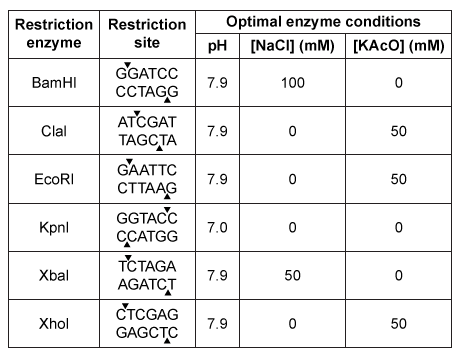
In the central nervous system, myelin produced by oligodendrocytes (glial cells) functions as an insulating sheath surrounding certain nerve fibers. To identify candidate genes involved in the myelination process, researchers collected oligodendrocytes from zebrafish and purified the messenger RNA (mRNA) transcripts expressed by these glial cells. The mRNA was converted to complementary DNA (cDNA) by reverse transcriptase, and the cDNA was fluorescently labeled and assessed for hybridization on a microarray. The expression of mRNA in other zebrafish cells was similarly measured.Transcripts detected in zebrafish oligodendrocytes at levels greater than 3 times those found in other cells were selected as candidate myelination genes. Some of the detected genes, including plp1a, Sox10, and mbp, were previously known to be specific to oligodendrocytes, validating the procedure. The cDNA of newly identified candidates was amplified by PCR, and the ends were digested with the restriction enzymes EcoRI and XhoI. Genes were then ligated into the multiple cloning site (MCS) of the pSKII vector, shown in Figures 1 and 2, which had also been digested by EcoRI and XhoI.
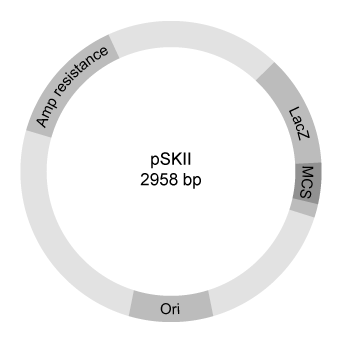 Figure 1 Overview of the pSKII vector (plasmid)
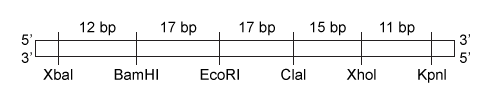 Figure 2 The pSKII MCS, showing the restriction sites of several restriction enzymesTable 1 shows the functional parameters of several restriction enzymes.
 To confirm that the candidate genes originated in oligodendrocytes, complementary RNA (cRNA) strands were synthesized from the cloned plasmids and hybridized to fixed zebrafish sections. One of the genes that localized to oligodendrocytes, known as cldnk, produces a 915 base pair mRNA transcript from two exons. The cldnk gene is involved in tight junction formation and may be required for myelin sheath development around axons.
-Microarrays are chips that contain hundreds of microscopic wells, each of which can detect a distinct nucleic acid. Prior to exposure to cDNA, the wells of the microarray described in the passage most likely contained:
A) double-stranded fragments of the zebrafish genome.
B) proteins isolated from zebrafish samples.
C) antibodies against the cDNA generated by reverse transcriptase.
D) single-stranded DNA corresponding to the sense strand of zebrafish genes.
Correct Answer:

Verified
Correct Answer:
Verified
Q203: Passage<br>Enterohemorrhagic Escherichia coli (EHEC) O157:H7 is a
Q204: Passage<br>Autosomal dominant polycystic kidney disease (ADPKD) is
Q205: The diagram below shows part of the
Q206: Passage<br>The Bloom syndrome helicase (BLM) transcript is
Q207: If a viral antigen were to bind
Q209: Passage<br>Adeno-associated virus 2 (AAV2) is a nonpathogenic,
Q210: Passage<br>Each time a eukaryotic cell replicates its
Q211: Passage<br>Enterohemorrhagic Escherichia coli (EHEC) O157:H7 is a
Q212: Passage<br>Adeno-associated virus 2 (AAV2) is a nonpathogenic,
Q213: Passage<br>Autosomal dominant polycystic kidney disease (ADPKD) is