Multiple Choice
Passage
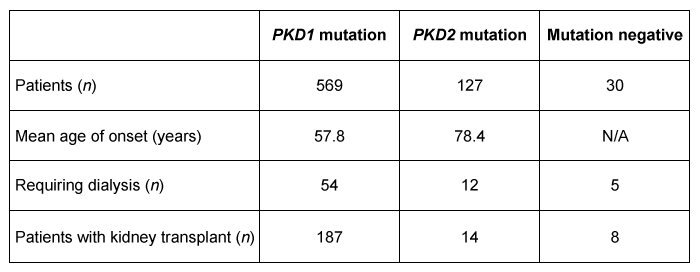
Autosomal dominant polycystic kidney disease (ADPKD) is one of the most common heterogeneous disorders, with a reported incidence of 1 in 1,000 people. The primary pathology is the development of numerous fluid-filled renal cysts that ultimately expand and severely impair kidney function. By age 60, approximately 50% of patients with ADPKD progress to end-stage renal disease (ESRD) and kidney failure. Clinical complications include high blood pressure, urinary tract infections, and cysts in other organs such as the liver and pancreas.Approximately 85% of ADPKD cases are caused by mutations in the PKD1 gene, which codes for the protein polycystin-1 (PC1) . The remaining 15% of cases are caused by mutations in the PKD2 gene, which codes for the protein polycystin-2 (PC2) . The PC2 protein functions as a mechanically activated calcium (Ca2+) channel in ciliated renal epithelial cells. PC1 and PC2 interact via their C-terminal cytoplasmic tails to form a heteromer that modulates intracellular calcium homeostasis. Disruption of calcium signaling as a result of mutations in either PKD1 or PKD2 is associated with increased cell growth and cyst formation in ADPKD patients.To identify individuals with mutations in PKD1 and PKD2, researchers analyzed phenotypic and genetic data from patients with established renal disease, as shown in Table 1.Table 1 Comparison of Renal Disease Onset and Symptom Severity in Various Patient Groups
 Next, researchers examined how phenotypic disease severity was affected by both the position of the mutations in PKD1 (5′ or 3′ end) and the type of mutation in PKD1 or PKD2. In Figure 1, disease severity is given as the cumulative probability of renal survival as a function of age.
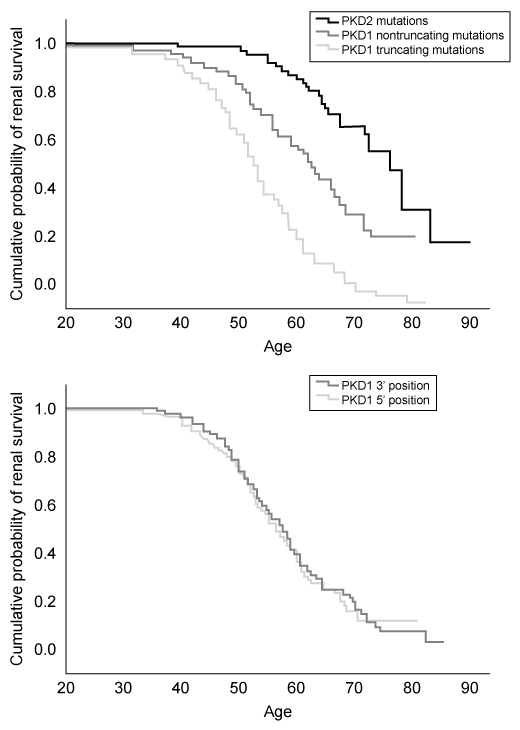 Figure 1 Probability of maintaining healthy kidney physiology as a function of age, analyzed by mutation type and position
Adapted from Cornec-le gall E, Audrézet MP, Chen JM, et al. J Am Soc Nephrol. 2013;24(6) :1006-13.
-In advanced ADPKD, all of the following components of physiological homeostasis would be disrupted EXCEPT:
A) blood nitrogen levels.
B) blood pH.
C) leukocyte production.
D) erythropoietin production.
Correct Answer:

Verified
Correct Answer:
Verified
Q199: Passage<br>Obstructive respiratory illnesses are characterized by an
Q200: A physician determines that a patient has
Q201: A woman carries an X-linked recessive allele
Q202: Passage<br>Each time a eukaryotic cell replicates its
Q203: Passage<br>Enterohemorrhagic Escherichia coli (EHEC) O157:H7 is a
Q205: The diagram below shows part of the
Q206: Passage<br>The Bloom syndrome helicase (BLM) transcript is
Q207: If a viral antigen were to bind
Q208: Passage<br>In the central nervous system, myelin produced
Q209: Passage<br>Adeno-associated virus 2 (AAV2) is a nonpathogenic,