Multiple Choice
Passage
The adrenal glands are divided into two anatomically distinct regions, the adrenal medulla and the adrenal cortex. The adrenal medulla is a collection of irregularly shaped cells located in the interior portion of each adrenal gland. In response to changing serum levels of corticosteroid hormones, medullary cells synthesize and secrete the catecholamines norepinephrine and epinephrine. Norepinephrine and epinephrine are water-soluble compounds, and their actual secretion into the bloodstream is stimulated by acetylcholine (ACh) -mediated signaling in the sympathetic component of the autonomic nervous system. Figure 1 shows the enzyme-mediated synthesis of norepinephrine and epinephrine.
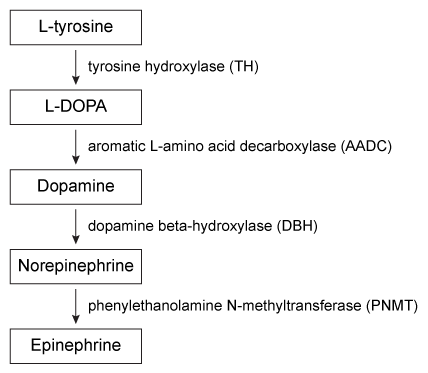 Figure 1The adrenal cortex is the outer portion of the adrenal gland and is composed of cells that synthesize and secrete lipophilic hormones derived from cholesterol. Hormones produced by the adrenal cortex include the principal glucocorticoid hormone (cortisol) and the mineralocorticoid hormone (aldosterone) .The hypothalamus and pituitary gland regulate and control the endocrine functions of the adrenal cortex (Figure 2) . Secretion of corticotrophin-releasing hormone (CRH) from the hypothalamus promotes the synthesis and release of adrenocorticotrophic hormone (ACTH) by the pituitary gland. ACTH acts on adrenal cortex cells to promote the growth of cortical tissue and to increase the synthesis and secretion of glucocorticoids. In addition to its body-wide functions as the principal stress hormone, cortisol also regulates adrenal activity by inhibiting CRH release from the hypothalamus and ACTH release from the pituitary.
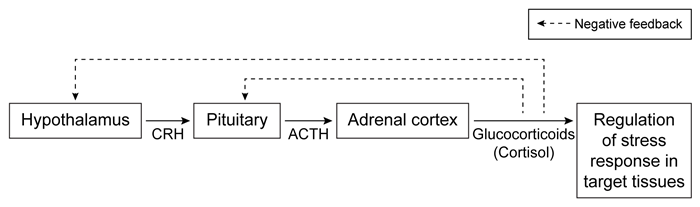 Figure 2
-Hormones secreted by the adrenal medulla most likely influence energy metabolism by:
A) inhibiting proteins that mediate glycogen synthesis.
B) activating their cytosolic receptors in target cells.
C) reducing the activity of enzymes that catalyze fat hydrolysis.
D) increasing the activity of proteins that inhibit gluconeogenesis.
Correct Answer:

Verified
Correct Answer:
Verified
Q138: Passage<br>Spinal muscular atrophy (SMA) is an autosomal
Q139: Passage<br>Alzheimer disease (AD) is a progressive condition
Q140: Excess post-exercise oxygen consumption is the extra
Q141: Passage<br>Quantitative fluorescence recovery after photobleaching (FRAP) is
Q142: One function of catecholamines released by the
Q144: Passage<br>Eukaryotic organelles such as mitochondria and chloroplasts
Q145: Passage<br>In the central nervous system, myelin produced
Q146: Passage<br>Obesity is a condition that affects over
Q147: Which of the following helps maintain the
Q148: Passage<br>The Bloom syndrome helicase (BLM) transcript is