Multiple Choice
Passage
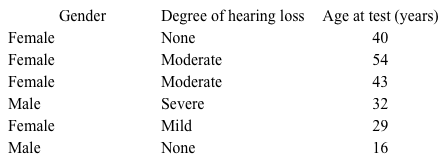
Mitochondria are thought to have been independent bacterial organisms that were engulfed and integrated into eukaryotic cells approximately two billion years ago. Most of the mitochondrial genome was lost or transferred into the large central genome of the eukaryotic nucleus, leaving only a residual genome within each mitochondrion.Because multiple mitochondria are found in the cell, mitochondrial DNA (mtDNA) mutations result in a condition known as heteroplasmy, or the intracellular mixture of wild-type mtDNA and mutant mtDNA. Just as the cellular ratio of wild-type to mutant mtDNA varies, the overall mtDNA content within a tissue or organ is also highly variable. For this reason, disease-causing mutant mtDNA manifests phenotypically only when the majority of mitochondria within a given tissue express the deleterious allele. In addition, the variability in mtDNA content makes it possible for individuals with the same mitochondrial mutation to display drastically different clinical symptoms.To investigate how heteroplasmy influences disease manifestation, researchers analyzed an A to G substitution at nucleotide 3243 in the tRNAleu gene of mtDNA. This mutation has been associated with hereditary hearing loss, diabetes mellitus, and a syndrome characterized by mitochondrial encephalomyopathy, lactic acidosis, and strokelike episodes.Family members who were confirmed to have the A3243G mutation were tested using an audiometry examination to assess hearing impairment, as shown in Table 1. The subjects carried no other genetic mutations known to cause hearing loss.Table 1 Audiometry Results From Family Members with the A3243G Mutation
 The blood samples of these subjects were collected, and the 3243 region of the tRNAleu gene was amplified via standard PCR. The PCR products were subsequently treated with the restriction enzyme ApaI and visualized on a PAGE gel. The normal undigested PCR product is 161 bp in length, but the PCR product amplified from the mutant A3243G is digested into two fragments by ApaI.
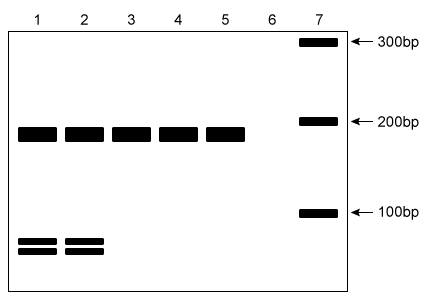 Figure 1 PAGE visualization of PCR products following ApaI digestion
Adapted from Hadjivasiliou Z, Pomiankowski A, Seymour RM, Lane N. Selection for mitonuclear co-adaptation could favour the evolution of two sexes. Proc Biol Sci. 2012;279(1734) :1865-72.
-What conclusion can be drawn from the results shown in Figure 1?
A) The samples were analyzed under denaturing conditions.
B) The samples were analyzed under reducing conditions.
C) The samples were analyzed using a native gel.
D) The samples were analyzed using a stable pH gradient.
Correct Answer:

Verified
Correct Answer:
Verified
Q132: Passage<br>Alzheimer disease (AD) is a progressive condition
Q133: Passage<br>Mitochondria are thought to have been independent
Q134: In an assay, researchers assessed activity levels
Q135: Passage<br>Parathyroid hormone (PTH) is an important regulator
Q136: Passage<br>Lipopolysaccharides (LPS) found in gram-negative bacterial cells
Q138: Passage<br>Spinal muscular atrophy (SMA) is an autosomal
Q139: Passage<br>Alzheimer disease (AD) is a progressive condition
Q140: Excess post-exercise oxygen consumption is the extra
Q141: Passage<br>Quantitative fluorescence recovery after photobleaching (FRAP) is
Q142: One function of catecholamines released by the