Multiple Choice
Passage
Antimicrobial peptides are an important component of innate immunity. Since their discovery in 1939, over 5,000 peptides with antimicrobial properties have been isolated from organisms in every domain of life. They have demonstrated activity against enveloped viruses, bacteria, fungi, and even tumor cells and have recently gained interest for their potential in fighting antibiotic-resistant bacteria. Most known antimicrobial peptides are positively charged, but some with negative charges have also been discovered.Frogs are known to secrete a variety of antimicrobial peptides as a major source of immunity. Secretions from a new species of frog were collected and the peptides were separated by cation exchange chromatography. Four of the isolated peptides demonstrated strong antibacterial activity and were characterized by isoelectric focusing and sequencing:
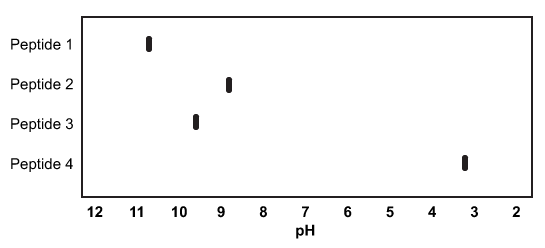 Figure 1 Results of isoelectric focusing of four antimicrobial peptidesTable 1 Amino Acid Compositions of Four Antimicrobial Peptides
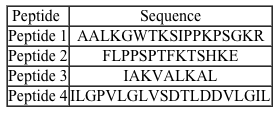 Adapted from Wang Z, Wang G. APD: the Antimicrobial Peptide Database. Nucleic Acids Res. 2004;32(Database issue) :D590-2.
-Some strains of Staphylococcus aureus modify their membranes by attaching lysine to phospholipids on the extracellular side. Given this information, which of the peptides tested is likely to be most effective against these strains?
A) Peptide 1
B) Peptide 2
C) Peptide 3
D) Peptide 4
Correct Answer:

Verified
Correct Answer:
Verified
Q70: Passage<br>Porphyrin biosynthesis is a multistep process that
Q71: Passage<br>Aldehyde dehydrogenase 2 (ALDH2) is essential for
Q72: The physical properties of two isoforms of
Q73: Passage<br>DNA polymerization is one of the most
Q74: Passage<br>ATP synthase, also known as Complex V,
Q76: Studies on the catalytic activity of hexokinase
Q77: Passage<br>The Ankyrin repeat and SOCS box containing
Q78: Passage<br>The tumor suppressor p53 is a homotetrameric
Q79: Passage<br>The recent advent of multidrug-resistant Mycobacterium tuberculosis
Q80: Passage<br>Diabetic nephropathy (kidney disease) is characterized in