Multiple Choice
Passage
Diabetic nephropathy (kidney disease) is characterized in part by a significant decrease in the glomerular filtration rate. Podocytes are differentiated cells that surround the glomerular capillaries and counteract the pressure of blood filtration. Hyperglycemia (elevated blood glucose) and capillary hypertension (high blood pressure) , both of which are common in diabetic patients, can subject podocytes to mechanical stress. This mechanical stress has been shown to regulate glucose uptake by podocytes, possibly by altering the production of glucose transport (GLUT) proteins.Researchers investigating GLUT2 and GLUT4 expression in rat podocytes measured the impact of mechanical stress on glucose uptake. Cells were grown for 4 hours on membranes exposed to atmospheric (atm) or high air pressure (HP) to mimic mechanical stress. Antibodies specific to GLUT2 and GLUT4 were used to visualize the expression of each under normal glucose (NG) and hyperglycemic (HG) conditions, and to assess the effect of mechanical stress on expression. The uptake of a radiolabeled glucose analogue, [3H]-2-deoxy-D-glucose (3H-2DG) , was then determined. The quantity of 3H-2DG transported by each GLUT protein was directly proportional to the cell surface expression.
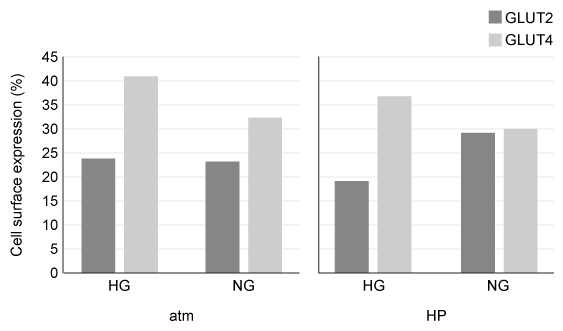 Figure 1 Cell surface expression of GLUT transporters in response to mechanical stress and varying glucose concentration.In vivo studies have shown that transport via GLUT2 is noninducible and depends only on extracellular glucose concentrations. However, GLUT4-mediated uptake is induced by insulin binding and occurs under high glucose conditions when insulin is released. The standard Km values for GLUT2 and GLUT4 are 19.4 and 4.3 mM, respectively, at normal blood glucose levels after a meal (~7.8 mM) . The data shown in Figure 2 represent the combined kinetic properties of both transporters.
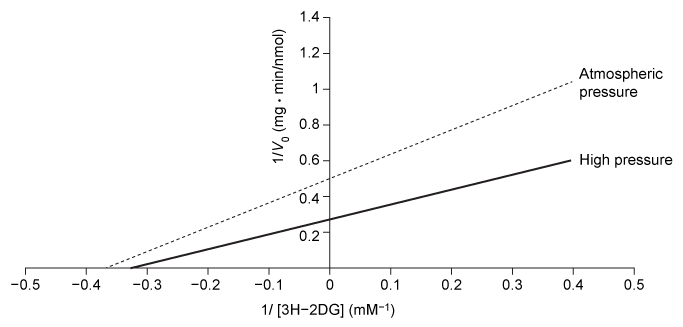 Figure 2 Plot of glucose uptake in podocytes with and without mechanical stress.
Adapted from Lewko, B., Bryl, E., Witkowski, J. M., Latawiec, E., Angielski, S., & Stepinski, J. (2005) . Mechanical stress and glucose concentration modulate glucose transport in cultured rat podocytes. Nephrology Dialysis Transplantation, 20(2) , 306-311.
-What stress-induced change in Figure 2 provides evidence that mechanical stress alters the binding properties of the GLUT transporters?
A) The left-shift of Km
B) The downward-shift of Vmax
C) The decreased catalytic efficiency
D) The lower affinity for the substrate
Correct Answer:

Verified
Correct Answer:
Verified
Q75: Passage<br>Antimicrobial peptides are an important component of
Q76: Studies on the catalytic activity of hexokinase
Q77: Passage<br>The Ankyrin repeat and SOCS box containing
Q78: Passage<br>The tumor suppressor p53 is a homotetrameric
Q79: Passage<br>The recent advent of multidrug-resistant Mycobacterium tuberculosis
Q81: Passage<br>Upon entering muscle cells, glucose is immediately
Q82: Based on the titration curve of an
Q83: 4-hydroxy-2-nonenal (4HNE), shown below, interacts with proteins
Q84: A solution of which amino acid will
Q85: Passage<br>Leptin signaling is vital for maintaining adequate