Multiple Choice
Passage
Antimicrobial peptides are an important component of innate immunity. Since their discovery in 1939, over 5,000 peptides with antimicrobial properties have been isolated from organisms in every domain of life. They have demonstrated activity against enveloped viruses, bacteria, fungi, and even tumor cells and have recently gained interest for their potential in fighting antibiotic-resistant bacteria. Most known antimicrobial peptides are positively charged, but some with negative charges have also been discovered.Frogs are known to secrete a variety of antimicrobial peptides as a major source of immunity. Secretions from a new species of frog were collected and the peptides were separated by cation exchange chromatography. Four of the isolated peptides demonstrated strong antibacterial activity and were characterized by isoelectric focusing and sequencing:
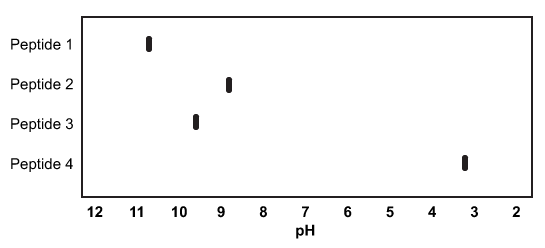 Figure 1 Results of isoelectric focusing of four antimicrobial peptidesTable 1 Amino Acid Compositions of Four Antimicrobial Peptides
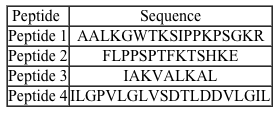 Adapted from Wang Z, Wang G. APD: the Antimicrobial Peptide Database. Nucleic Acids Res. 2004;32(Database issue) :D590-2.
-In which order will the four peptides elute from the cation exchange column as pH is increased from 7 to 12?
A) Peptide 4, Peptide 3, Peptide 2, Peptide 1
B) Peptide 4, Peptide 2, Peptide 3, Peptide 1
C) Peptide 1, Peptide 2, Peptide 3, Peptide 4
D) Peptide 1, Peptide 3, Peptide 2, Peptide 4
Correct Answer:

Verified
Correct Answer:
Verified
Q296: Passage<br>Leukocyte common antigen (LCA) enzymes play several
Q297: Passage<br>Destabilase, an enzyme found in the saliva
Q298: Passage<br>Tumor hypoxia is a marker of resistance
Q299: Activity assays were performed to determine the
Q300: Passage<br>DNA polymerization is one of the most
Q302: Passage<br>Interactions between positively charged histones and negatively
Q303: Passage<br>Ribulose-1,5-bisphosphate carboxylase/oxygenase (rubisco) is one of the
Q304: Passage<br>Although the structure of the cell membrane
Q305: Passage<br>Myalgic encephalopathy (ME), or chronic fatigue syndrome
Q306: Passage<br>Dystroglycan (Dg) is a transmembrane protein that