
Exam 5: Integrals

arrow
  • Select Tags
search iconSearch Question
  • Select Tags

Determine a reduction formula for ∫1ex(ln⁡x)ndx\int _ { 1 } ^ { e } x ( \ln x ) ^ { n } d x

(Essay)
4.8/5
(83)

Use FTC1 to write down an antiderivative F(x) of f(x)=ex2 such that F(0)=2F ( x ) \text { of } f ( x ) = e ^ { x ^ { 2 } } \text { such that } F ( 0 ) = 2

(Essay)
4.7/5
(80)

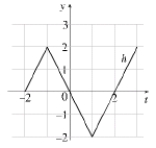
Let g(x)=∫−2xh(t)dtg ( x ) = \int _ { - 2 } ^ { x } h ( t ) d t , where h is the function whose graph is shown below:  Let  g ( x ) = \int _ { - 2 } ^ { x } h ( t ) d t  , where h is the function whose graph is shown below:   (a) Evaluate g (  - 2  ), g (  2  ), g (0), g (3).(b) On what interval(s) is g increasing? (c) What are the maximum and minimum values of g over [  - 2  ,3]? (a) Evaluate g ( −2- 2 ), g ( 22 ), g (0), g (3).(b) On what interval(s) is g increasing? (c) What are the maximum and minimum values of g over [ −2- 2 ,3]?
(Essay)
4.8/5
(80)

Use the definition of the definite integral to evaluate ∫04(2x−x2)dx\int _ { 0 } ^ { 4 } \left( 2 x - x ^ { 2 } \right) d x

(Short Answer)
4.9/5
(74)

Evaluate the improper integral ∫1∞ln⁡xxdx\int _ { 1 } ^ { \infty } \frac { \ln x } { x } d x

(Multiple Choice)
4.8/5
(69)

Use Simpson's Rule with n = 4 to approximate ∫0111+x2dx\int _ { 0 } ^ { 1 } \frac { 1 } { 1 + x ^ { 2 } } d x

(Short Answer)
4.8/5
(83)

Express ∫14(2x−1x2)dx\int _ { 1 } ^ { 4 } \left( 2 x - \frac { 1 } { x ^ { 2 } } \right) d x as the limit of a sum.

(Essay)
4.8/5
(75)

Determine whether each integral is convergent or divergent. Evaluate those that are convergent.(a) ∫021x−1dx\int _ { 0 } ^ { 2 } \frac { 1 } { x - 1 } d x (b) ∫2∞1x(ln⁡x)2dx\int _ { 2 } ^ { \infty } \frac { 1 } { x ( \ln x ) ^ { 2 } } d x (c) ∫01ln⁡xxdx\int _ { 0 } ^ { 1 } \frac { \ln x } { \sqrt { x } } d x

(Essay)
4.8/5
(87)

Use the definition of the definite integral to evaluate ∫01(1−2x)dx\int _ { 0 } ^ { 1 } ( 1 - 2 x ) d x

(Short Answer)
4.9/5
(89)

Compute ddx∫2x3xesin⁡tdt\frac { d } { d x } \int _ { 2 x } ^ { 3 x } e ^ { \sin t } d t

(Essay)
4.8/5
(77)

Use FTC1 to write down an antiderivative F(x) of f(x)=xex such that F(1)=4F ( x ) \text { of } f ( x ) = \sqrt { x } e ^ { x } \text { such that } F ( 1 ) = 4

(Essay)
4.9/5
(60)

Let s(t)=∫1t2−3t(u+2)eu4dus ( t ) = \int _ { 1 } ^ { t ^ { 2 } - 3 t } ( u + 2 ) e ^ { \sqrt [ 4 ] { u } } d u be the position function of a particle. When does the particle stop?

(Essay)
4.8/5
(80)

Evaluate ∫−22xcos⁡(x3)dx\int _ { - 2 } ^ { 2 } x \cos \left( x ^ { 3 } \right) d x

(Short Answer)
5.0/5
(66)

Use the Comparison Theorem to determine whether ∫2∞dx4x2+1\int _ { 2 } ^ { \infty } \frac { d x } { \sqrt { 4 x ^ { 2 } + 1 } } is convergent or divergent. Justify your answer.

(Short Answer)
4.9/5
(88)

Find the value of the integral ∫011−u2du\int _ { 0 } ^ { 1 } \sqrt { 1 - u ^ { 2 } } d u

(Multiple Choice)
5.0/5
(59)

Given ∫04f(x)dx=−5 and ∫06f(x)dx=3\int _ { 0 } ^ { 4 } f ( x ) d x = - 5 \text { and } \int _ { 0 } ^ { 6 } f ( x ) d x = 3 use the properties of definite integrals to find ∫64f(x)dx.\int _ { 6 } ^ { 4 } f ( x ) d x .

(Short Answer)
4.7/5
(72)

If ∫12xf(t)dt=xsin⁡−1x\int _ { 1 } ^ { 2 x } f ( t ) d t = x \sin ^ { - 1 } x where f is a continuous function, find f (1).

(Essay)
4.8/5
(95)

Let f (x) = x2−2x ^ { 2 } - 2 on the interval [0,2]. Let the interval be divided into four equal subintervals. Find the value of the Riemann sum ∑i=14f(xi∗)Δxi if xi∗\sum _ { i = 1 } ^ { 4 } f \left( x _ { i } ^ { * } \right) \Delta x _ { i } \text { if } x _ { i } ^ { * } is the right endpoint of the subinterval.

(Multiple Choice)
4.8/5
(61)

Find the value of the integral ∫131x2dx\int _ { 1 } ^ { 3 } \frac { 1 } { x ^ { 2 } } d x

(Multiple Choice)
4.8/5
(84)
Showing 221 - 239 of 239
close modal

Filters

  • Essay(0)
  • Multiple Choice(0)
  • Short Answer(0)
  • True False(0)
  • Matching(0)