Exam 5: Integration

arrow
  • Select Tags
search iconSearch Question
  • Select Tags

Sketch the area corresponding to the integral. Sketch the area corresponding to the integral.

(Essay)
4.9/5
(82)

Find the area between Find the area between   and the x-axis for  and the x-axis for Find the area between   and the x-axis for

(Multiple Choice)
4.9/5
(73)

Find the function Find the function   satisfying the given conditions.  satisfying the given conditions. Find the function   satisfying the given conditions.

(Multiple Choice)
4.8/5
(72)

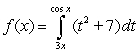
Find the derivative Find the derivative    Find the derivative

(Multiple Choice)
4.8/5
(86)

Approximate the area under the curve on the given interval using Approximate the area under the curve on the given interval using   rectangles and midpoint evaluation. Round to three decimal places.   on   ,  rectangles and midpoint evaluation. Round to three decimal places. Approximate the area under the curve on the given interval using   rectangles and midpoint evaluation. Round to three decimal places.   on   ,  on Approximate the area under the curve on the given interval using   rectangles and midpoint evaluation. Round to three decimal places.   on   ,  , Approximate the area under the curve on the given interval using   rectangles and midpoint evaluation. Round to three decimal places.   on   ,

(Multiple Choice)
5.0/5
(81)

Use Part I of the Fundamental Theorem of Calculus to compute the integral exactly. Use Part I of the Fundamental Theorem of Calculus to compute the integral exactly.

(Multiple Choice)
4.9/5
(71)

Find the area of the region bounded by Find the area of the region bounded by   ,   , the x-axis, and the y-axis. , Find the area of the region bounded by   ,   , the x-axis, and the y-axis. , the x-axis, and the y-axis.

(Multiple Choice)
4.7/5
(79)

Compute the error (the difference between the exact value and the approximation) in the Trapezoidal Rule approximation using Compute the error (the difference between the exact value and the approximation) in the Trapezoidal Rule approximation using   . Round to 5 decimal places.  . Round to 5 decimal places. Compute the error (the difference between the exact value and the approximation) in the Trapezoidal Rule approximation using   . Round to 5 decimal places.

(Multiple Choice)
4.8/5
(80)

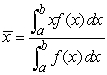
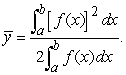
The location The location   of the center of gravity (balance point) of a flat plate bounded by   and the   -axis is given by   and   For the isosceles triangle bounded below by the   -axis and above by the function   (for   ), use symmetry to argue that   and   . Compute   . of the center of gravity (balance point) of a flat plate bounded by The location   of the center of gravity (balance point) of a flat plate bounded by   and the   -axis is given by   and   For the isosceles triangle bounded below by the   -axis and above by the function   (for   ), use symmetry to argue that   and   . Compute   . and the The location   of the center of gravity (balance point) of a flat plate bounded by   and the   -axis is given by   and   For the isosceles triangle bounded below by the   -axis and above by the function   (for   ), use symmetry to argue that   and   . Compute   . -axis is given by The location   of the center of gravity (balance point) of a flat plate bounded by   and the   -axis is given by   and   For the isosceles triangle bounded below by the   -axis and above by the function   (for   ), use symmetry to argue that   and   . Compute   . and The location   of the center of gravity (balance point) of a flat plate bounded by   and the   -axis is given by   and   For the isosceles triangle bounded below by the   -axis and above by the function   (for   ), use symmetry to argue that   and   . Compute   . For the isosceles triangle bounded below by the The location   of the center of gravity (balance point) of a flat plate bounded by   and the   -axis is given by   and   For the isosceles triangle bounded below by the   -axis and above by the function   (for   ), use symmetry to argue that   and   . Compute   . -axis and above by the function The location   of the center of gravity (balance point) of a flat plate bounded by   and the   -axis is given by   and   For the isosceles triangle bounded below by the   -axis and above by the function   (for   ), use symmetry to argue that   and   . Compute   . (for The location   of the center of gravity (balance point) of a flat plate bounded by   and the   -axis is given by   and   For the isosceles triangle bounded below by the   -axis and above by the function   (for   ), use symmetry to argue that   and   . Compute   . ), use symmetry to argue that The location   of the center of gravity (balance point) of a flat plate bounded by   and the   -axis is given by   and   For the isosceles triangle bounded below by the   -axis and above by the function   (for   ), use symmetry to argue that   and   . Compute   . and The location   of the center of gravity (balance point) of a flat plate bounded by   and the   -axis is given by   and   For the isosceles triangle bounded below by the   -axis and above by the function   (for   ), use symmetry to argue that   and   . Compute   . . Compute The location   of the center of gravity (balance point) of a flat plate bounded by   and the   -axis is given by   and   For the isosceles triangle bounded below by the   -axis and above by the function   (for   ), use symmetry to argue that   and   . Compute   . .

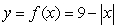
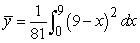
(Essay)
4.9/5
(76)

Use the graph to determine whether Use the graph to determine whether   is positive or negative.  is positive or negative. Use the graph to determine whether   is positive or negative.

(Multiple Choice)
4.8/5
(81)

Sketch a graph of a function Sketch a graph of a function   corresponding to the given graph of   .    corresponding to the given graph of Sketch a graph of a function   corresponding to the given graph of   .    . Sketch a graph of a function   corresponding to the given graph of   .    Sketch a graph of a function   corresponding to the given graph of   .

(Essay)
4.9/5
(89)

Suppose that a car can accelerate from Suppose that a car can accelerate from   mph to   mph in   seconds. Assuming a constant acceleration, find the acceleration (in miles per second squared) of the car and find the distance traveled by the car during the   seconds. mph to Suppose that a car can accelerate from   mph to   mph in   seconds. Assuming a constant acceleration, find the acceleration (in miles per second squared) of the car and find the distance traveled by the car during the   seconds. mph in Suppose that a car can accelerate from   mph to   mph in   seconds. Assuming a constant acceleration, find the acceleration (in miles per second squared) of the car and find the distance traveled by the car during the   seconds. seconds. Assuming a constant acceleration, find the acceleration (in miles per second squared) of the car and find the distance traveled by the car during the Suppose that a car can accelerate from   mph to   mph in   seconds. Assuming a constant acceleration, find the acceleration (in miles per second squared) of the car and find the distance traveled by the car during the   seconds. seconds.

(Multiple Choice)
4.7/5
(86)

Suppose that a runner has velocity Suppose that a runner has velocity   mph for   minutes, velocity   mph for   minutes, velocity   mph for   minutes, and velocity   mph for   minutes. Find the distance run. Round to two decimal places. mph for Suppose that a runner has velocity   mph for   minutes, velocity   mph for   minutes, velocity   mph for   minutes, and velocity   mph for   minutes. Find the distance run. Round to two decimal places. minutes, velocity Suppose that a runner has velocity   mph for   minutes, velocity   mph for   minutes, velocity   mph for   minutes, and velocity   mph for   minutes. Find the distance run. Round to two decimal places. mph for Suppose that a runner has velocity   mph for   minutes, velocity   mph for   minutes, velocity   mph for   minutes, and velocity   mph for   minutes. Find the distance run. Round to two decimal places. minutes, velocity Suppose that a runner has velocity   mph for   minutes, velocity   mph for   minutes, velocity   mph for   minutes, and velocity   mph for   minutes. Find the distance run. Round to two decimal places. mph for Suppose that a runner has velocity   mph for   minutes, velocity   mph for   minutes, velocity   mph for   minutes, and velocity   mph for   minutes. Find the distance run. Round to two decimal places. minutes, and velocity Suppose that a runner has velocity   mph for   minutes, velocity   mph for   minutes, velocity   mph for   minutes, and velocity   mph for   minutes. Find the distance run. Round to two decimal places. mph for Suppose that a runner has velocity   mph for   minutes, velocity   mph for   minutes, velocity   mph for   minutes, and velocity   mph for   minutes. Find the distance run. Round to two decimal places. minutes. Find the distance run. Round to two decimal places.

(Multiple Choice)
4.7/5
(84)

Evaluate the integral. Evaluate the integral.

(Multiple Choice)
4.9/5
(73)

Find the general antiderivative. Find the general antiderivative.

(Multiple Choice)
4.9/5
(75)

Approximate the area under the curve on the given interval using Approximate the area under the curve on the given interval using   rectangles and right-endpoint evaluation. Round to three decimal places.   on   ,  rectangles and right-endpoint evaluation. Round to three decimal places. Approximate the area under the curve on the given interval using   rectangles and right-endpoint evaluation. Round to three decimal places.   on   ,  on Approximate the area under the curve on the given interval using   rectangles and right-endpoint evaluation. Round to three decimal places.   on   ,  , Approximate the area under the curve on the given interval using   rectangles and right-endpoint evaluation. Round to three decimal places.   on   ,

(Multiple Choice)
4.9/5
(76)

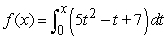
Find the derivative Find the derivative   .  . Find the derivative   .

(Multiple Choice)
4.8/5
(86)

Use the graph to determine whether Use the graph to determine whether   is positive or negative.  is positive or negative. Use the graph to determine whether   is positive or negative.

(Multiple Choice)
4.8/5
(87)

Determine the position function if the velocity function is Determine the position function if the velocity function is   and the initial position is   . and the initial position is Determine the position function if the velocity function is   and the initial position is   . .

(Multiple Choice)
4.7/5
(76)

Suppose that a car can come to rest from Suppose that a car can come to rest from   mph in   seconds. Assuming a constant (negative) acceleration, find the acceleration (in miles per second squared) of the car and find the distance traveled by the car during the   seconds (i.e., the stopping distance). mph in Suppose that a car can come to rest from   mph in   seconds. Assuming a constant (negative) acceleration, find the acceleration (in miles per second squared) of the car and find the distance traveled by the car during the   seconds (i.e., the stopping distance). seconds. Assuming a constant (negative) acceleration, find the acceleration (in miles per second squared) of the car and find the distance traveled by the car during the Suppose that a car can come to rest from   mph in   seconds. Assuming a constant (negative) acceleration, find the acceleration (in miles per second squared) of the car and find the distance traveled by the car during the   seconds (i.e., the stopping distance). seconds (i.e., the stopping distance).

(Multiple Choice)
4.7/5
(79)
Showing 41 - 60 of 129
close modal

Filters

  • Essay(0)
  • Multiple Choice(0)
  • Short Answer(0)
  • True False(0)
  • Matching(0)