



 Chat with AI
Exam 11: Planetary Adornmentsmoons and Rings

Exam 1: Why Learn Astronomy92 Questions
Exam 2: Patterns in the Skymotions of Earth96 Questions
Exam 3: Motion of Astronomical Bodies91 Questions
Exam 4: Gravity and Orbits88 Questions
Exam 5: Light87 Questions
Exam 6: The Tools of the Astronomer94 Questions
Exam 7: The Birth and Evolution of Planetary Systems87 Questions
Exam 8: The Terrestrial Planets and Earths Moon99 Questions
Exam 9: Atmospheres of the Terrestrial Planets92 Questions
Exam 10: Worlds of Gas and Liquid the Giant Planets92 Questions
Exam 11: Planetary Adornmentsmoons and Rings93 Questions
Exam 12: Dwarf Planets and Small Solar System Bodies89 Questions
Exam 13: Taking the Measure of Stars88 Questions
Exam 14: Our Starthe Sun88 Questions
Exam 15: Star Formation and the Interstellar Medium89 Questions
Exam 16: Evolution of Low-Mass Stars90 Questions
Exam 17: Evolution of High-Mass Stars90 Questions
Exam 18: Relativity and Black Holes90 Questions
Exam 19: The Expanding Universe90 Questions
Exam 20: Galaxies95 Questions
Exam 21: The Milky Waya Normal Spiral Galaxy96 Questions
Exam 22: Modern Cosmology92 Questions
Exam 23: Large-Scale Structure in the Universe65 Questions
Exam 24: Life61 Questions
Select questions type


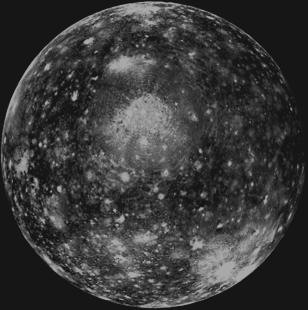
What are the two basic materials of which the moons in the solar system are composed? For each type of material, name an example of a moon whose surface is composed primarily of that material.
(Essay)
5.0/5  (84)
(84) 
The mass of all of Saturn's bright rings is comparable to the mass of:
(Multiple Choice)
4.9/5 (88)
(88) How do Uranus's rings differ from the ring systems of the other giant planets?
(Multiple Choice)
4.9/5 (77)
(77) Two years after first being observed, astronomers reported that Saturn's rings vanished. What happened to them?
(Multiple Choice)
4.9/5 (73)
(73) What leads astronomers to believe that many large moons associated with the giant planets have compositions that are roughly half water?
(Multiple Choice)
4.9/5 (77)
(77) If a planetary ring had an inner diameter of 100,000 km, an outer diameter of 120,000 km, a thickness of 10 meters, and a density of 100 kg/m3, what would be the total mass of material in this ring?
(Multiple Choice)
4.8/5 (93)
(93) Explain why it was difficult for the Voyager space probe to detect Jupiter's ring system as it was approaching the planet, but easy to detect the rings once it passed behind Jupiter.
(Essay)
4.9/5 (82)
(82) Which of the following can be used as an indicator of the age of a moon's surface?
(Multiple Choice)
4.7/5 (76)
(76) If you wanted to search for faint rings around a giant planet by sending a spacecraft on a flyby, it would be best to make your observations:
(Multiple Choice)
4.9/5 (76)
(76) Which of the following planets has the most complex and magnificent ring system?
(Multiple Choice)
4.7/5 (97)
(97) Europa is a very interesting moon that scientists are considering visiting with a spacecraft in order to search for signs of life. What is it about this moon that makes it so interesting, and what surface features give us clues about its interior?
(Essay)
4.9/5 (91)
(91) Galileo discovered Saturn's rings and correctly concluded that they were formed by moons that had been tidally ripped apart.
(True/False)
4.9/5 (77)
(77) Lakes of methane, ethane, and other hydrocarbons can be found on the surface of Saturn's moon Titan.
(True/False)
4.8/5 (81)
(81) Which object has turned itself inside out numerous times, leading to a situation where lighter elements have escaped, sulfur compounds compose the crust, and primarily heavier elements make up its core?
(Multiple Choice)
4.9/5 (77)
(77) What is the escape velocity from Europa, whose radius is 1,600 km and mass is 5 * 1022 kg?
(Multiple Choice)
4.8/5 (72)
(72) What do astronomers believe causes the spoke-like features associated with Saturn's B ring?
(Essay)
4.9/5 (74)
(74) 
Filters
- Essay(0)
- Multiple Choice(0)
- Short Answer(0)
- True False(0)
- Matching(0)